
Casino Not on GamStop Instant Withdrawal: What 'Instant' Actually Means in 2026
 Available in US
Over 450,000 UK residents signed up for GamStop since 2018. Some walked away permanently; others found offshore casinos advertising “instant withdrawals” and no self-exclusion database checks. The pitch sounds frictionless: deposit crypto, play a few hands, cash out in minutes. Reality is messier.
Non-GamStop casinos operate under Curaçao, Malta, or Anjouan licences, not the UK Gambling Commission. That puts them outside GamStop’s reach — and outside every player protection the UKGC mandates. No segregated funds, no dispute resolution through IBAS, no regulatory recourse if a withdrawal gets stuck. The speed advantage is real for specific payment methods (crypto processes in 5–60 minutes, e-wallets in 1–24 hours), but “instant” depends entirely on whether KYC is complete before the cashout request, whether bonus wagering is cleared, and whether the operator actually processes withdrawals automatically or routes every request through a 48-hour compliance queue.
This guide breaks down what non-GamStop casinos actually are in 2026, which payment methods genuinely deliver sub-1-hour payouts, and what UK players trade away when they bypass the regulatory framework for speed.
What “Casino Not on GamStop” Actually Means in 2026

GamStop is the UK’s free national self-exclusion scheme, mandatory for every UKGC-licensed operator since 31 March 2020. A casino “not on GamStop” is any site that doesn’t hold a UK Gambling Commission licence and therefore doesn’t query the GamStop database. These are offshore-licensed operators — Curaçao, Malta, Anjouan, Gibraltar, Kahnawake — serving UK players without UKGC permission.
The Gambling Act 2005, amended in 2014, makes it illegal for operators to offer gambling services to UK residents without a UKGC licence. Enforcement targets the operators and payment processors, not the players. No UK resident has been prosecuted for playing at an offshore casino. Winnings aren’t taxable under UK law (HMRC doesn’t tax individual gambling winnings). The legal risk sits with the operator, who faces fines or payment-channel blocks if the UKGC catches them advertising in the UK market.
What players lose by going offshore: UKGC-licensed casinos must segregate player funds in separate accounts, offer IBAS dispute resolution, follow audited RTP and RNG standards, enforce 2.5-second minimum spin times, disable autoplay on slots, block credit-card deposits, and cap bonus wagering at 10x (introduced January 2026). Non-GamStop casinos follow none of these rules. If a Curaçao-licensed operator refuses a withdrawal, the UK Gambling Commission will not intervene. Your recourse is the licensing authority’s dispute panel, which has limited enforcement teeth, or public complaints on forums.
Why these casinos exist: UKGC compliance costs (affordability checks, source-of-funds reviews, mandatory deposit-limit prompts, the 10x wagering cap) led dozens of operators to exit the UK market between 2020–2024 and serve UK players from offshore entities instead. Some target self-excluded players explicitly by advertising outside GamStop; others simply offer fewer restrictions and faster cashouts.
Is it legal for UK players to use casinos not on GamStop in 2026?
Playing at an offshore casino is not illegal for UK residents. The Gambling Act 2005 criminalises operators serving UK players without a UKGC licence, not the players themselves. Enforcement falls on the operators and financial intermediaries (banks, payment processors) who facilitate transactions. No UK resident has faced prosecution for using a non-GamStop casino. Winnings are not subject to UK tax. The legal exposure is the operator’s, not yours — but the financial risk is entirely yours, because you’ve stepped outside the UK’s consumer protection framework.
Why “Instant Withdrawal” Isn’t Always Instant

Most non-GamStop casinos advertise “instant withdrawals,” and the payment methods they support (crypto, e-wallets) are capable of sub-1-hour processing. But “instant” refers to the payment network’s speed, not the casino’s internal approval time. A Bitcoin transaction confirms in 30 minutes on the blockchain; if the casino routes every withdrawal through a 48-hour compliance review, the cashout isn’t instant.
True instant withdrawals require four conditions: completed KYC before the cashout request, no active bonus wagering requirements, a payment method with sub-1-hour network confirmation (crypto or e-wallet), and automated or near-instant casino approval. Miss any one, and “instant” stretches to 24–72 hours.
The KYC Bottleneck: Why Your First Cashout Takes 24–72 Hours
Most offshore casinos advertise “no KYC” or “instant withdrawal,” but first cashouts trigger verification requests that add 24–72 hours regardless of payment method. Photo ID, proof of address, and payment-method ownership (a selfie holding your card, or a screenshot of your crypto wallet address) are standard. Some operators (Rainbet claims to, Mystake varies by amount) allow small withdrawals without verification, but anything above £100–£500 typically triggers document requests.
Roobet dropped its no-KYC policy entirely and now requires full verification before any withdrawal. Gamdom still lets most players cash out without documents, but large withdrawals (threshold not published) trigger KYC. The bottleneck isn’t the payment method — it’s the casino’s compliance team reviewing your documents during UK evening hours when the team might be offline.
The advertised speed only applies after KYC is complete. Repeat withdrawals process faster because verification is already done. If you’re testing a new non-GamStop casino, expect the first cashout to take 24–72 hours regardless of whether you’re using Bitcoin or Skrill. Complete KYC before you deposit if the casino allows it (most don’t), or treat the first withdrawal as a trust test with a small amount.
Pending Periods and Reversal Windows
Many offshore casinos hold withdrawals in “pending” status for 24 hours, allowing players to cancel and return funds to their balance. This is a retention mechanism, not a compliance requirement. UKGC-licensed sites cannot delay withdrawals by requesting documents they could have asked for earlier; offshore sites have no such restriction. The pending window is pure friction designed to tempt you back into play.
Some operators let you opt out of the pending period in account settings, but that option usually requires contacting support or completing a “cooling-off waiver” form. If a casino advertises instant crypto withdrawals but every cashout sits in pending for 24 hours, that’s policy, not blockchain delay.
Bonus Wagering Locks
Active bonus funds with incomplete wagering requirements block withdrawals at most casinos. A £100 deposit with a 100% match and 40x wagering requires £8,000 in total stakes before cashout becomes possible. Non-GamStop bonuses often carry 50x–60x wagering (versus the 10x cap at UKGC-licensed sites since January 2026), with game exclusions that make clearing impractical. Slots contribute 100%, table games 10% or excluded entirely.
If you deposit without a bonus, you can usually withdraw after 1x wagering of the deposit amount (anti-money-laundering requirement). If you accept a bonus, read the terms before you play. “Instant withdrawal” doesn’t apply while bonus funds are active.
Why does my “instant withdrawal” casino still take 24 hours to pay?
Three common causes: your first cashout triggered KYC verification (add 24–72 hours), the casino has a pending period before processing (add 24 hours), or you have active bonus wagering that blocks withdrawals until cleared. Check your account status for document requests, look for a “cancel pending withdrawal” button (sign of a reversal window), and verify that bonus funds are fully wagered or forfeited. Once those are cleared, crypto should process in 5–60 minutes and e-wallets in 1–24 hours.
Do I need to complete KYC verification before withdrawing from a non-GamStop casino?
Most offshore casinos trigger KYC on the first withdrawal, not at registration. Small cashouts (under £100–£500 depending on the operator) may process without documents, but anything larger typically requires photo ID, proof of address, and payment-method verification. Roobet now requires full KYC before any withdrawal. Gamdom and Rainbet claim to allow no-KYC cashouts for most players, but reserve the right to request documents for large amounts or suspected fraud. Complete verification before your first withdrawal attempt to avoid 24–72 hour delays.
Payment Methods Ranked by Real Withdrawal Speed
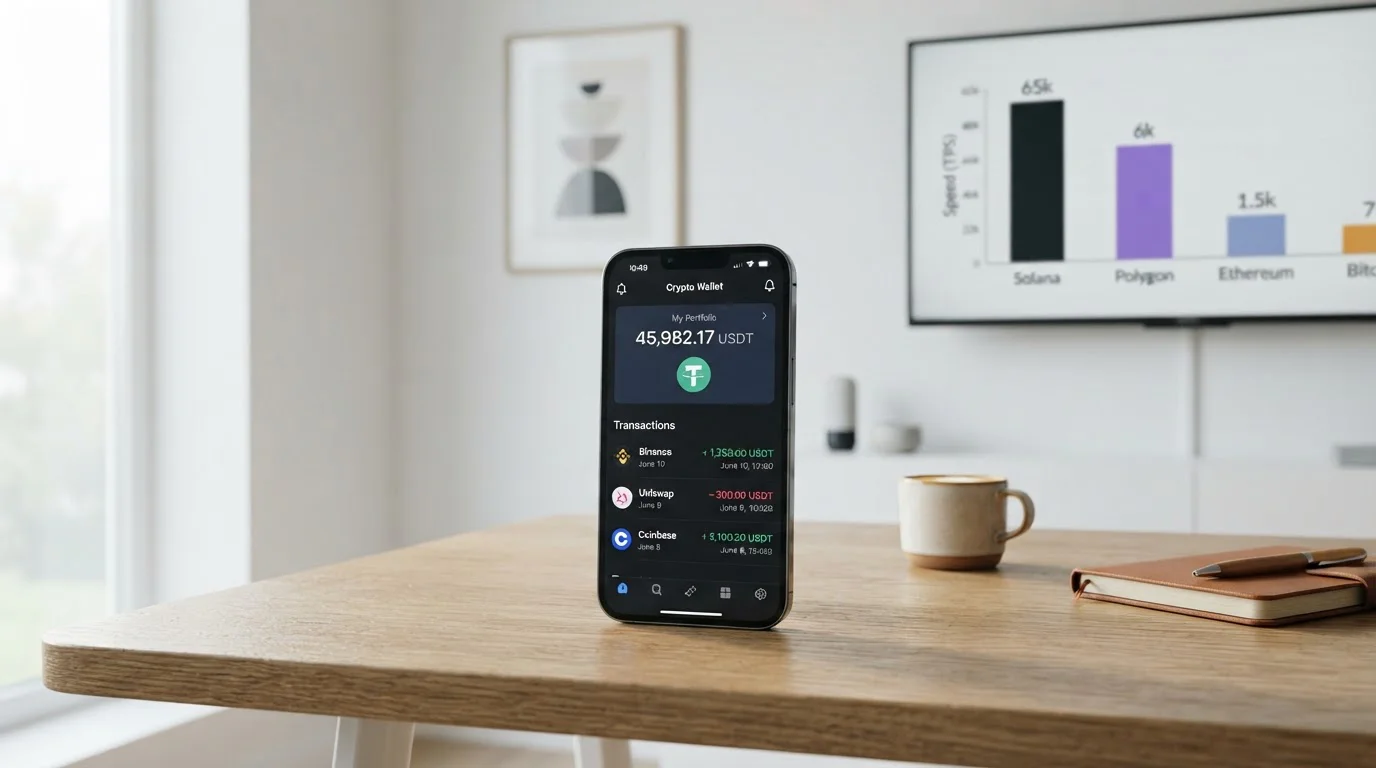
Payment method determines the ceiling for withdrawal speed, but the casino’s internal processing sets the floor. Crypto confirms in 5–60 minutes on the blockchain; e-wallets credit instantly once the casino sends funds; bank transfers take 3–7 days. The range exists because casinos vary wildly in how fast they approve cashouts after you click “withdraw.”
Tether (USDT) via Tron: 5–15 Minutes
Tether is a stablecoin pegged 1:1 to the US dollar. TRC-20 is the Tron blockchain implementation, chosen by most crypto casinos for its low fees and fast block times. Tron’s 3-second block time means network confirmation happens in 5–15 minutes, significantly faster than Bitcoin or Ethereum. Network fees run $1–$5, making it economical even for small withdrawals in the £20–£50 range.
USDT via Tron is the default choice at crypto-native casinos (Roobet, Gamdom, Rainbet) for players who want speed and price stability. You avoid Bitcoin’s price swings and Ethereum’s gas-fee unpredictability. The main risk is the wrong-network trap: Tether exists on multiple blockchains (Ethereum ERC-20, Binance Smart Chain BEP-20, Tron TRC-20). Sending USDT on ERC-20 to a TRC-20 address results in permanent loss of funds. Always verify the network before confirming a withdrawal.
Most casinos default to TRC-20 for USDT in 2026 because the cost and speed advantages are obvious. If your casino offers USDT but doesn’t specify the network, assume TRC-20 and double-check in the cashier before withdrawing.
Bitcoin (BTC): 20–60 Minutes
Bitcoin is the most widely accepted cryptocurrency at non-GamStop casinos, but not the fastest. Typical confirmation time is 20–60 minutes, depending on network congestion and the fee attached to the transaction. Bitcoin’s block time is approximately 10 minutes, and most casinos wait for 3–6 confirmations before crediting, which translates to 30–60 minutes.
Network fees vary from $1–$15 depending on mempool congestion. During high-activity periods (NFT mints, ordinals surges), fees can spike above $20. Miners prioritize higher-fee transactions, so a withdrawal with a low fee can sit unconfirmed for hours during busy periods. Most casinos pass the network fee to the player, either as a fixed deduction or by letting you choose the fee tier (higher fee, faster confirmation).
Bitcoin is best for large withdrawals where a $10 fee is negligible relative to the amount. For small cashouts (under £100), Tether via Tron or Litecoin are cheaper and faster. Bitcoin’s advantage is liquidity and universal acceptance — nearly every crypto-friendly casino supports it, and converting BTC to fiat on an exchange is straightforward.
Ethereum (ETH): 15–45 Minutes (Gas Fees Apply)
Ethereum’s block time is around 12 seconds, but casinos typically wait for 12–30 confirmations before crediting, which translates to 15–45 minutes. The speed is competitive, but gas fees make Ethereum uneconomical for small withdrawals. Network fees range from $2–$10 during low-activity periods to $20–$50 during high activity (NFT drops, DeFi surges).
Gas fees are denominated in gwei and fluctuate based on network demand. A small withdrawal (£50) during a high-gas period can lose 20–40% of its value to fees. Layer-2 solutions (Arbitrum, Optimism, Polygon) reduce fees to under $1, but casino adoption of Layer-2 remains low in 2026. Most operators support only mainnet Ethereum.
Ethereum is best for medium-to-large withdrawals (£200+) when the gas fee is proportionally small. Check current gas prices at etherscan.io before withdrawing. If gas is above 50 gwei, consider switching to Tether via Tron or waiting for network activity to drop.
Skrill: 1–24 Hours
Skrill is an e-wallet owned by Paysafe, widely accepted at non-GamStop casinos. Withdrawal speed is 1–24 hours post-casino approval. The range reflects casino internal review times, not Skrill’s processing speed. Once the casino sends funds to your Skrill wallet, the credit is near-instant (within minutes).
Most offshore operators don’t charge a withdrawal fee for Skrill. Skrill itself charges fees for withdrawing from the Skrill wallet to a bank account (typically 1–2% or a flat fee depending on the currency and method). Currency conversion within Skrill incurs a 3.99% markup if your wallet currency differs from the casino’s payout currency. Keep them aligned to avoid the conversion hit.
Skrill requires separate KYC (photo ID, proof of address) independent of the casino’s verification. Complete Skrill’s KYC before your first casino cashout to avoid double verification delays. If both the casino and Skrill request documents simultaneously, you’re looking at 48–96 hours before funds land in your wallet.
Skrill is faster than bank transfers, slower than crypto. It’s the standard e-wallet choice at non-GamStop casinos for players who don’t want to handle cryptocurrency.
Neteller: 1–24 Hours
Neteller is functionally identical to Skrill (both owned by Paysafe). Withdrawal time is 1–24 hours post-casino approval, with near-instant credit to the Neteller wallet once the casino processes the request. Most offshore operators don’t charge a Neteller withdrawal fee. Neteller itself charges fees for Neteller-to-bank withdrawals, and currency conversion incurs a 3.99% markup.
Complete Neteller’s KYC separately before your first casino cashout. Some players prefer Neteller over Skrill based on historic account setup or regional availability, but the processing speed and fee structures are interchangeable.
MiFinity: 1–24 Hours
MiFinity is an e-wallet with growing acceptance at non-GamStop casinos. Less established than Skrill or Neteller, but functionally similar. Withdrawal time is 1–24 hours post-casino approval, with the delay on the casino side rather than MiFinity’s processing.
Some casinos charge a small withdrawal fee for MiFinity (£1–£5), unlike Skrill or Neteller where fees are rare. MiFinity offers an eVoucher prepaid option for deposits, which some players use for an extra layer of separation from their bank account. MiFinity’s own fee structure for wallet-to-bank withdrawals varies by currency and method.
Lower brand recognition than the Paysafe duo, but similar speed. Growing acceptance at offshore operators in 2026 makes it a viable alternative if you already have a MiFinity account.
Bank Transfers and Cards: 3–7 Days
Bank transfers and card withdrawals are the slowest options at non-GamStop casinos. Typical processing time is 3–7 business days, with some operators stretching to 10 days for international bank wires. The delay is partly the banking system (SWIFT transfers take 3–5 days), partly the casino’s internal review (up to 72 hours before the transfer is sent).
Card withdrawals (Visa, Mastercard) can only be processed to the card used for deposit, and many UK banks block incoming transactions from offshore gambling operators. Bank transfers require sharing your IBAN and SWIFT code with a Curaçao or Anjouan-licensed entity, which some players avoid for privacy reasons.
If speed matters, avoid bank transfers and cards entirely. Use crypto or e-wallets. Bank transfers are acceptable only if you’re cashing out a large amount (£1,000+) and the multi-day wait is tolerable.
How fast are crypto withdrawals at non-GamStop casinos compared to e-wallets?
Crypto confirms in 5–60 minutes on the blockchain (Tether via Tron fastest at 5–15 min, Bitcoin slowest at 20–60 min), while e-wallets process in 1–24 hours post-casino approval. Crypto is faster once the casino sends the transaction, but both depend on the casino’s internal approval time. If the casino reviews withdrawals manually and the compliance team is offline, a crypto withdrawal can sit pending for 24 hours just like an e-wallet request. True instant withdrawals require automated casino approval, which is more common at crypto-native operators (Roobet, Gamdom, Rainbet) than e-wallet-focused sites.
Are Bitcoin or Tether (USDT) faster for casino withdrawals in 2026?
Tether via Tron is faster and cheaper. USDT/TRC-20 confirms in 5–15 minutes with $1–$5 network fees, while Bitcoin takes 20–60 minutes with $1–$15 fees (up to $20+ during congestion). Bitcoin has wider acceptance and higher liquidity, but Tether’s speed and price stability make it the default choice at crypto casinos in 2026. Use Bitcoin for large withdrawals where the fee is negligible; use Tether for speed and small-to-medium amounts.
| Payment Method | Typical Withdrawal Time | Common Fees | Typical Min. Withdrawal | Notes |
|---|---|---|---|---|
| Tether (USDT) via Tron | 5–15 minutes | $1–$5 network fee | $10–$20 | Fastest stablecoin; wrong-network risk (TRC-20 vs ERC-20) |
| Bitcoin (BTC) | 20–60 minutes | $1–$15 network fee | $10–$20 | Widest acceptance; fees spike during congestion |
| Ethereum (ETH) | 15–45 minutes | $2–$50 gas fee | $20–$50 | Fast but expensive; uneconomical for small amounts |
| Skrill | 1–24 hours | Usually none from casino | £10–£20 | Reflects casino review time; 3.99% FX markup |
| Neteller | 1–24 hours | Usually none from casino | £10–£20 | Identical to Skrill; same 3.99% FX fee |
| MiFinity | 1–24 hours | £0–£5 from some casinos | £10–£20 | Growing acceptance; some operators charge fee |
| Bank Transfer | 3–7 business days | £0–£25 depending on operator | £20–£100 | Slowest option; SWIFT delays apply |
| Visa/Mastercard | 3–7 business days | Usually none | £10–£20 | Only to card used for deposit; many UK banks block |
Non-GamStop Casinos with the Fastest Payouts

The operator matters as much as the payment method. A casino that advertises crypto withdrawals but routes every cashout through a 48-hour compliance review isn’t faster than a UKGC-licensed site. The operators below have verified fast payout reputations in 2026, based on third-party testing, licence registry checks, and published withdrawal policies.
Roobet: Curaçao-Licensed, Sub-1-Hour Crypto Payouts
Roobet operates under Curaçao licence OGL/2024/687/0427, issued December 24, 2025, listed as “Indefinite” on the Curaçao Gaming Authority register (last verified September 14, 2026). Legal entity is Raw Entertainment B.V., Curaçao company number 157205, registered office at Korporaalweg 10, Curaçao. A second entity, Raw Entertainment Ltd (Cyprus registration HE421735), handles fiat payments.
Founded in 2019, Roobet grew into one of the largest crypto casinos by reputation and track record. Game library includes 7,084 titles from 96 providers, plus 14 in-house “Originals” (Crash, Dice, Plinko, Mines, Towers). Sportsbook integrated with Polymarket prediction markets. Accepts 11 cryptocurrencies (Bitcoin, Ethereum, Litecoin, Bitcoin Cash, Dogecoin, Tether, Ripple, Tron, Binance Coin, Cardano, Polygon) plus Visa and Mastercard (1% fee on fiat deposits).
Roobet dropped its no-KYC policy and now requires full verification before any withdrawal. Photo ID, proof of address, and payment-method ownership must be submitted before you can cash out. Once KYC is complete, crypto withdrawals are stated as “instant,” with each deposit requiring 1x wagering before cashout (anti-money-laundering requirement). Minimum withdrawal is $10, no monthly limit for crypto. Terms allow Roobet to freeze accounts and balances at its discretion, a standard clause in offshore licences but worth noting.
Withdrawal speed reputation is strong: once KYC is complete, crypto payouts process in under 1 hour. The bottleneck is the initial verification, which can take 24–72 hours. Complete KYC immediately after registration if Roobet allows it, or treat your first small cashout as a trust test.
Blocks 35 countries and territories including UK, US, Netherlands, Germany, and France. Roobet accepts UK players despite the block, enforcing it inconsistently through IP checks that VPN use bypasses. The regulatory risk is the operator’s, not the player’s, but account closure and balance forfeiture are possible if Roobet detects a blocked jurisdiction after the fact.
Gamdom: Instant to 30 Minutes, Pick-Your-Fee Speed
Gamdom holds an Anjouan Gaming Authority licence. Licence number not published on site. Anjouan is the lightest-touch regulator among common offshore jurisdictions, with minimal consumer protection and limited enforcement history. The Comoros central bank has stated that some bodies issuing Anjouan gaming licences have no legal existence under Comoros law. Gamdom’s operational track record (founded early 2010s) is longer than most crypto casinos, which provides some trust signal despite the weak licensing.
Crypto-only deposits and withdrawals. Supports Bitcoin, Ethereum, Litecoin, USDT, and other major coins. Game library includes provably fair originals (Crash, Dice, Roulette) and slots from third-party providers. Sportsbook covers major leagues and esports. No fiat payment methods accepted.
Withdrawal speed is stated as “instant to 30 minutes” for crypto, with tested payouts often clearing in under 5 minutes in practice. Gamdom offers a pick-your-fee-speed option: pay a higher network fee for faster blockchain confirmation, or choose a lower fee and wait longer. Most players withdraw without KYC, but large amounts (threshold not published) trigger verification requests. The no-KYC claim is real for small-to-medium cashouts, but don’t assume it applies to withdrawals above £1,000.
Trust score is 4.4/10 within its licensing class (Anjouan), which is not comparable to UKGC or MGA scores. The score reflects Anjouan’s minimal oversight, not Gamdom’s operational history. Near-4-star Trustpilot rating based on user reviews. The main risk is the wrong-network trap: sending crypto on an incompatible network (e.g., USDT on ERC-20 to a TRC-20 address) results in permanent loss of funds. Gamdom cannot recover cross-network errors.
Rainbet: 5–15 Minutes, No-KYC Claimed
Rainbet launched in 2023 and grew rapidly to become the #4 crypto casino by deposit volume ($320 million in 30 days to October 2, 2026, per Tanzanite data). Licensed under Curaçao, but the specific licence number is not published on the site or in available third-party reviews as of October 2026. Short track record (founded 2023) is the main risk — the casino hasn’t weathered a full economic cycle or regulatory crackdown.
Game library includes 2,000+ titles: provably fair originals (Crash, Dice, Mines, Plinko) and slots from providers like Pragmatic Play, Hacksaw Gaming. Live dealer tables powered by Evolution. Sportsbook covers major leagues and esports. Accepts Bitcoin, Ethereum, Litecoin, Tron, Ripple, USDT, USDC, and other cryptocurrencies. No fiat payment methods.
Rainbet advertises no KYC requirement for deposits or withdrawals, though it reserves the right to request verification for suspected fraud. Withdrawal processing time is not published on the site (help pages were unreachable during September 2026 testing). Third-party reports cite 5–15 minutes for crypto after cashier approval, with some reports stretching to 2–6 hours. The variance suggests that Rainbet’s “instant” claim depends on manual review queues that aren’t always staffed.
Provably fair games use hash verification (HMAC-SHA256 similar to Stake’s format), but the exact byte-for-byte formula has not been independently verified. Clean, modern UI built for crypto-native players. $320 million deposit volume in 30 days to October 2, 2026 (up 9% on prior 30 days), with 1.08 million deposits and an average deposit of $297.
Duelz: MGA-Licensed, 6-Minute E-Wallet Verified
Duelz launched in 2019 and operates under Malta Gaming Authority licence 39358. Also holds a UK Gambling Commission remote operating licence for the British market. The UK version participates in GamStop by regulatory requirement; the non-GamStop variant is the .com domain operating under the MGA licence only. For UK players accessing via the MGA-licensed entity, Duelz is technically “non-GamStop” because it doesn’t query the GamStop database under the MGA framework.
Game library includes 2,000+ titles from major providers. Distinguishing feature is the gamified “duel” loyalty system: players compete in timed challenges on specific slots, with leaderboard prizes. Weekly cashback offered based on activity. E-wallet and card withdrawals available, plus bank transfers.
Published withdrawal targets are 0–24 hours for e-wallets, up to 5 working days for bank transfers. Third-party reviews cite verified 6-minute payouts for Skrill and Neteller once the pending period is complete. The MGA licence requires fund segregation (player funds held in separate accounts from operational funds) and offers functional ADR (alternative dispute resolution) through an independent panel. Better player protection than Curaçao or Anjouan operators.
The dual-licence structure (MGA + UKGC) means Duelz offers some regulatory safeguards that pure offshore casinos don’t. If a withdrawal dispute arises, you have recourse through the MGA’s complaints process, which has enforcement teeth. The trade-off is that Duelz enforces stricter affordability checks and source-of-funds reviews than Curaçao casinos, which can delay large withdrawals.
Mystake: 24–72 Hours General, Crypto Faster
Mystake operates under a Curaçao licence (exact number not published in readily available reviews as of 2026). Not UKGC-licensed, so not on GamStop. Legal entity details are not prominently disclosed on the site. Domain is mystake.com.
Game library includes 6,600+ titles from major providers. Sportsbook integrated. Accepts crypto (Bitcoin, Ethereum, Litecoin, USDT, and others) plus some e-wallets. 300% welcome bonus advertised, though high wagering requirements (likely 50x–60x) make clearing impractical for most players. Withdrawal limits around €10,000 per transaction, with monthly caps varying by account tier and payment method.
Stated withdrawal time is 24–72 hours in general, with crypto processing faster than that range. KYC requirements vary: smaller withdrawals (under £500–£1,000) may not trigger verification, but larger amounts do. The 24–72 hour window reflects internal compliance review rather than payment-method speed. Crypto should confirm in under 1 hour once Mystake sends the transaction, but the casino’s approval time pushes total cashout time to the multi-day range.
Curaçao licence means no UKGC oversight, so no IBAS dispute resolution for UK players. If a withdrawal is refused or delayed beyond the stated timeframe, your recourse is the Curaçao Gaming Authority’s dispute panel, which has limited enforcement capacity. The large game library (6,600+) and sportsbook make Mystake a one-stop shop, but the slower withdrawal processing compared to Roobet or Gamdom is the trade-off.
NineWin: Anjouan-Licensed, Under 24 Hours E-Wallets
NineWin operates under an Anjouan Gaming Authority licence. Anjouan licensing is described as a “lightweight registration system” with minimal consumer protection and limited enforcement. The Comoros central bank has publicly stated that some bodies issuing Anjouan gaming licences have no legal existence under Comoros law. The 2026 Anjouan reform introduced mandatory provably fair audits and a public register, but enforcement remains minimal.
Game library includes slots and live dealer options from major providers. Withdrawal methods include e-wallets, crypto, and bank transfers. Expected withdrawal time is under 24 hours for e-wallets and crypto, up to 7 business days for bank transfers. Internal casino processing window can stretch to 72 hours before the payment is sent, so “under 24 hours” applies to repeat withdrawals after KYC is complete, not first cashouts.
Rated 7.30/10 by CasinoTest24, described as a “good casino to play at.” That score does not account for the weak Anjouan licensing. Minimum withdrawal and fee structures vary by payment method (not published in available reviews). The Anjouan licence is the weakest regulatory tier among common non-GamStop casinos. If a withdrawal dispute arises, expect minimal recourse.
| Operator | Licence | Withdrawal Speed | Min. Deposit | Distinguishing Feature |
|---|---|---|---|---|
| Roobet | Curaçao OGL/2024/687/0427 | Instant (crypto, post-KYC) | $10 | 7,084 games, 14 Originals, now requires full KYC |
| Gamdom | Anjouan | Instant to 30 min (crypto) | Varies by coin | Founded early 2010s, pick-your-fee speed, no KYC for small amounts |
| Rainbet | Curaçao | 5–15 min claimed (crypto) | Varies by coin | #4 crypto casino by volume, no-KYC claimed, founded 2023 |
| Duelz | MGA 39358 | 0–24 hours (6 min verified, e-wallets) | £10 | Gamified duel system, MGA fund segregation, better protection |
| Mystake | Curaçao | 24–72 hours (crypto faster) | €10 | 6,600+ games, sportsbook, €10k per-transaction limit |
| NineWin | Anjouan | Under 24 hours (e-wallets/crypto) | £10 | Anjouan licensing (minimal oversight), up to 72-hour internal review |
What You Lose by Playing Outside the UKGC Framework
The speed advantage comes with a regulatory trade-off. UKGC-licensed casinos operate under strict consumer protections mandated by the Gambling Act 2005 and enforced by the UK Gambling Commission. Non-GamStop casinos operate under offshore licences (Curaçao, Malta, Anjouan) with weaker or non-existent player protections. The gap matters most when a withdrawal is refused or an operator shuts down.
No Segregated Player Funds
UKGC-licensed operators must hold player funds in separate bank accounts, segregated from operational funds. If the casino goes bankrupt, player balances are protected and paid out before creditors. Curaçao and Anjouan licences do not mandate fund segregation. If a Curaçao-licensed casino folds, your balance may be treated as an unsecured creditor claim, ranking behind secured debt. Malta Gaming Authority licences do require fund segregation, so MGA-licensed operators (like Duelz) offer this protection even outside the UKGC framework.
In practice, this means: if you have £5,000 in your account at a Curaçao casino and the operator declares insolvency, you’re competing with other unsecured creditors for whatever assets remain. At a UKGC-licensed casino, the £5,000 sits in a segregated account and you’re paid out in full.
No IBAS Dispute Resolution
The Independent Betting Adjudication Service (IBAS) is the UK’s free ADR for gambling disputes. UKGC-licensed operators must offer IBAS or an equivalent approved ADR scheme. If a UKGC casino refuses a withdrawal, you file a complaint with IBAS, which investigates and issues a binding decision. IBAS sided with players in 42% of cases in 2025 (latest published data).
Non-GamStop casinos are not required to offer IBAS. Dispute resolution routes through the licensing authority’s panel (Curaçao Gaming Authority, Anjouan Gaming Authority, or Malta Gaming Authority for MGA licensees). Curaçao’s dispute process exists on paper but has limited enforcement capacity. Anjouan’s is essentially non-functional. MGA’s ADR process has teeth and is closer to IBAS in effectiveness.
If a Curaçao casino refuses your withdrawal and the licensing authority sides with the operator or simply doesn’t respond, your only recourse is public complaints on forums (AskGamblers, Trustpilot, Reddit) and chargebacks if you used a credit card (which most offshore casinos don’t accept for this reason). UKGC-licensed casinos can be fined or have their licence revoked for ignoring IBAS rulings. Curaçao casinos face no equivalent enforcement.
Curaçao vs Anjouan vs Malta: Licensing Quality Comparison
Curaçao Gaming Authority (CGA): Most common offshore licence for non-GamStop casinos. The licensing system transitioned in 2024 under the LOK reform. Current licences are alphanumeric (e.g., OGL/2024/687/0427). A public register exists, but enforcement is minimal. No mandatory fund segregation, no mandatory RTP/RNG audits, no spin-speed limits. ADR routes through the licensing authority’s panel, which rarely issues binding decisions against operators. Curaçao is a step above unlicensed, but several steps below UKGC or MGA.
Anjouan Gaming Authority: The weakest regulatory tier. Anjouan is an autonomous island within Comoros, and its gaming licensing system has been described as “legally grey” even by the Comoros central bank. No published player-protection standards, no enforcement history, no functional dispute resolution. The 2026 reform introduced mandatory provably fair audits and a public register, but enforcement remains minimal. Operators choose Anjouan because it’s cheap and asks no questions. If an Anjouan-licensed casino refuses a withdrawal, expect zero regulatory help.
Malta Gaming Authority (MGA): Stricter than Curaçao and Anjouan. Mandatory fund segregation, functional ADR process, published RTP/RNG audit requirements. Some MGA-licensed operators serve UK players under their MGA licence (not UKGC), making them technically “non-GamStop” but with better player protections. Duelz is the clearest example: MGA licence 39358 provides fund segregation and ADR, even though the casino doesn’t query GamStop. MGA licensing is closer to UKGC standards than to Curaçao.
What Happens If a Withdrawal Is Refused
At a UKGC-licensed casino: file a complaint with the operator’s customer service, escalate to the casino’s internal complaints team if unresolved, then escalate to IBAS if still unresolved. IBAS investigates and issues a binding decision within 6–8 weeks. The casino must comply or face UKGC sanctions.
At a non-GamStop casino: file a complaint with the operator’s support, escalate to the licensing authority if unresolved. Curaçao and Anjouan licensing authorities rarely respond or issue binding decisions. MGA may investigate if the complaint is substantiated. If the licensing authority doesn’t help, your options are public complaints on third-party forums (AskGamblers, Casinomeister, Reddit) to damage the operator’s reputation, or legal action (expensive and rarely practical for amounts under £10,000).
The practical outcome: UKGC-licensed casinos resolve disputes through a structured, enforced process. Non-GamStop casinos resolve disputes only when they choose to, or when public pressure forces them. Operator reputation matters more in the offshore market than regulatory oversight.
What’s the difference between Curaçao, Malta, and Anjouan licensing for offshore casinos?
Curaçao is the most common offshore licence, with minimal player protection and weak enforcement. Anjouan is the weakest tier, described as legally grey with no functional dispute resolution. Malta (MGA) is the strictest, requiring fund segregation and offering functional ADR closer to UKGC standards. MGA-licensed casinos are safer than Curaçao or Anjouan, even when operating outside the UKGC framework. Choose MGA-licensed operators (like Duelz) if player protection matters; accept Curaçao or Anjouan only if you’re comfortable with minimal regulatory recourse.
What happens if a non-GamStop casino refuses to pay my withdrawal?
File a complaint with the operator’s customer service and escalate to the licensing authority (Curaçao, Anjouan, or Malta) if unresolved. Curaçao and Anjouan rarely issue binding decisions against operators; MGA has functional enforcement. If the licensing authority doesn’t help, post detailed complaints on AskGamblers, Trustpilot, and Reddit to damage the operator’s reputation. Legal action is possible but expensive and rarely practical for amounts under £10,000. The key difference from UKGC casinos: no IBAS, no structured enforcement, and resolution depends on operator reputation rather than regulatory pressure.
What player protections do I lose by using a casino not on GamStop instead of a UKGC-licensed site?
You lose segregated player funds (your balance isn’t protected if the casino folds), IBAS dispute resolution (no free, binding ADR), mandatory RTP/RNG audits (game fairness is operator-claimed, not independently verified), spin-speed limits (UKGC mandates 2.5-second minimum, offshore sites have none), autoplay bans on slots (UKGC banned it, offshore sites allow it), credit-card deposit blocks (UKGC banned them to prevent debt gambling, offshore sites accept them), and the 10x wagering cap on bonuses (UKGC mandates it since January 2026, offshore sites run 50x–60x). You also lose GamStop self-exclusion access and any regulatory recourse through the UK Gambling Commission.
Common Withdrawal Problems and How to Avoid Them

Even at reputable non-GamStop casinos, withdrawal failures happen. Most are preventable with basic diligence. The four most common traps: wrong-network crypto errors, payment-method mismatches, bonus-term lockouts, and document requests after the cashout.
Wrong-network trap for crypto: Tether (USDT) exists on multiple blockchains: Ethereum (ERC-20), Binance Smart Chain (BEP-20), Tron (TRC-20), Polygon, Avalanche, and others. Sending USDT on ERC-20 to a TRC-20 address results in permanent loss of funds. The transaction completes on the blockchain you sent from, but the receiving address doesn’t exist on that blockchain, so the funds are unrecoverable. Casinos cannot reverse or recover cross-network errors. Always verify the network before confirming a crypto withdrawal. Most casinos default to TRC-20 for USDT in 2026 because of Tron’s low fees, but double-check in the cashier. The same trap applies to other multi-chain coins (USDC, Wrapped Bitcoin, bridged tokens).
Payment-method mismatch: Most casinos require you to withdraw using the same payment method you deposited with (anti-money-laundering rule). Depositing with card A and trying to withdraw to card B triggers a delay while the casino requests proof of ownership for both cards. Depositing with Skrill and trying to withdraw via Bitcoin requires the casino to process the Skrill deposit as a closed loop first (withdraw back to Skrill up to the deposit amount), then allow the Bitcoin withdrawal for anything above that. If you plan to withdraw via crypto, deposit via crypto. If you deposited with an e-wallet, withdraw to that same e-wallet.
Bonus-term traps: Active bonus funds lock withdrawals until wagering is complete. If you accept a 100% match bonus with 50x wagering on a £100 deposit, you must stake £10,000 before cashout becomes possible. Game exclusions (table games contribute 10% or not at all) make clearing impractical. Forfeiting the bonus mid-play voids any winnings generated while the bonus was active at some casinos; others allow you to forfeit the bonus and keep winnings from your real-money balance. Read the terms before accepting a bonus. If you want fast withdrawals, deposit without a bonus and accept the 1x wagering requirement (deposit amount staked once) instead of 50x–60x bonus wagering.
Document requests after cashout: Some casinos let you deposit and play without KYC, then request documents only when you try to withdraw. If you’ve already played through your balance and won, the verification delay (24–72 hours) is tolerable. If you deposited £1,000, won £5,000, and the casino requests documents, you’re locked out of your funds until verification clears. Complete KYC before depositing if the casino allows it (most don’t), or make a small test withdrawal (£20–£50) immediately after your first deposit to trigger verification early. The small withdrawal confirms the casino will pay, and KYC is complete before you play serious money.
Why do some non-GamStop casinos hold withdrawals in “pending” status for 24 hours?
Pending periods are a retention mechanism, not a compliance requirement. The casino holds your withdrawal in a cancellable state for 24 hours, allowing you to reverse the cashout and return funds to your balance. UKGC-licensed sites cannot delay withdrawals by requesting documents they could have asked for earlier; offshore sites have no such restriction. Some operators let you opt out of the pending period in account settings or by contacting support. If a casino advertises instant crypto withdrawals but every cashout sits pending for 24 hours, that’s policy friction designed to tempt you back into play, not blockchain delay.
Game Selection at Non-GamStop Casinos
Game libraries at non-GamStop casinos often exceed what UKGC-licensed operators offer, because offshore licences don’t restrict which providers or game types can be offered. Slots from major providers (Pragmatic Play, NetEnt, Play’n GO, Hacksaw Gaming, Nolimit City) appear at both UKGC and offshore sites. Provably fair originals (Crash, Dice, Plinko, Mines) are exclusive to crypto casinos like Roobet, Gamdom, and Rainbet, because UKGC doesn’t recognise blockchain-based RNG verification.
Live dealer games from Evolution, Ezugi, and Pragmatic Live are widely available at non-GamStop casinos, often with higher table limits than UKGC sites (which cap maximum stakes to comply with safer-gambling rules). If you’re chasing high-limit baccarat or roulette, offshore operators offer £10,000–£50,000 per hand versus £1,000–£5,000 caps at UKGC casinos.
The trade-off: UKGC-licensed casinos must use independently audited RNG systems and publish RTP verification. Non-GamStop casinos claim RTP compliance but aren’t subject to mandatory third-party audits (except MGA licensees). Provably fair games let you verify individual outcomes using blockchain hashes, but the overall RTP is operator-stated rather than independently certified.
Bonuses and Wagering Requirements
Non-GamStop casinos advertise larger bonuses than UKGC-licensed sites: 300% matches, 500 free spins, £5,000 welcome packages. The wagering requirements are proportionally higher. UKGC-licensed sites are capped at 10x wagering since January 2026 (a £100 bonus requires £1,000 in stakes to clear). Offshore casinos run 40x–60x wagering as standard, with game exclusions that make clearing difficult.
A 300% match on a £100 deposit gives you £400 total balance (£100 real money + £300 bonus). At 50x wagering, you must stake £15,000 (50 × £300 bonus) before you can withdraw. Slots contribute 100%, table games contribute 10% or are excluded entirely. If you play £100 in blackjack, only £10 counts toward wagering. Clearing £15,000 in slot stakes at £1 per spin takes 15,000 spins. House edge on slots is typically 4–6%, so expected loss over 15,000 spins at £1 each is £600–£900. The £300 bonus costs you £600–£900 in expected losses to clear, making it a negative-value proposition unless variance works heavily in your favour.
The counter-argument: bonuses extend playtime and provide more spins per pound deposited. If entertainment value is the goal rather than profit expectation, high-wagering bonuses deliver more play. If fast withdrawals are the goal, deposit without a bonus and accept the 1x wagering requirement instead.
Offshore bonuses also lock funds during wagering. You cannot withdraw real-money winnings while bonus wagering is incomplete at most casinos. UKGC sites must separate real-money and bonus funds in the balance display and let you withdraw real-money winnings at any time (forfeiting the bonus). Offshore sites mix the balances and block all withdrawals until wagering is complete.
New Casinos Not on GamStop in 2026
New offshore casinos launch monthly, typically on Curaçao licences. Rainbet (founded 2023) is the most prominent recent entrant, reaching #4 crypto casino by volume within three years. Other new launches in 2024–2026 include sites built on white-label platforms (SoftSwiss, EveryMatrix) with rebranded game libraries and similar bonus structures.
The risk with new casinos: no operational track record. A casino founded in 2025 hasn’t faced a major withdrawal surge, a regulatory crackdown, or a payment-processor exit. Established operators (Roobet since 2019, Gamdom since early 2010s) have survived multiple cycles. New entrants may offer competitive bonuses and clean UIs, but trust is unproven.
If you test a new non-GamStop casino, limit the first deposit to an amount you’re comfortable losing entirely (£50–£100), withdraw a small amount (£20) immediately to confirm the casino pays, and escalate deposits only after the first cashout clears. Treat the first withdrawal as a trust test, not a profit expectation.
Responsible Gambling Without GamStop
GamStop exists because self-exclusion works. Over 450,000 UK residents have registered since 2018, blocking themselves from all UKGC-licensed operators for 6 months, 1 year, or 5 years. Non-GamStop casinos bypass this by operating outside UKGC jurisdiction. That’s the entire point for some players, and a trap for others.
If you used GamStop because you needed a hard break from gambling and you’re now considering non-GamStop casinos as a workaround, the underlying problem hasn’t changed. Offshore operators have weaker or non-existent self-exclusion tools. Some offer account closure or cooling-off periods, but enforcement is voluntary. You can request self-exclusion from one Curaçao casino and sign up at another minutes later — there’s no shared database.
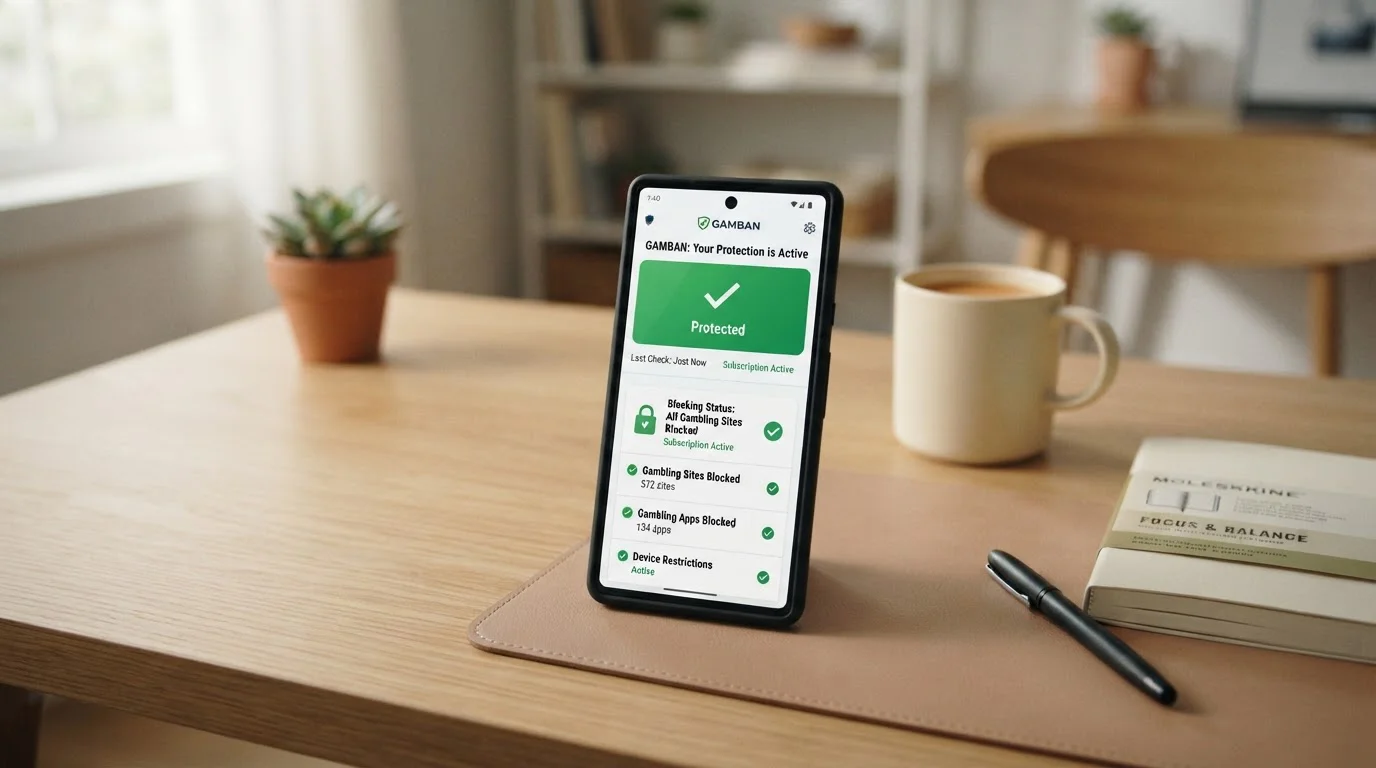
Alternative self-exclusion tools: GAMBAN (third-party software that blocks gambling sites across all devices, £24.99/year), BetBlocker (free, open-source site blocker), and bank-level gambling blocks (most UK banks let you block gambling transactions in their app). These tools work across UKGC and non-GamStop sites, unlike GamStop which only covers UKGC licensees.
If you’re using non-GamStop casinos because UKGC affordability checks or deposit limits felt intrusive, that’s a regulatory trade-off you’re choosing consciously. If you’re using them to bypass GamStop self-exclusion, consider whether the speed and access advantage is worth losing the safety net. Offshore casinos won’t stop you from playing when you’ve asked them to — because they don’t have to.
Can I use Skrill or Neteller at casinos not on GamStop?
Yes. Skrill and Neteller are widely accepted at non-GamStop casinos, often with no withdrawal fee from the casino. Both are owned by Paysafe and functionally interchangeable. Withdrawal time is 1–24 hours post-casino approval, with the delay on the casino side rather than the e-wallet provider. Complete Skrill or Neteller KYC separately before your first casino cashout to avoid double verification delays. Currency conversion within the e-wallet incurs a 3.99% markup if your wallet currency differs from the casino’s payout currency.
Fast Withdrawal Casinos UK 2026 — Quick Payouts Compared
Content created by the «casinomoneyg» team