
UK Crypto Casino No KYC 2026: Offshore Options After Stake's Exit
 Available in US
Crypto casinos promised UK players something traditional sites couldn’t deliver: deposits in Bitcoin, withdrawals in minutes, and sign-ups without uploading a passport scan. That promise held until March 2025, when Stake.com—the largest crypto casino serving British players—shut UK access after a UK Gambling Commission investigation. Roobet, Shuffle, Gamdom, Cloudbet, Rainbet, Bitstarz, Winna, Thrill, and Duel followed within months, geo-blocking the UK explicitly in their terms.
What remains is a smaller field of offshore operators that still accept UK sign-ups, none holding a UKGC licence, all operating under Curaçao or Anjouan permits. This guide maps which crypto casinos still work for UK players in 2026, what “no KYC” actually means when you try to withdraw, and what you lose by stepping outside UKGC regulation. The choice isn’t between legal and illegal—it’s between offshore convenience and onshore protection. Both routes exist; neither is perfect.
BC.Game, Jack.com, and Lucky Block are the three names appearing in every UK crypto casino ranking post-Stake. One survived a bankruptcy and an operator change. One rebranded in May 2026 after four years under a different name. One built its model around a native casino token nobody asked for. Each offers no-KYC sign-ups; each reserves the right to freeze your withdrawal and demand documents the moment their risk system flags your account. The UKGC-licensed hybrid route—crypto to Skrill, Skrill to GBP, GBP to a licensed casino—exists for players who want regulatory cover without giving up digital currency entirely.
What Are Crypto Casinos and Why UK Players Use Them
A crypto casino is an online gambling platform that accepts cryptocurrency for deposits and withdrawals, typically bypassing traditional banking rails and Know Your Customer checks at sign-up. You send Bitcoin or USDT from your wallet to a casino-provided address; the transaction settles on-chain within minutes; your balance updates. Withdrawals reverse the process. No card networks, no bank delays, no Faster Payments hold for manual review.
UK players turn to offshore crypto casinos for three reasons, in descending order of honesty. Speed: a Bitcoin withdrawal clears in ten minutes vs three working days for a UKGC-licensed debit-card payout. Privacy: no passport upload at registration, no source-of-funds interrogation until you hit a withdrawal threshold the site won’t name upfront. GamStop bypass: self-excluded at every UK-licensed operator, but offshore sites don’t check the national register because they’re not required to.
Crypto casinos operate on blockchain transactions, which are pseudonymous—your wallet address is visible, your legal name is not. This creates friction with UK regulation, which requires licensed operators to verify identity, monitor suspicious activity, and file reports with the National Crime Agency. The UK Gambling Commission has never formally banned cryptocurrency gambling, but its licence conditions on anti-money laundering compliance are, in the Commission’s own interpretation, incompatible with letting players deposit and withdraw pseudonymously at scale. So no UKGC licensee accepts crypto directly, and every crypto casino serving UK players does so from outside UKGC jurisdiction.
The blockchain layer makes transactions traceable in a technical sense—every send is recorded on a public ledger—but enforcement is reactive, not preventative. If a casino withholds your withdrawal, you can prove you sent funds and prove the casino received them, but you cannot force the casino to return them unless a court with jurisdiction over that casino orders it. Curaçao and Anjouan licences give you a complaints mailbox; they do not give you a UK-enforceable remedy.
How crypto casinos work
You register with an email address or a wallet connection. Some sites skip email entirely and generate an account from your Web3 wallet signature. The casino provides a deposit address for each supported coin; you send funds from your personal wallet; the transaction confirms on-chain; the casino credits your balance in the same coin or converts it to a house denomination like USDT. Games run in crypto or in a fiat-equivalent toggle—slots spin in dollars or euros, but your balance behind the scenes is stablecoin.
Withdrawals require you to provide a destination wallet address. The casino processes the request internally—this is where KYC can be triggered—then broadcasts a transaction to the blockchain. Settlement speed depends on the coin: Bitcoin averages ten minutes per confirmation, Ethereum twelve seconds, TRON three seconds. “Instant withdrawal” marketing means the casino approves your request instantly, not that the blockchain confirms instantly, though the distinction is rarely explained.
Provably fair technology is the other recurring pitch. Each game result is generated by a cryptographic algorithm whose seed values you can verify after the spin. The idea: you don’t have to trust the casino’s word that the RNG is fair; you can independently check the maths. In practice this is a step up from blind trust but a step down from independent third-party RNG certification, which UKGC-licensed operators must obtain from accredited testing labs. A provably fair hash proves the result wasn’t tampered with after the fact; it doesn’t prove the game’s payout structure or return-to-player percentage is correctly implemented.
Why UK players turn to offshore crypto casinos
The first reason is speed, and it’s legitimate. A UKGC-licensed casino pays withdrawals to e-wallets in under six hours on a verified account, but debit-card payouts take three to five working days. Crypto casinos process Bitcoin in thirteen minutes on average for Jack.com, potentially faster at BC.Game if you’re past the first-withdrawal verification gate. For players who’ve already passed KYC, offshore crypto is measurably faster than onshore fiat. For players who haven’t, the comparison is misleading—your first crypto withdrawal waits on document review just like your first UKGC payout.
The second reason is privacy, which breaks into two camps. One camp values pseudonymity as a principle: they don’t want their legal name tied to a gambling transaction, full stop. The other camp is evading affordability checks, source-of-funds interrogation, or a self-exclusion they now regret. Crypto casinos accommodate both; they don’t ask which camp you’re in when you sign up with a wallet address and an anonymous handle.
The third reason is regulatory arbitrage. A player banned at every UKGC site can still deposit at BC.Game, because BC.Game isn’t checking UKGC registers and isn’t obliged to. A player whose bank blocks gambling transactions can fund a Coinbase account, buy USDT, and send it to an offshore casino the bank never sees. These are real use cases; they’re also the ones UKGC enforcement targets when it investigates unlicensed operators reaching UK customers.
What is a crypto casino?
A crypto casino is an offshore gambling site licensed in a jurisdiction with lighter regulatory requirements than the UK—typically Curaçao or Anjouan—that accepts cryptocurrency for deposits and withdrawals and markets itself on speed, privacy, and minimal verification at sign-up. “Crypto casino” doesn’t mean unregulated; it means regulated elsewhere, under a framework that permits pseudonymous blockchain payments and risk-based KYC rather than universal identity checks upfront.
The defining feature isn’t the coins accepted—plenty of offshore casinos take both crypto and fiat—but the operational model: sign up in seconds, deposit without a bank, withdraw to your wallet, and deal with verification only if the site’s risk system flags you. That model is structurally incompatible with UKGC licensing, which is why every crypto casino open to UK players operates from outside UK jurisdiction and why none appear on the Commission’s public register of licensed operators.

The UK Legal Reality: No UKGC Licences, Offshore Only
The UK Gambling Commission has never issued an operating licence to a purely crypto-based casino. As of 2026, zero UKGC licensees accept Bitcoin, Ethereum, USDT, or any other cryptocurrency for direct deposits or withdrawals. The regulatory position is clear: any operator offering real-money gambling to UK residents must hold a UKGC licence under the Gambling Act 2005 and the Gambling (Licensing and Advertising) Act 2014, regardless of payment method. Cryptocurrency doesn’t create an exemption; it creates a compliance obstacle the Commission has not resolved.
The obstacle is structural, not political. UKGC licence conditions require operators to verify customer identity, monitor transactions for suspicious activity, assess affordability, enforce deposit limits, integrate with the national GamStop self-exclusion register, and maintain segregated player funds with quarterly attestation. Pseudonymous blockchain payments and volatile crypto balances make several of these requirements difficult to implement and impossible to audit in real time. The Commission could, in theory, carve out stablecoins or mandate fiat-equivalent accounting; it has not. Industry lobbying for a stablecoin framework has produced no formal consultation as of October 2026.
Why the UKGC doesn’t licence crypto casinos
The Commission’s position rests on three pillars: anti-money laundering compliance, consumer protection, and operational oversight. On AML, licensed operators must verify the source of funds for deposits above certain thresholds, file Suspicious Activity Reports with the National Crime Agency, and demonstrate that player funds are legitimate. Crypto transactions are blockchain-traceable but pseudonymous—you can see a wallet address sent £10,000 worth of Bitcoin, but you can’t see who controls that wallet without off-chain identity linking. That linking happens at the exchange where the player buys crypto, but the casino doesn’t see it unless the player voluntarily discloses it, and enforcement agencies can’t compel production of records from offshore casinos in uncooperative jurisdictions.
Consumer protection requires segregated funds, dispute resolution through an approved Alternative Dispute Resolution provider, and enforceable remedies when an operator withholds a withdrawal. Offshore crypto casinos hold Curaçao or Anjouan licences, which mandate basic operational standards but lack the enforcement mechanism the UKGC wields. If a UKGC licensee freezes your account without cause, you escalate to IBAS, and IBAS can rule in your favour and compel the operator to pay or face licence suspension. If a Curaçao licensee freezes your account, you file a complaint with the licensing authority, which may or may not respond, and even if it rules in your favour, enforcement depends on the operator’s voluntary compliance or a court action in the operator’s home jurisdiction.
Operational oversight means the Commission can audit an operator’s systems, review game logs, test RNG implementations, and suspend a licence on 24 hours’ notice if safeguarding concerns emerge. That oversight requires the operator to maintain a UK-accessible corporate structure, hold funds in UK or EU-regulated banks, and submit to UK legal jurisdiction. Offshore crypto casinos do none of those things by design. They’re incorporated in jurisdictions chosen specifically for regulatory distance, they hold funds in blockchain wallets or Curaçao-banked accounts beyond UK court reach, and they exit the UK market entirely rather than submit to UKGC investigation—exactly what Stake did in March 2025.
What you lose by going offshore
You lose mandatory GamStop integration. Every UKGC licensee checks the national self-exclusion register before allowing a deposit; offshore casinos don’t because they’re not required to and because checking would expose them to UK enforcement. If you’ve self-excluded for gambling harm and later regret it, an offshore casino will take your money without hesitation. That’s not a feature; it’s a safeguarding failure.
You lose affordability checks and source-of-funds scrutiny. UKGC operators must assess whether your gambling is sustainable relative to your income and must ask for evidence of fund sources when deposits spike. Offshore casinos run no such checks until you trigger a withdrawal-verification threshold, at which point they may ask for documents, but they’re checking your identity, not your affordability. You can lose more than you can afford at an offshore site without the operator ever intervening.
You lose enforceable dispute resolution. If a UKGC casino withholds your withdrawal, you escalate through customer support, then to an ADR provider like IBAS or IBAS equivalent, who will investigate and issue a binding ruling the operator must honour or lose its licence. If an offshore casino withholds your withdrawal, you file a complaint with its Curaçao or Anjouan licensing authority, wait weeks or months for a response that may never arrive, and discover that even a favourable ruling is unenforceable unless the operator voluntarily complies. Your recourse is a lawsuit in the casino’s home jurisdiction—prohibitively expensive and uncertain.
You lose player fund protection. UKGC licensees must segregate player balances from operating capital and hold them in trust or maintain insurance coverage sufficient to return player funds if the operator becomes insolvent. Offshore casinos hold your funds in blockchain wallets or bank accounts commingled with operating reserves; if the operator goes bankrupt, you’re an unsecured creditor competing with other claimants. BC.Game’s former operators, BlockDance B.V. and Small House B.V., were declared bankrupt by a Curaçao court in November 2024 after player funds went unpaid during April to August of that year. Documented claims totalled $2–2.5 million. The new operator, Twocent Technology Limited, did not assume those liabilities; players owed money by the old entity are left pursuing recovery through Curaçao bankruptcy proceedings with uncertain prospects.
You lose regulatory enforcement as a backstop. The UKGC can and does suspend licences, impose fines, and force operator exits when consumer protection standards slip. Offshore regulators issue licences but rarely revoke them; Curaçao and Anjouan licensing bodies have minimal public enforcement records compared to the Commission’s quarterly compliance reports and public sanctions register.
| Feature | Offshore Crypto Casino | UKGC-Licensed Casino |
|---|---|---|
| UKGC Licence | No | Yes—mandatory |
| GamStop Integration | No | Mandatory |
| Player Fund Protection | Minimal (licence requirement varies) | Segregated funds or insurance required |
| Dispute Resolution | Curaçao/Anjouan complaints process (non-binding) | IBAS or equivalent ADR (binding) |
| Affordability Checks | None at deposit; KYC may trigger at withdrawal | Mandatory above thresholds |
| Responsible Gambling Tools | Voluntary (self-exclusion available on request) | Deposit limits, cooling-off, mandatory |
| Deposit Currency | Cryptocurrency | GBP (fiat only) |
| Tax on Winnings | None (but capital gains tax applies to crypto disposal) | None |
The UKGC-licensed hybrid route: crypto via Skrill/Neteller
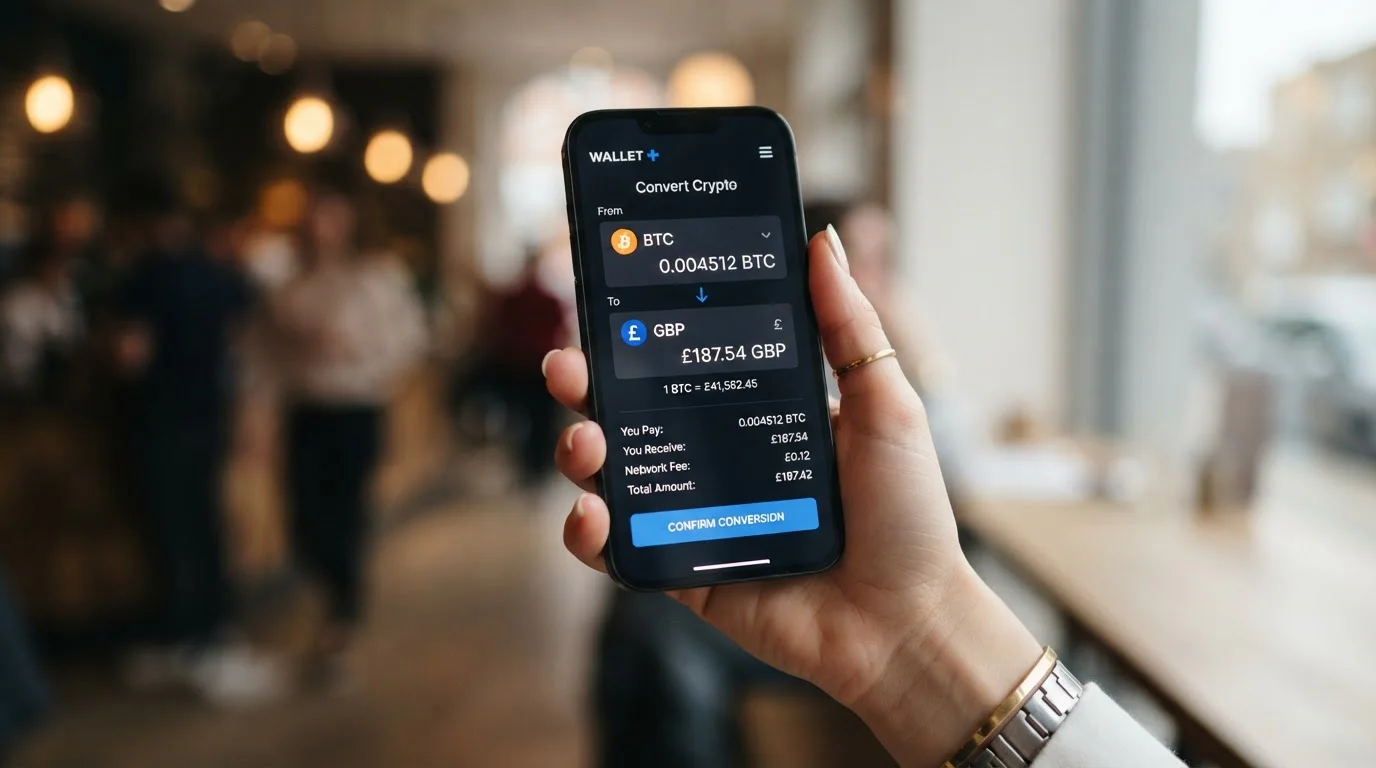
A small number of UKGC-licensed casinos permit players to fund accounts using crypto-linked e-wallets, where the e-wallet itself converts cryptocurrency to sterling before the casino sees the transaction. This is the only compliant route to crypto-adjacent gambling in the UK. The pathway: you buy crypto at an FCA-registered exchange like Coinbase UK, Kraken, or Gemini; you transfer that crypto to Skrill or Neteller; the e-wallet converts it to GBP at its published rate (typically a 1–2% spread); you deposit GBP at a UKGC-licensed casino via Skrill or Neteller as the payment method; the casino receives pounds, not crypto, so its AML obligations remain intact and its licence stays clean.
Skrill and Neteller are both owned by Paysafe, FCA-regulated, and hold a Central Bank of Ireland licence for crypto asset services under the Markets in Crypto-Assets Regulation, which came fully into force across the EU and EEA in 2026. Both e-wallets added external crypto withdrawal functionality in the second half of 2024, allowing users to move crypto out to private wallets, not just spend it via the e-wallet’s card or internal transfer functions. This makes the hybrid route genuinely bidirectional: crypto in, GBP to casino, GBP back to e-wallet on withdrawal, GBP to crypto if you want it back in blockchain form.
What you gain: full UKGC protection (GamStop checks, affordability reviews, deposit limits, enforceable ADR, segregated funds), regulatory recourse if anything goes wrong, legal operation with zero risk of account freeze for terms-of-service breach. What you lose: true pseudonymity (the FCA-registered exchange KYCs you when you buy the crypto, the e-wallet KYCs you when you open the account, the casino KYCs you before your first withdrawal), speed (the crypto-to-GBP step adds a conversion delay and a fee, and the casino still processes withdrawals on its standard three-to-five-day timetable for debit cards or under-six-hour timetable for e-wallets), and access to provably fair crypto-native games or altcoin diversity.
The hybrid route is not a loophole; it’s a structure the UKGC tolerates because the casino never handles cryptocurrency directly. It’s also not widely marketed, because most players looking for crypto casinos want the offshore model—minimal verification, instant cashouts, no affordability interrogation—not a sanitised version with all the UKGC constraints reintroduced at the e-wallet and casino layers. For players who want to stay within UK regulation but still transact in crypto before and after the gambling step, this is the only legal path.
Are crypto casinos legal in the UK in 2026?
Direct answer: online gambling is legal and regulated in the UK, but no UKGC licensee accepts crypto, so “crypto gambling” in practice means using an offshore site. The Gambling Act 2005 criminalises unlicensed supply of gambling services to persons in Great Britain; it does not criminalise the player. Using an offshore crypto casino is not a criminal offence for an individual in the UK, and there has never been a prosecution of a UK player for doing so. What is illegal is the operator serving you without a licence—and what you lose is the entire UKGC protection framework.
The UK Gambling Commission has pursued offshore operators aggressively since the 2014 reforms closed the white-list loophole. Stake.com withdrew from the UK on 11 March 2025 following a UKGC investigation; its exit triggered a wave of geo-blocking by other major crypto casinos unwilling to face similar scrutiny. Roobet, Shuffle, Gamdom, Cloudbet, Rainbet, Bitstarz, Winna, Thrill, Duel, Sportsbet.io, and 1win all added the United Kingdom to their restricted-territories clauses between March 2025 and October 2026, refusing registrations from UK IPs and closing existing UK accounts.
The Financial Conduct Authority sits on the other side of the transaction. Since January 2020, UK crypto-asset businesses must be FCA-registered under the Money Laundering Regulations 2017. Coinbase UK, Kraken, and Gemini all KYC you before you can buy a single satoshi. Since October 2023, crypto promotions to UK consumers must carry FCA-style risk warnings, and the Financial Services and Markets Act 2023 brought crypto inside the regulatory perimeter for consumer protection. None of that directly touches gambling law, but it does mean every pound you convert to crypto is logged against your name at the exchange even when the casino later asks for nothing. Your crypto casino deposit is pseudonymous on-chain but fully identified at the on-ramp.
Which Crypto Casinos Still Accept UK Players in 2026
The post-Stake landscape is sparse. Of the operators tracked by ProvablyFair, CryptoSlate, and affiliate review sites, BC.Game is the only large crypto casino whose restricted-jurisdiction clause did not explicitly name the United Kingdom when those sites verified terms in September 2026. Jackbit (rebranded to Jack.com in May 2026) and Lucky Block appear in UK-focused rankings, though some sources reported terms-page readability issues during verification, marking their eligibility as “unverified but listed in live rankings.”
Stake.com left on 11 March 2025. Roobet names the UK alongside the US, Australia, Canada, the Netherlands, France, and Spain in its geo-restrictions; VPN sign-ups breach terms and are frozen at withdrawal verification when your ID country doesn’t match your sign-up IP. Shuffle lists eleven restricted jurisdictions including the UK. Gamdom, Cloudbet, Rainbet, Winna, Thrill, Sportsbet.io, and 1win all explicitly bar UK players in their terms as of the September 2026 snapshot. Bitstarz section 3.6 prohibits “United Kingdom (including any overseas territories),” plus the Isle of Man, Jersey, and Gibraltar. Duel restricts the UK despite being the highest-rated originals operator in some reviews, making it unavailable for this market.
The post-Stake landscape: who left, who stayed
Stake.com was the market leader by volume and brand recognition until its UKGC-forced exit. It sponsored Everton FC and UFC, partnered with Drake, and processed more UK player deposits than any other crypto casino. Its March 2025 withdrawal created a vacuum BC.Game, Jack.com, and Lucky Block have absorbed. Stake’s exit also sent a signal: the UKGC has the willingness and capacity to investigate major offshore operators, compel them to exit the UK market, and trigger cascading geo-blocking by competitors who’d rather avoid scrutiny than fight.
The enforcement mechanism isn’t arrests or domain seizures; it’s reputational and financial pressure. An operator under UKGC investigation faces negative media coverage, potential restrictions on payment processing partnerships, and the risk of sanctions that spill over into other regulated markets where the operator does hold licences. For a multi-jurisdictional business, the UK market alone isn’t worth jeopardising licences in Malta, Sweden, or other tier-one jurisdictions. Stake chose to exit rather than contest; Roobet, Shuffle, and the others followed not because they were individually investigated but because the precedent made continued UK operation legally risky and commercially marginal.
What this means for players: the offshore crypto casinos still accepting UK sign-ups in 2026 are either small enough to fly under enforcement radar, willing to accept the compliance risk, or operating in a grey zone where their terms don’t explicitly name the UK but their licensing authority’s restrictions technically include it. BC.Game falls into the third category—its Anjouan licence lists the UK as a restricted territory, but the casino’s own terms as of September 2026 did not explicitly name the United Kingdom in the restricted-jurisdiction clause, creating ambiguity. Access from a UK IP is currently blocked with an error message, but whether that’s a hard geo-block or a VPN-testing soft block is unclear from third-party testing.

| Casino | Licence | Coins Supported | Avg Withdrawal Time | KYC Stance | Distinguishing Feature |
|---|---|---|---|---|---|
| BC.Game | Anjouan ALSI-202410011-FI1 | 150+ (BTC, ETH, USDT, LTC, XRP, DOGE, SOL, BNB, Monero, others) | Minutes–24h (varies by coin and account) | No KYC at sign-up; may request at withdrawal | Widest crypto selection; survived bankruptcy and operator change Dec 2024 |
| Jack.com | Curaçao OGL/2024/1800/1049 | 18+ (BTC, ETH, USDT, LTC, XRP, DOGE, SOL, BNB, others) | ~13 min avg (operator-stated) | Risk-based; ~10% face verification at withdrawal | Instant rakeback 5–30%, unified casino+sportsbook loyalty |
| Lucky Block | Anjouan ALSI-142311005-FI2 | 20+ (BTC, ETH, USDT, BNB, LTC, DOGE, XRP, SOL, TRON, ADA, others) | Minutes–hours (operator processing varies) | No KYC at sign-up; verification at withdrawal discretion | Native $LBLOCK token, Telegram Casino, 15% cashback on token use |
| UKGC hybrid route | UKGC (any licensed operator accepting Skrill/Neteller) | Crypto converts to GBP at e-wallet; casino receives fiat only | 3–5 days (debit card) or <6h (e-wallet), standard UKGC timing | Full KYC required (exchange, e-wallet, casino) | Only legal UK-compliant crypto route; full UKGC protections |
BC.Game
BC.Game operates under Twocent Technology Limited, a company registered in Belize, holding Anjouan licence ALSI-202410011-FI1 issued in December 2024. That’s the current structure. Getting here involved a November 2024 Curaçao court bankruptcy ruling against the casino’s former operators, BlockDance B.V. and Small House B.V., after player funds went unpaid during April to August 2024. Documented claims in the bankruptcy proceedings totalled $2–2.5 million, with individual claims as high as $1.48 million. BC.Game contested the ruling, called it erroneous, and voluntarily withdrew its Curaçao licence entirely rather than operate under a jurisdiction that had declared it bankrupt. By early December 2024, the casino had moved to a new Belizean operator under an Anjouan permit and continued operating without interruption to live accounts.
The bankruptcy didn’t shut BC.Game down; it split the entity. The old operators (BlockDance, Small House) remain bankrupt in Curaçao; the new operator (Twocent Technology) picked up the platform and player base but didn’t assume the old liabilities. Players owed money by BlockDance or Small House are left pursuing recovery through Curaçao insolvency proceedings, with uncertain prospects. Players who joined after December 2024 are dealing with a clean-slate entity that has no formal connection to those debts. Whether that structure is a legitimate corporate restructuring or an offshore liability-shedding manoeuvre depends on which jurisdiction’s insolvency law you apply—and Curaçao’s enforcement record on cross-border bankruptcies is minimal.
BC.Game claims 150+ supported cryptocurrencies, the widest selection among major crypto casinos. Bitcoin, Ethereum, Litecoin, XRP, Dogecoin, USDT across multiple networks (ERC-20, TRC-20), USDC, BNB, Solana, Cardano, Monero, Dash, SHIBA INU, Polygon, Chainlink, TRON, Bitcoin Cash—if a coin has market liquidity and wallet infrastructure, BC.Game likely accepts it. The casino also offers over 8,000 games from 60+ providers, a sportsbook, esports betting, and provably fair originals. Leicester City FC’s front-of-shirt sponsor for the 2026/27 season is BC.Game, making it the most visibly branded crypto casino in UK professional sports despite not holding a UKGC licence and technically restricting UK players under its Anjouan permit.
No KYC is required at sign-up. Verification may be requested at withdrawal, with no public disclosure of what triggers it—typical risk-based model. The UK status is ambiguous: the Anjouan licence names the UK as restricted, but the casino’s own terms as of September 2026 research snapshots did not explicitly list the United Kingdom in the restricted-jurisdiction clause, and some UK-focused affiliate sites still include it in rankings. Access from a UK IP currently returns an error message advising users to check their VPN connection, suggesting a geo-block is active. That could be a hard block enforcing the Anjouan restriction, or a soft block the casino implemented after Stake’s exit to reduce UKGC scrutiny while leaving terms ambiguous. Either way, BC.Game’s continued presence in UK rankings post-bankruptcy, combined with zero mention of the bankruptcy in those rankings, is the information gap this guide exists to close.
Jack.com (formerly Jackbit)
Jack.com launched in 2022 as Jackbit, spent four years building a reputation on fast crypto withdrawals and a friction-free loyalty model, then rebranded to jack.com in May 2026 alongside a platform-wide rebuild called Volume 2.0. Same operator (Data Link Digital B.V., Curaçao), same licence (CGA OGL/2024/1800/1049), same accounts and balances carried forward—new name, new infrastructure. The rebrand wasn’t cosmetic; it shipped with Wallet 2.0, a rebuilt cashier with blockchain-level transaction tracking and an address book for saved withdrawal destinations, a game library expansion from roughly 7,000 titles to 9,200+, a live bets feed showing real-time wagers and big wins across the platform, and a peer-to-peer tips function letting players send crypto directly to other registered users.
The loyalty model is instant rakeback, not a traditional deposit match bonus. Every player is enrolled automatically when they place their first qualifying wager. Rakeback is credited in real time—not at the end of a day or week—and carries zero wagering requirements. The percentage scales across eleven VIP tiers from Rookie (5%) to Legend (30%). Points accumulate at different rates by game category: 20% on slots, virtual sports, and sportsbook wagers; 10% on live casino; 1% on in-house originals. For high-volume players, compounded rakeback over months can eclipse the value of a one-time deposit match with 40x rollover.
Jack.com processes routine crypto cashouts in approximately thirteen minutes on average, per the operator’s own reporting. The platform’s stated maximum processing time is 24 hours, but standard withdrawals settle well inside that window. Upper VIP tiers remove withdrawal caps entirely, making the casino viable for higher-volume players who’d hit daily or weekly limits on comparable sites. Fiat deposits are accepted via Swapped (Visa, Mastercard, Apple Pay, Google Pay, Skrill, Neteller, bank transfer), but withdrawals are crypto-only—there’s no fiat off-ramp at cashout.
Risk-based KYC applies. Jack.com states that approximately 10% of users face verification at withdrawal. Documents are requested when the platform’s risk system flags patterns like multi-account activity, chargeback history, or unusual betting behaviour. Most routine withdrawals process without documentation. This is meaningfully different from no-KYC-ever: Jack reserves the right to request verification at any time and can suspend withdrawals pending document review. Players who hit withdrawal thresholds or trigger automated risk flags should expect to submit ID before funds clear.
The sportsbook and casino feed the same loyalty programme, which is unusual. Most crypto platforms run separate VIP systems for sports and casino, meaning a player who bets exclusively on football can’t access the same rakeback rates as a slots player. Jack routes both verticals through the same eleven-tier ladder. A punter who wagers only on Premier League matches still climbs toward Legend tier and earns the same instant rakeback as someone spinning Pragmatic slots for eight hours a day. For sports-first players, this structure removes the second-class citizenship they experience at casino-centric competitors.
Jack won AffPapa’s “Crypto Casino of the Year” award for 2026, which carries weight in affiliate circles but zero regulatory significance. It’s an industry trade award, not a compliance certification. The casino holds 18+ cryptocurrencies (BTC, ETH, USDT, LTC, XRP, BNB, DOGE, SOL, USDC, MATIC, XMR, TRX, DAI, BCH, DASH, SHIB, LINK, others) and 9,200+ games. Licensing documentation available on the site cites Ryker B.V. (Curaçao company number 154186) as the licensed entity, with jack-bit.casino listed as the operating domain on the certificate—evidence the rebrand carried forward the same corporate structure despite the domain and brand name change.
Lucky Block
Lucky Block holds Anjouan licence ALSI-142311005-FI2 and launched in 2022. The operator’s legal entity is not clearly disclosed in publicly available sources, which is common in the crypto casino space but less common at sites targeting regulated markets. The casino previously held a Curaçao Gaming licence; the timeline of the switch to Anjouan isn’t specified in research sources, but the pattern matches BC.Game’s move—operators migrating from Curaçao to Anjouan as Curaçao’s regulatory environment tightened in 2024 under new gaming ordinance reforms.
The casino’s defining feature is the $LBLOCK token, a native crypto asset players can stake for rewards, use to access exclusive games and bonuses, and earn 15% cashback when gambling with it. This is Web3 integration taken further than most competitors attempt: you’re not just depositing crypto to gamble; you’re buying into a casino-specific token economy with staking yields and loyalty mechanics tied to holding and using the token. For players who believe in the token’s value proposition, the 15% cashback is a material edge. For players who see it as an unnecessary layer between themselves and the gambling experience, it’s friction.
Lucky Block also offers Telegram Casino integration—play directly via the Telegram bot without opening a browser. You interact with the casino through chat commands; balances, deposits, and withdrawals happen inside the messaging app; game results render as inline messages. It’s faster than launching a browser, logging in, and navigating to a game, but it’s also a single point of failure: if your Telegram account is compromised, whoever has access can drain your casino balance without touching your email or wallet.
The welcome bonus is 200% up to €25,000 plus 50 free spins, one of the highest headline offers in the offshore space. Wagering requirement is 60x total (you wager your deposit six times to release 10% of the bonus, repeated until the full bonus is cleared). Minimum deposit €20. Free spins are valid on one specific slot (Wanted Dead or a Wild) and expire in seven days. The bonus terms are aggressive: 60x is higher than Jack.com’s zero-wagering rakeback or BC.Game’s VIP lossback model, but for players chasing a large bankroll boost on the first deposit, the nominal €25,000 ceiling is higher than anything Jack or BC offers.
Lucky Block supports 20+ cryptocurrencies (BTC, ETH, USDT, USDC, BNB, LTC, DOGE, XRP, SOL, TRON, ADA, AVAX, MATIC, DAI, SHIB, others) and fiat deposits via Visa and Mastercard. The game library is 2,700+ titles—smaller than BC.Game’s 8,000+ or Jack.com’s 9,200+, but still covering mainstream providers like Pragmatic Play, Evolution, and NetEnt. The VIP programme is invite-only from level six upward, which means the top tiers aren’t accessible by wagering alone; the casino selects who gets invited based on volume and other undisclosed criteria. That’s standard at high-roller-focused casinos but less common at mass-market crypto sites.
Trustpilot reviews for Lucky Block show over 750 entries with mixed ratings, clustered around 2.5–3 out of 5. Positive feedback cites the game library, Telegram community, and bonus generosity. Negative feedback centres on account verification issues and withdrawal delays—a pattern consistent with risk-based KYC where the casino requests documents at cashout and players who didn’t expect verification find themselves waiting days for manual review. Some players also found the $LBLOCK token mechanic confusing at first, though that’s a learning-curve issue rather than a functional problem.
Stake.com: what happened in March 2025
Stake.com exited the UK on 11 March 2025 following a UK Gambling Commission investigation into its unlicensed operations targeting British customers. UK registrations were refused from that date forward; existing UK accounts were closed and balances refunded. The investigation wasn’t public while it ran—UKGC doesn’t announce enforcement actions until they conclude—but the outcome was decisive: Stake chose to withdraw rather than contest or seek compliance.
Stake was the largest crypto casino serving UK players by deposit volume and brand visibility. It sponsored Everton FC (front-of-shirt deal), UFC (official betting partner), and collaborated with Drake on high-profile promotions that reached mainstream audiences beyond the crypto gambling niche. The casino offered 3,000+ games, a full sportsbook, provably fair originals, and supported 10+ cryptocurrencies (BTC, ETH, LTC, DOGE, XRP, USDT, others). No KYC was required at sign-up; risk-based verification applied at withdrawal.
Stake’s exit didn’t just remove one option—it reset the UK crypto casino market. Players who’d built up VIP status, held balances, or integrated Stake into their gambling routine were forced to move to competitors or exit crypto gambling entirely. BC.Game, Jack.com, and Lucky Block absorbed the majority of displaced volume, as measured by the spike in UK-focused affiliate traffic and ranking prominence post-March 2025. The exit also triggered a compliance reassessment across the offshore crypto casino industry: operators who’d previously tolerated UK players without explicit geo-blocking began adding the United Kingdom to their restricted-territories clauses to avoid becoming the UKGC’s next target.
The enforcement signal was clear: unlicensed supply to UK customers is not a victimless regulatory technicality the Commission will tolerate indefinitely. Stake held no UKGC licence, marketed aggressively to UK players through sports sponsorships and affiliate partnerships, and processed millions in UK deposits. The UKGC’s investigation and Stake’s subsequent withdrawal demonstrated that offshore incorporation and Curaçao licensing do not insulate an operator from UK enforcement when the operator’s business model centres on reaching UK consumers. Stake could have fought—contested the jurisdiction, challenged the enforcement mechanism, or applied for a UKGC licence to operate compliantly. It chose exit instead, which suggests the cost of compliance (integrating GamStop, implementing affordability checks, segregating funds, submitting to UKGC oversight) outweighed the value of the UK market for a business built on the offshore crypto model.
Which crypto casinos still accept UK players after Stake left in March 2025?
Three casinos dominate UK-focused rankings post-Stake: BC.Game, Jack.com, and Lucky Block. BC.Game operates under Twocent Technology Limited (Belize) with Anjouan licence ALSI-202410011-FI1, issued December 2024 after the operator switched from Curaçao following a bankruptcy ruling against its former operators. Jack.com (formerly Jackbit) operates under Data Link Digital B.V. (Curaçao) with CGA licence OGL/2024/1800/1049, rebranded in May 2026 but maintained continuity of accounts and licensing. Lucky Block operates under Anjouan licence ALSI-142311005-FI2, founded 2022, with legal operator entity not clearly disclosed.
All three offer no-KYC sign-ups with risk-based verification at withdrawal. None hold a UKGC licence. None integrate with GamStop, conduct affordability checks at deposit, or provide enforceable ADR through a UK-recognised body. All three accept 18–150+ cryptocurrencies depending on the casino. Withdrawal speeds range from minutes (for approved, non-flagged accounts on fast blockchains like TRON or Solana) to 24+ hours (for first withdrawals, flagged accounts, or slower blockchains like Bitcoin during network congestion).
The UKGC-licensed hybrid route (crypto → Skrill/Neteller → GBP → licensed casino) remains the only compliant path for UK players who want crypto exposure without stepping outside UKGC regulation. That route sacrifices pseudonymity (full KYC at exchange, e-wallet, and casino) and offshore speed (UKGC standard withdrawal times apply: 3–5 days for debit cards, under 6 hours for e-wallets) in exchange for full regulatory protection: GamStop integration, segregated funds, binding ADR, and UKGC enforcement backing if anything goes wrong.
What “No KYC” Actually Means—And When Verification Kicks In
No KYC at sign-up means you can create an account and deposit without uploading a passport, proof of address, or selfie holding today’s newspaper. It does not mean the casino will never ask for documents. Risk-based KYC is the standard model at offshore crypto casinos: verification is triggered by account behaviour rather than applied universally upfront. You sign up anonymously, deposit freely, and deal with identity checks only if the casino’s risk system flags you—typically at your first withdrawal, but sometimes earlier if deposit patterns trip automated AML filters.
Jack.com states that approximately 10% of users face verification at withdrawal. That’s the only publicly disclosed rate among the casinos reviewed here; BC.Game and Lucky Block don’t publish their trigger rates. The 10% figure suggests most players withdraw without documents, but it’s not a guarantee—your account might be in that 10%, and you won’t know until you request a cashout and the casino freezes your withdrawal pending KYC review.
Risk-based KYC: the model offshore casinos use
Risk-based KYC separates identity verification from account creation. You register with minimal information—an email address or a Web3 wallet signature—and the casino assigns you an account without checking government ID, proof of address, or any other document. The verification gate is deferred to a later point, determined by automated risk scoring rather than a fixed policy like “all withdrawals above X require KYC.” The casino’s system monitors deposit size, withdrawal frequency, betting patterns, IP address consistency, device fingerprints, and blockchain transaction history. When enough risk signals accumulate, the system flags the account and requests documents before processing the next withdrawal.
The triggers aren’t disclosed publicly, because disclosing them would let players game the system—deposit just below the threshold, withdraw in small increments, cycle through VPNs to mask patterns. But from reviewing blocked-account reports on forums and Trustpilot complaints, common triggers include: first withdrawal (many casinos verify everyone on the first cashout regardless of amount), withdrawals above $2,000–$5,000 in a single request or cumulatively over a short period, multiple accounts traced to the same device or IP, depositing from an exchange-flagged address with AML red flags, sudden spikes in bet size after a period of dormancy, and chargebacks or disputed transactions from prior sessions.
The advantage for players is speed at sign-up and freedom from intrusive affordability checks during deposits. The disadvantage is uncertainty: you don’t know whether you’ll withdraw smoothly until you try, and if you’re flagged, your funds are frozen until you complete verification, which can take days if the casino’s document-review queue is backlogged or if your submitted documents don’t meet their requirements on the first pass.
For the casino, risk-based KYC reduces onboarding friction (more sign-ups convert when there’s no ID gate upfront) while still meeting the baseline AML obligations of its offshore licence (verify identity when red flags appear). It’s a commercial optimisation, not a player protection measure. The 10% verification rate Jack.com discloses means 90% of users withdraw without friction—but if you’re in the 10%, the experience flips from “instant cashout” to “account under review, wait 3–7 business days.”
When do crypto casinos ask for documents?
The most common trigger is your first withdrawal, regardless of amount. Some casinos verify everyone on the first cashout as a blanket policy disguised as risk-based; others genuinely let small first withdrawals (under $500–$1,000) pass without review. You won’t know which model applies until you request that first payout. If you’ve deposited $50 and want to withdraw $200 in winnings, there’s a non-zero chance the casino will ask for ID despite the modest sums involved, especially if your account is new (under a week old) or if your IP address doesn’t match the jurisdiction you implied during sign-up.
Withdrawal thresholds are the second trigger. Casinos that let small payouts pass will flag accounts once cumulative withdrawals cross a certain amount—commonly cited thresholds in forum reports are $2,000, $5,000, or $10,000, but these aren’t published figures and vary by casino. If you’ve withdrawn $1,500 three times without verification, the fourth withdrawal that pushes your cumulative total past the internal threshold may get flagged. The casino doesn’t announce the threshold in advance because doing so would encourage players to stay just below it indefinitely.
Multi-account detection is a hard trigger. Crypto casinos prohibit multiple accounts per player in their terms, and detection methods include device fingerprinting (browser and OS data that persist across sessions), IP address tracking (same IP used for multiple accounts), and blockchain analysis (withdrawals from different accounts landing in the same external wallet). If the casino’s system links your account to another account it previously verified or banned, expect both accounts to be frozen pending review. This trigger hits VPN users hardest: if you sign up through a VPN exit node that hundreds of other players also used, the casino may flag your account as a duplicate even though you’re a unique individual, simply because the IP overlap creates a false positive.
Chargeback history and payment disputes trigger immediate verification. If you’ve ever reversed a deposit via your card issuer or crypto exchange, the casino will KYC you on sight in future interactions. Crypto transactions are irreversible on-chain, but fiat on-ramps (buying crypto with a card via Swapped or MoonPay, then depositing that crypto at the casino) can be disputed, and casinos treat those disputes as fraud flags.
Sudden behavioural changes flag accounts even without hitting a monetary threshold. A dormant account that suddenly starts depositing thousands after months of inactivity, a player who shifts from $10 spins to $500 spins overnight, or a sports bettor who pivots to arbitrage betting across multiple books—all of these patterns trigger manual review even if the absolute amounts are below published limits.
What happens if you’re flagged for verification
Your withdrawal request is suspended. The casino sends an email or displays an in-platform message stating that verification is required before the payout can proceed. You’re asked to submit documents: government-issued photo ID (passport, driver’s licence, national identity card), proof of address (utility bill, bank statement, council tax bill dated within the last three months), and sometimes a selfie holding your ID alongside a handwritten note with today’s date and the casino’s name. High-value withdrawals or flagged accounts may also require proof of funds—bank statements, crypto exchange records, or employment documentation showing where your deposited money came from.
You upload the documents through the casino’s verification portal. The review process takes 24 hours to 7 business days depending on the casino’s staffing, document quality, and queue length. If your documents are rejected (photo too blurry, address document older than three months, name on ID doesn’t match the name you provided at sign-up if you gave one), you resubmit and wait another cycle. During this entire period, your withdrawal is frozen, your winnings are locked, and your account is in “verification pending” status—you can’t withdraw, and depending on the casino’s policy, you may or may not be able to cancel the withdrawal and continue playing with the funds.
Once verification is approved, the withdrawal processes and your account is marked as verified for future cashouts. Most casinos won’t ask again unless you trigger a new risk flag (huge jump in withdrawal size, change of withdrawal wallet address, long gap in activity followed by sudden high-volume play). If verification is rejected outright—because your documents don’t pass, because the casino suspects fraud, or because you’re in a jurisdiction the casino has decided to exclude—the account may be suspended and the withdrawal denied. Terms of service typically allow the casino to refund your original deposit and confiscate winnings in cases of terms breach, which includes providing false information, operating from a restricted jurisdiction, or multi-accounting.
What does “no KYC” actually mean—do I never need to verify my identity?
No. “No KYC” in crypto casino marketing means no identity check at registration and no mandatory verification before your first deposit. It does not mean the casino will never ask for documents. Every offshore casino reserves the right to request verification at any time, for any reason, as stated in their terms of service. The practical reality is that most players who withdraw modest amounts (under $1,000–$2,000) and don’t trip behavioural flags will never be asked. Players who withdraw larger sums, exhibit patterns the risk system flags, or simply get unlucky with random spot checks will face full KYC despite the “no verification” branding.
If you sign up at a no-KYC crypto casino expecting to withdraw five-figure sums anonymously, that expectation is misaligned with how these casinos operate. The correct framing: no-KYC casinos defer verification rather than eliminate it. You get anonymity during the deposit and play phase; you may or may not get it during withdrawal, depending on risk scoring you can’t see and thresholds the casino won’t publish. That deferred model is still faster and less intrusive than UKGC-licensed casinos, which KYC you before your first withdrawal regardless of amount, but it’s not the “gamble anonymously forever” outcome the marketing implies.

Withdrawal Speed, Limits, and the “No Limits” Reality
Crypto casino marketing emphasises instant payouts, unlimited withdrawals, and freedom from the three-to-five-day bank transfer delays that plague UKGC-licensed sites. The speed claim is partially true; the unlimited claim is mostly false. Withdrawal speed depends on three factors: the casino’s internal processing time (the approval gate), the blockchain network’s confirmation time (the technical settlement), and whether your account is flagged for verification (the hidden variable). Withdrawal limits exist at every offshore casino; what varies is whether they’re disclosed upfront or discovered when you hit them.
Jack.com states an average withdrawal time of thirteen minutes, measured from request to blockchain broadcast. That’s operator processing plus Bitcoin confirmation time, averaged across all users. BC.Game’s withdrawal speed is listed as “minutes to 24 hours” depending on the coin and account status—deliberately vague, but consistent with player reports that verified accounts on fast blockchains (TRON, Solana) clear in under ten minutes, while first-time withdrawals or flagged accounts wait hours for manual approval. Lucky Block doesn’t publish an average; player reviews on Trustpilot cite withdrawal times ranging from instant (for small amounts on verified accounts) to multiple days (for first withdrawals or amounts above $5,000).
How fast are crypto casino withdrawals?
Blockchain confirmation time is the technical floor. Bitcoin averages ten minutes per block; your transaction needs one confirmation for the casino to consider it settled, sometimes three confirmations for extra security. Ethereum averages twelve seconds per block; USDT on the ERC-20 network inherits that speed. TRON averages three seconds per block; USDT on the TRC-20 network (the version most offshore casinos use for stablecoin transactions) is one of the fastest settlement options. Solana, BNB Chain, and Polygon are all sub-minute networks. If you’re withdrawing USDT via TRC-20 and the casino approves your request instantly, your funds land in your wallet within three to five seconds of blockchain broadcast.
Operator processing time is the variable. A casino that markets “instant withdrawals” means it processes approved cashouts instantly—it doesn’t mean every cashout is approved instantly. Your withdrawal enters a queue; the casino’s system checks for KYC flags, multi-account links, bonus-abuse patterns, and wagering-requirement completion; if all checks pass, the system auto-approves and broadcasts the transaction to the blockchain. If any check fails, the withdrawal moves to manual review, which takes hours to days depending on staffing.
For verified accounts withdrawing amounts below the casino’s internal threshold on a fast blockchain, crypto payouts are genuinely faster than UKGC-licensed e-wallet cashouts (which average under six hours) and drastically faster than UKGC debit-card payouts (which average three to five working days). For unverified accounts, first-time withdrawals, or amounts that trigger manual review, crypto casinos are no faster than UKGC sites—both wait on a human to review documents or approve an exception, and that human works business hours in the casino’s timezone, not yours.
Withdrawal limits: VIP tiers and daily caps
Every offshore crypto casino imposes withdrawal limits, typically structured as daily, weekly, or monthly caps that vary by VIP tier. Standard users—players who’ve just signed up or haven’t wagered enough to climb the VIP ladder—face the tightest limits. Jack.com’s base-tier daily limit isn’t published on the site, but player reports suggest $2,000–$5,000 per 24-hour period for non-VIP accounts. BC.Game’s limits vary by VIP level, starting around $10,000 per day for Bronze and scaling up to unlimited for Diamond and above. Lucky Block’s published terms reference withdrawal limits but don’t specify amounts, deferring to “contact support” for case-by-case assessment.
VIP tiers unlock higher or unlimited withdrawals, but reaching those tiers requires sustained wagering volume. Jack.com’s Legend tier (the top of eleven levels) removes withdrawal caps entirely, but climbing there requires millions in cumulative wagers—achievable for high-rollers, out of reach for casual players. BC.Game’s Diamond tier unlocks unlimited daily withdrawals, but again, the wagering requirement to reach Diamond is steep. The “unlimited withdrawals” claim in crypto casino marketing refers to what’s technically possible at the top VIP tier, not what’s available to the median player who deposits $500 and spins slots for a weekend.
For players who hit a big win—a $50,000 progressive jackpot or a $100,000 accumulator—withdrawal limits become a practical bottleneck. If your daily limit is $5,000, cashing out that $50,000 jackpot takes ten days of consecutive withdrawal requests, assuming each request is approved without delay and you don’t re-gamble the funds waiting in your account. UKGC-licensed casinos face the same structure (daily limits that scale with VIP status), but they’re required to state those limits in their terms and honour them consistently. Offshore casinos change limits without notice, apply different limits to different players based on undisclosed criteria, or introduce “pending review” holds that stretch a nominally instant withdrawal into a multi-day process.
The “unlimited withdrawals” claim decoded
“Unlimited withdrawals” in crypto casino marketing means one of three things, in descending order of honesty. First, it means the casino’s top VIP tier has no daily or monthly cap—true, but irrelevant to 95% of users who will never reach that tier. Second, it means there’s no single-transaction limit—you can request a $1 million withdrawal in one go rather than splitting it into $10,000 chunks—but that request still waits on manual approval, KYC verification if you haven’t done it yet, and potential holds for AML review if the amount is large enough to trigger regulatory scrutiny under the casino’s Curaçao or Anjouan licence obligations. Third, it’s marketing puffery with no operational meaning, designed to contrast with UKGC-licensed casinos’ explicit caps while obscuring the fact that offshore casinos have caps too, they’re just less transparent about them.
The real constraint isn’t the casino’s stated policy; it’s liquidity. A small offshore casino that processes $10 million in monthly deposits may not have $1 million in immediately liquid crypto reserves to pay out a whale who hits a massive win. The casino has to convert house reserves from stablecoins or fiat into the player’s withdrawal currency (Bitcoin, Ethereum, whatever), execute that conversion through an exchange or OTC desk, and send the funds on-chain. That process takes time even when the casino wants to pay quickly, and it creates an incentive for the casino to slow-pay or negotiate a settlement (pay part now, part later, part in a different currency) if the win is large enough to strain liquidity.
UKGC-licensed casinos are required to hold sufficient liquid reserves to pay all player balances on demand, audited quarterly. Offshore casinos have no such requirement. If an offshore casino becomes insolvent—like BC.Game’s former operators in 2024—players holding large balances become unsecured creditors in a foreign bankruptcy proceeding with minimal recovery prospects. That’s the hidden risk behind “unlimited withdrawals”: the limit isn’t a published cap; it’s the casino’s ability and willingness to pay when you win big.
Supported cryptocurrencies
| Coin | BC.Game | Jack.com | Lucky Block | Blockchain Confirmation Time |
|---|---|---|---|---|
| Bitcoin (BTC) | Yes | Yes | Yes | ~10 min (1 confirmation) |
| Ethereum (ETH) | Yes | Yes | Yes | ~12 sec (12–15 confirmations typical) |
| USDT (ERC-20) | Yes | Yes | Yes | ~12 sec (Ethereum network) |
| USDT (TRC-20) | Yes | Yes | Yes | ~3 sec (TRON network) |
| Litecoin (LTC) | Yes | Yes | Yes | ~2.5 min (1 confirmation) |
| Dogecoin (DOGE) | Yes | Yes | Yes | ~1 min (1 confirmation) |
| XRP (Ripple) | Yes | Yes | Yes | ~4 sec (1 confirmation) |
| Solana (SOL) | Yes | Yes | Yes | <1 sec (typical finality) |
| BNB (Binance Coin) | Yes | Yes | Yes | ~3 sec (BSC network) |
| Monero (XMR) | Yes | Yes | No | ~2 min (10 confirmations typical) |
| Others | 140+ more | 8+ more | 10+ more | Varies by coin |
BC.Game’s 150+ coin support is the widest in the offshore space and the main differentiator if you hold niche altcoins or want to gamble in privacy coins like Monero without converting to Bitcoin first. Jack.com’s 18+ and Lucky Block’s 20+ are still broader than most UKGC-licensed casinos (which accept zero crypto) but narrower than BC.Game. For mainstream coins—Bitcoin, Ethereum, USDT, Litecoin—all three casinos support them, so selection only matters if you’re deep in the altcoin ecosystem.
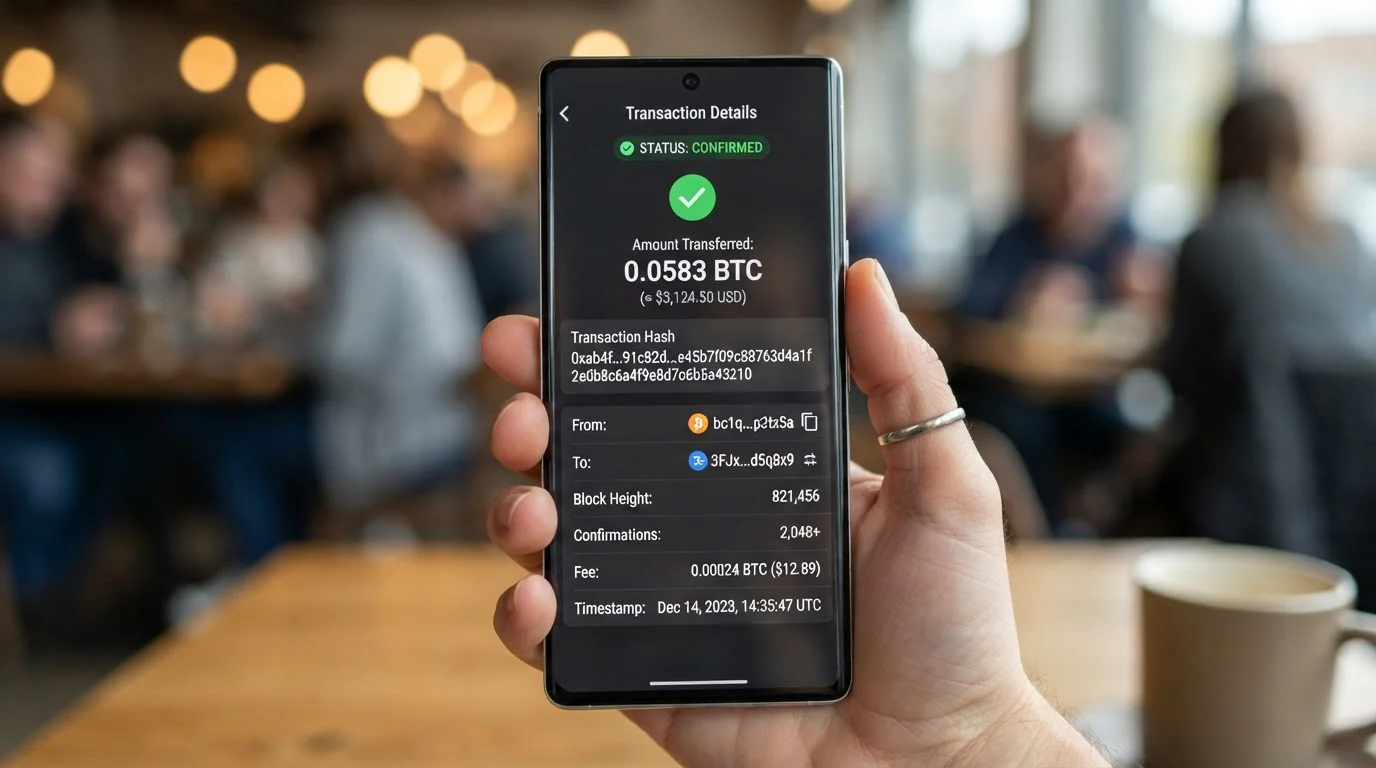
Stablecoin withdrawals (USDT, USDC, DAI) avoid price volatility between cashout and settlement. If you win $10,000 worth of Bitcoin on Monday and request withdrawal, but Bitcoin drops 5% by Tuesday when the transaction confirms, you’ve lost $500 to market movement. If you win $10,000 USDT and withdraw USDT, you receive $10,000 worth of stablecoin regardless of what Bitcoin does. Most offshore casinos let you toggle between displaying balances in crypto or fiat-equivalent, and some let you convert between coins inside the platform without withdrawing to an external exchange first. That internal conversion adds a spread (the casino’s exchange rate is worse than market rate by 0.5–2%), but it saves a step if you deposited BTC and want to withdraw USDT.
How fast are crypto casino withdrawals compared to UKGC-licensed sites?
Crypto casinos are faster for verified accounts withdrawing below the manual-review threshold on fast blockchains. Jack.com’s thirteen-minute average beats the under-six-hour average for UKGC e-wallet payouts and demolishes the three-to-five-day average for UKGC debit-card payouts. BC.Game and Lucky Block don’t publish averages, but player reports for verified accounts using TRON-based USDT confirm sub-ten-minute settlement from request to wallet arrival.
For first-time withdrawals, crypto casinos lose the speed advantage. Your first cashout at BC.Game, Jack.com, or Lucky Block waits on KYC review if you’re flagged, which takes 24 hours to a week depending on document queue and submission quality. Your first cashout at a UKGC-licensed casino also waits on KYC review, which takes similar time if you haven’t pre-verified your account. The difference: UKGC casinos encourage you to verify your ID immediately after sign-up, before you deposit, so your first withdrawal is already verified and processes on the standard e-wallet timetable (under six hours). Crypto casinos actively discourage pre-verification—there’s no submit-ID-now option; you verify only if the casino asks—so most players hit the verification gate at first withdrawal when they least want delay.
For large withdrawals, neither crypto nor UKGC casinos are “instant.” A $50,000 cashout triggers manual review at both, because both operate under anti-money-laundering regimes (offshore licences and UKGC respectively) that require source-of-funds checks above certain thresholds. The difference is transparency: UKGC casinos state their thresholds in terms and conduct those reviews within published SLAs. Offshore casinos don’t state thresholds and don’t commit to review timelines, which leaves high-value withdrawals in limbo for unpredictable durations.
Bonuses, Rakeback, and Wagering Requirements
Crypto casinos split into two bonus models: traditional deposit match bonuses with wagering requirements, and rakeback systems that return a percentage of every bet whether you win or lose. Jack.com runs pure rakeback (5–30% instant cashback, zero wagering). BC.Game leans on VIP lossback and level-up bonuses rather than a headline welcome offer. Lucky Block offers a traditional 200% deposit match up to €25,000 with 60x wagering. The model you prefer depends on play style: high-volume grinders benefit more from rakeback; one-time depositors chasing a bankroll boost prefer the upfront match.
Welcome bonuses vs rakeback models
A deposit match bonus gives you extra funds on top of your deposit—200% up to €25,000 means a €5,000 deposit nets you €10,000 in bonus funds, for a total €15,000 balance. The catch: those bonus funds are locked until you meet the wagering requirement, typically 40x to 60x the bonus amount or the deposit plus bonus combined. Lucky Block’s 60x total means you wager your €15,000 balance six times (€90,000 in total wagers) to convert 10% of the bonus (€1,000) to withdrawable cash, then repeat nine more cycles to unlock the full €10,000. Games contribute differently toward wagering—slots 100%, live casino 10%, table games vary—so your effective wagering requirement stretches higher if you play non-slots games.
Rakeback returns a percentage of your wager instantly, win or lose, with zero wagering requirement. Jack.com’s model: you wager $1,000 on slots at Rookie tier (5% rakeback), you receive $50 credited instantly to your withdrawable balance, no rollover. If you lose the $1,000, you’ve lost $950 net. If you win $2,000, you keep the $2,000 plus the $50 rakeback. The rakeback percentage scales with VIP tier (5% at Rookie, 30% at Legend), and points accumulate at different rates by game type (slots 20%, live casino 10%, originals 1%). For high-volume players, compounded rakeback over months outpaces a one-time deposit match even when the match headline number is larger.
BC.Game runs VIP-based rewards: lossback (a percentage of net losses returned weekly), level-up bonuses (a cash reward every time you reach a new VIP tier), and monthly bonuses tied to wagering volume. There’s no fixed welcome bonus advertised on the main site; the model is earn-as-you-play rather than claim-upfront. For players who prefer a traditional “deposit $500, get $1,000 bonus” structure, BC.Game’s system is less intuitive. For players who’d rather receive steady cashback than chase a high-rollover bonus, BC.Game’s VIP model aligns better with long-term play.
How wagering requirements work at crypto casinos
Wagering requirements determine how many times you must bet the bonus amount (or deposit plus bonus) before you can withdraw. 40x bonus means a $1,000 bonus requires $40,000 in total wagers to unlock. 40x deposit plus bonus means a $500 deposit with a $500 bonus (total $1,000) requires $40,000 in wagers to unlock. The second structure is stricter because it counts your real money toward the rollover, not just the bonus.
Game weighting affects how much each bet contributes toward the requirement. Slots contribute 100%: a $10 slot spin counts as $10 toward your $40,000 target. Live casino contributes 10%: a $10 live blackjack bet counts as $1 toward the target, so you need to wager $400,000 in live games to clear a bonus that would take $40,000 in slots. Table games (RNG roulette, blackjack, baccarat) vary by casino, typically 10–50%. Some casinos exclude certain high-RTP games entirely (blackjack, video poker, certain slots) from bonus wagering, meaning bets on those games contribute 0% and don’t advance the rollover counter.
Maximum bet limits apply while the bonus is active. Most crypto casinos cap your per-spin or per-bet amount at $5–$10 while you’re clearing a bonus, regardless of your actual balance. If you bet above the max, the bonus is voided and winnings confiscated. This prevents bonus abuse (deposit $1,000, get $1,000 bonus, place a single $2,000 all-or-nothing bet, cash out if you win) and forces players to grind through the rollover on small bets.
Expiry periods restrict how long you have to clear the bonus. Lucky Block’s welcome bonus expires 14 days after activation. If you don’t complete the 60x wagering within two weeks, the bonus and any winnings derived from it are forfeit. Some casinos use a “bonus + winnings” forfeiture model, where failing to meet the rollover means losing not just the bonus but also any profit you made while playing with it. Others use a “bonus only” model, where your original deposit and any winnings above it remain withdrawable even if you don’t finish the rollover. Always check the specific casino’s bonus terms before activating a match offer.
No-deposit bonuses and free spins
No-deposit bonuses—free credits given without requiring a deposit—are rare at offshore crypto casinos. When offered, they’re small ($10–$50) with high wagering requirements (60x–100x) and strict maximum cashout caps ($50–$200), making them more marketing teasers than genuine value. Lucky Block’s welcome offer includes 50 free spins, but they’re tied to a minimum €20 deposit and are valid only on one specific slot (Wanted Dead or a Wild), with a seven-day expiry. Winnings from free spins count toward the bonus balance and are subject to the same 60x rollover as the deposit match.
Jack.com doesn’t offer a traditional welcome bonus or free spins; the entire model is rakeback from the first bet. BC.Game occasionally runs promotions with free spins or no-wager bonuses, but these are time-limited campaigns rather than permanent fixtures. For players chasing no-deposit offers, offshore crypto casinos deliver less than UKGC-licensed casinos, where no-deposit bonuses are a standard acquisition tool even if they come with restrictive terms.
Games, Slots, and Provably Fair Technology
Crypto casinos offer the same game types as traditional online casinos—slots, live dealer tables, RNG blackjack and roulette, video poker, jackpot games—plus provably fair originals that use blockchain-verifiable RNG. Game libraries range from 2,700+ at Lucky Block to 9,200+ at Jack.com, sourced from the same providers UKGC-licensed casinos use: Pragmatic Play, NetEnt, Evolution, Playtech, Play’n GO, Microgaming, and dozens more. The games function identically whether you’re playing at BC.Game or a licensed UK casino; the difference is the licensing environment wrapping them, not the software.
Casino games at crypto casinos
Slots dominate the library count at every casino reviewed. Jack.com’s 9,200+ games are 70–80% slots; BC.Game’s 8,000+ skew similarly. You’ll find the same Pragmatic megahits (Gates of Olympus, Sweet Bonanza, Sugar Rush) and NetEnt classics (Starburst, Gonzo’s Quest) at offshore crypto casinos as at UKGC sites. The difference: offshore casinos often carry region-restricted titles unavailable in the UK because the game provider hasn’t obtained a UKGC compliance certificate for that specific title, and offshore casinos don’t need one. Some providers release games internationally months before UK-compliant versions appear, giving offshore casinos early access.
Live dealer games are supplied by Evolution, Pragmatic Play Live, Ezugi, and other studios. You’re playing at the same physical tables, streamed from the same studios in Latvia, Malta, or Romania, as players at UKGC casinos. The croupiers don’t know or care whether you’re logged in via an offshore crypto site or a UK-licensed operator; they’re employees of the game provider, not the casino. Offshore casinos may offer live games excluded from UK licences (certain Crazy Time variants, high-stakes baccarat with looser bet limits) because the provider’s UK compliance certification doesn’t cover those variants.
Provably fair originals—in-house games developed by the casino or commissioned from crypto-native studios like BGaming or Spribe—use cryptographic RNG that you can verify. Crash, Plinko, dice, limbo, hi-lo—these are simple games with transparent maths, where the outcome is generated from a server seed and a client seed combined, hashed, and converted to a result. You receive the hashed server seed before you bet; after the round ends, the casino reveals the unhashed server seed; you verify that hashing it produces the hash you received earlier, confirming the result wasn’t changed after you placed your bet.
What is provably fair—and does it replace a gambling licence?
Provably fair is a cryptographic proof that a specific game result wasn’t manipulated after the bet was placed. It does not prove the game’s payout structure is correct, the RTP is as advertised, or the server seed generation is truly random. It proves non-tampering, not fairness in the broader sense. A provably fair dice game can still be rigged if the house edge is silently set to 10% instead of the advertised 1%—the hashes will verify correctly, but the maths governing payouts will cheat you on every roll.
UKGC-licensed casinos are required to have their RNG tested by accredited third-party labs (eCOGRA, GLI, iTech Labs) who verify not just that results aren’t manipulated but that the entire game implementation—payout tables, RTP calculation, bonus trigger frequency—matches the certified specification. Those labs audit the code, run millions of simulated spins, and confirm the actual RTP over a large sample matches the theoretical RTP. That’s a higher bar than provably fair hashing.
Provably fair is better than blind trust but worse than third-party certification. If you’re playing provably fair crash at BC.Game, you can verify each round’s hash and confirm the casino didn’t change the crash point after you cashed out. You cannot verify that the distribution of crash points over 10,000 rounds aligns with the stated house edge unless you log every result and compute the distribution yourself—and even then, you’re trusting your sample is large enough to expose statistical manipulation. Third-party labs do that verification for you, across millions of rounds, with professional statisticians and access to the casino’s server code. Provably fair doesn’t replace a licence; it’s a transparency layer useful within an already-trustworthy environment but insufficient alone to prove a game is fair.

VPNs, Geo-Blocking, and the Risks of Workarounds
Multiple crypto casinos now explicitly prohibit UK players in their terms following Stake’s March 2025 exit: Roobet, Shuffle, Gamdom, Cloudbet, Rainbet, Bitstarz, Winna, Thrill, Duel, Sportsbet.io, and 1win all list the United Kingdom as a restricted jurisdiction. Players tempted to use a VPN to bypass the geo-block need to understand the enforcement mechanism: the casino won’t stop you from registering through a VPN, but it will freeze your withdrawal and confiscate your balance when your ID document at verification reveals you’re in a restricted country.
Which casinos tolerate VPNs, which ban them
BC.Game, Jack.com, and Lucky Block don’t explicitly name the UK in their restricted-territories clauses as of available September 2026 research, but all three prohibit VPN use in their terms for the purpose of bypassing geo-restrictions. BC.Game’s error message when accessed from certain UK IPs says “check your VPN connection,” which looks like an invitation but isn’t—it’s a detection notice. The terms state that using a VPN to access the site from a restricted jurisdiction is a breach, and breach consequences include account suspension and balance confiscation.
Some casinos tolerate VPNs for privacy (you’re in an allowed country but prefer to mask your IP) while banning them for geo-circumvention (you’re in a banned country and using a VPN to fake being elsewhere). The enforcement distinction: if your ID document shows you’re in an allowed jurisdiction, VPN use is overlooked. If your ID shows you’re in a banned jurisdiction, VPN use is treated as fraud. You won’t know which side of that line you fall on until you attempt your first withdrawal and submit documents.
What happens if you use a VPN to bypass geo-restrictions
You sign up through a VPN exit node in a non-restricted country—Germany, Canada, wherever. The casino’s system logs your IP as German. You deposit Bitcoin; the transaction clears. You play; maybe you win. You request withdrawal. The casino’s risk system flags the withdrawal for KYC review (first cashout, or amount above threshold, or IP inconsistency detected). You submit your UK passport. The casino’s compliance team sees a UK ID from an account that registered via a German IP. That’s a geo-restriction breach under the terms you agreed to at sign-up.
The casino emails you: account suspended, withdrawal denied, original deposit refunded (sometimes), winnings confiscated. No appeal process beyond emailing support and arguing your case, which fails because you demonstrably breached the terms. The Bitcoin you deposited is returned to your wallet (if you’re lucky); the $10,000 you won is kept by the casino as a terms-breach penalty. You have no recourse—offshore licensing authorities don’t arbitrate VPN disputes in players’ favour, and you can’t sue in a UK court because you were using an unlicensed site you contractually agreed not to access.
This isn’t hypothetical; it’s the standard outcome reported across forums, Trustpilot complaints, and Reddit threads by players who tried VPN workarounds at Roobet, Bitstarz, and Shuffle after those casinos geo-blocked the UK. The casinos don’t block VPNs at the connection level because doing so would also block legitimate users who VPN for privacy. They block at the verification level, where your ID country is the source of truth. A VPN makes sign-up easy; it makes withdrawal impossible.
Can I use a VPN to access crypto casinos that block the UK?
Technically yes; practically no. You can register and deposit through a VPN at any casino—Roobet, Bitstarz, Shuffle, any of them—and the site will accept your deposit without immediate complaint. You will not be able to withdraw your winnings, because the moment you submit a UK ID document for KYC verification, the casino will flag your account as geo-restricted and confiscate your balance under the terms-breach clause.
The only scenario where VPN access works long-term is if you hold valid ID from a non-restricted country (dual citizenship, residency elsewhere) and can verify your account with that non-UK ID. Even then, you’re committing fraud if you’re physically located in the UK while accessing the casino, because most terms prohibit access from restricted territories regardless of your citizenship. If the casino later detects you’re logging in from UK IPs (VPN leak, forgot to connect, mobile data slip), your account can still be suspended retroactively.
For players who don’t hold non-UK ID, VPN workarounds are a delayed confiscation: you’re giving the casino your money upfront with zero ability to get winnings back when you inevitably hit the verification gate. The correct approach: if a casino explicitly restricts the UK in its terms, treat it as unavailable. The three casinos that don’t explicitly name the UK (BC.Game, Jack.com, Lucky Block) are the only ones worth considering for UK players, and even those three carry geo-restriction risk because their licensing authorities technically prohibit UK access even if the casinos’ own terms don’t name it.
Mobile Apps and Playing on the Go
All three casinos reviewed (BC.Game, Jack.com, Lucky Block) offer mobile-optimised websites that work in any smartphone browser without requiring a native app download. You visit the site, log in, and play—games load in mobile-responsive wrappers, the cashier scales to touchscreens, and the experience is functionally identical to desktop minus screen real estate. Native iOS or Android apps are rarer at offshore casinos because app stores (Apple App Store, Google Play Store) prohibit real-money gambling apps from unlicensed operators. Offshore casinos that do offer apps distribute them as APK files (Android) or via workarounds like Progressive Web Apps (PWA) that bypass app-store restrictions.
BC.Game offers a mobile app distributed as an APK download from the casino’s website (not from Google Play). Installation requires enabling “install from unknown sources” in Android settings, which is a security trade-off—you’re bypassing Google’s malware screening to install software directly from the casino. The app provides a native interface, push notifications for bonuses and promotions, and faster game loading than the mobile browser site. iPhone users get a PWA instead: you bookmark the site to your home screen, and iOS treats it like a native app with icon and standalone mode, but it’s still running in Safari under the hood.
Jack.com runs mobile-optimised browser access with no standalone app. The Volume 2.0 rebuild included mobile UX improvements (touch-friendly cashier, swipe navigation, portrait-mode game scaling), making the mobile browser experience competitive with native apps. Lucky Block offers mobile browser access and a Telegram Casino integration that lets you play directly inside the Telegram messaging app, which some players find faster than switching to a browser but others find cramped for serious sessions.
Tax, HMRC, and Capital Gains on Crypto Gambling
Gambling winnings are not taxed in the UK. If you win £50,000 at a UKGC-licensed casino or $50,000 at BC.Game, HMRC does not treat that win as taxable income. This is a longstanding UK policy: recreational gambling proceeds are tax-free for individuals. Professional gamblers (those who derive their primary livelihood from gambling) fall into a grey area, but for the vast majority of players, the win itself is not taxed.
The cryptocurrency you use to fund gambling or receive as winnings is a separate matter. HMRC treats crypto as property for tax purposes, not currency. Every time you dispose of crypto—sell it, spend it, or exchange it for another asset—you realise a capital gain or loss. Spending Bitcoin to deposit at a crypto casino is a disposal. If you bought that Bitcoin for £10,000 and its value rose to £12,000 when you spent it, you realised a £2,000 capital gain. If you later withdraw £15,000 worth of Bitcoin from the casino and subsequently sell it for £15,000, that sale is another disposal with another potential capital gain (calculated from the cost basis at the time you received the withdrawal, not the original £10,000 you started with).
HMRC’s Capital Gains Tax applies to your net gains above the annual exempt amount, which is £3,000 for the 2025/26 tax year. If your total capital gains (from crypto and any other assets) exceed £3,000, you pay CGT on the excess at 10% (basic-rate taxpayers) or 20% (higher-rate taxpayers). The gambling win is tax-free; the crypto gains wrapped around it are not. This creates a record-keeping burden: you must log the sterling value of every crypto transaction at the time it occurred, calculate the gain or loss on each disposal, and report the aggregate on your Self Assessment tax return if you exceed the exempt amount.
Do I pay tax on crypto casino winnings in the UK?
No tax on the gambling winnings themselves. Potential tax on the crypto disposals involved in funding and cashing out those winnings. Example: you buy 1 BTC at £40,000, it rises to £50,000, you send 0.5 BTC (£25,000 worth) to BC.Game to gamble. That deposit is a disposal of 0.5 BTC; your cost basis is £20,000 (half of the original £40,000), its value at disposal is £25,000, so you realised a £5,000 capital gain. You gamble and win, withdraw 1 BTC (now worth £55,000) to your wallet. No tax on the win at that moment. You later sell that 1 BTC for £55,000. That sale is another disposal; your cost basis is £50,000 (the value when you received it from the casino), so you realised a £5,000 capital gain on the sale. Total capital gains for the tax year: £10,000. Minus the £3,000 exempt amount: £7,000 taxable. At 20% (higher-rate taxpayer): £1,400 tax owed.
Most players don’t track this. Coinbase, Kraken, and other FCA-registered exchanges report large transactions to HMRC under KYC and AML obligations, but they report the transaction, not the calculated gain. It’s your responsibility to compute the gain, maintain records of cost basis, and file Self Assessment if you exceed the exempt amount. Failing to report crypto gains is tax evasion if HMRC later audits you and discovers undeclared disposals. The offshore casino won’t report your winnings to HMRC (it’s not a UK entity and has no obligation), but the exchange where you bought or sold the crypto will, and that’s where HMRC’s visibility starts.
How to Choose a Safe Crypto Casino
Licence type, payout reliability, and user reviews are the three pillars of due diligence when evaluating an offshore crypto casino. A Curaçao or Anjouan licence is baseline—unlicensed casinos should be rejected outright. Payout reliability means checking third-party reports (Trustpilot, AskGamblers, casino forums) for patterns of withheld withdrawals, frozen accounts, or unresolved complaints. User reviews reveal operational red flags (slow KYC processing, shifting terms, unresponsive support) that marketing pages conceal.
Licence type: Curaçao vs Anjouan vs unlicensed
Curaçao licences come from the Curaçao Gaming Control Board (or its predecessors, depending on when the licence was issued). Curaçao has been the default offshore licensing jurisdiction for two decades; it’s where most crypto casinos land first. Curaçao licences impose basic AML obligations, require some level of RNG certification, and provide a complaints process, but enforcement is light compared to UKGC or MGA standards. The presence of a Curaçao licence means the casino passed minimal checks; it doesn’t mean the casino is trustworthy or that you’ll get your money back if something goes wrong.
Anjouan licences come from the Autonomous Island of Anjouan, Union of Comoros, a jurisdiction that emerged as a Curaçao alternative in 2024 as Curaçao tightened its gaming laws. BC.Game and Lucky Block both hold Anjouan licences as of 2026. Anjouan’s regulatory framework is newer and less transparent than Curaçao’s; there’s minimal public enforcement record, and the licensing authority’s website lists licensed operators but provides little detail on compliance standards or dispute resolution processes. An Anjouan licence signals the casino is operating under some regulatory oversight, but that oversight is even lighter than Curaçao’s.
Unlicensed casinos—sites with no licence from any jurisdiction—should be avoided entirely. They have zero regulatory obligations, no oversight, and no recourse path if they refuse to pay. Some crypto casinos operate unlicensed for months or years, paying users without issue, then selectively scam high-value withdrawals or exit-scam by shutting down and keeping all balances. The presence of a licence (Curaçao, Anjouan, anything) is a minimum filter; the absence of a licence is disqualifying.
Red flags to watch for
Unverified operator identity. If the casino’s terms don’t state the operating legal entity, registration number, and licensing details, that’s a red flag. BC.Game, Jack.com, and Lucky Block all disclose their operators (Twocent Technology, Data Link Digital, and “legal entity not clearly disclosed” respectively—Lucky Block falls short here). A casino that hides who operates it has something to hide.
Shifting terms without notice. If the casino’s withdrawal limits, bonus terms, or KYC requirements change retroactively (you signed up under one set of rules, they change the rules mid-play without announcement), that’s a red flag. Offshore casinos have more latitude to change terms than UKGC sites, but reputable operators notify users and grandfather existing accounts under the old terms for some period.
Unresponsive or hostile support. If support tickets go unanswered for days, live chat loops you back to generic responses, or support agents threaten account suspension when you push for answers on a delayed withdrawal, that’s a red flag. Test support before depositing large sums—ask a question about bonus terms or withdrawal process and gauge response time and quality.
Selective payment reports. If Trustpilot or AskGamblers show a pattern of complaints where small withdrawals clear fine but large withdrawals (above $5,000–$10,000) get delayed, flagged for extra verification, or outright confiscated under vague terms-breach claims, that’s a red flag. A casino that pays reliably up to a threshold but stalls above it is selectively scamming high-value players.
Checking payout reliability and user reviews
Trustpilot, AskGamblers, and CasinoMeister are the three review platforms with enough volume to spot patterns. Filter for verified reviews (Trustpilot’s “verified” badge means the reviewer demonstrated they used the service). Read the negative reviews, not the positives—five-star reviews are often incentivised (the casino gives free spins for leaving a review); one-star reviews are where real problems surface. Look for specifics: “withdrawal delayed 14 days, no response from support, eventually paid after public complaint” is actionable. “Terrible casino, scammers” without detail is noise.
Reddit threads (r/crypto_gambling, r/bitcoincasino) and BitcoinTalk forums surface complaints that never make it to formal review sites. Players post screenshots of frozen accounts, email exchanges with support, blockchain transaction records proving they sent funds the casino claims they didn’t. These are primary sources; they’re also one-sided (you’re seeing the player’s version, not the casino’s), so look for corroboration across multiple reports. If three players in a two-month span post similar complaints about the same casino (large withdrawal frozen, KYC documents rejected repeatedly, eventual confiscation under terms-breach), that’s a pattern worth heeding.
CasinoMeister and AskGamblers both run complaint mediation services. If a player files a formal complaint, the platform contacts the casino, requests a response, and facilitates resolution. Casinos that cooperate with mediation and resolve complaints get better trust scores; casinos that ignore mediation or refuse to engage get blacklisted. Check the casino’s complaint-resolution rate on these platforms before depositing. A 50% resolution rate (half of complaints end in favour of the player or a compromise) is acceptable for an offshore casino. A 10% resolution rate (the casino refuses to engage or rejects every complaint) is a red flag.
Responsible Gambling and Where to Get Help
Offshore crypto casinos offer responsible gambling tools on a voluntary basis—self-exclusion requests handled via email to support, deposit limits you set yourself through account settings (but which the casino doesn’t enforce with the same rigour as UKGC sites), and cooling-off periods if you ask. These tools exist, but they’re opt-in and rely on the casino’s cooperation, not regulatory enforcement. There’s no GamStop equivalent that spans all offshore casinos; self-excluding at BC.Game doesn’t exclude you at Jack.com or Lucky Block. Each casino is a separate action.
If you’re gambling more than you can afford to lose, chasing losses, or finding that gambling is affecting your relationships, work, or mental health, that’s a signal to step back and seek support. GambleAware offers free, confidential help via phone (0808 8020 133) and online chat. The National Gambling Helpline provides 24/7 support for UK residents. BeGambleAware.org hosts self-assessment tools and links to NHS gambling treatment services. Gamblers Anonymous runs peer-support meetings across the UK for people who want to stop gambling entirely.
Offshore casinos don’t integrate with GamStop, so if you’ve self-excluded at UKGC sites but can still access BC.Game or Jack.com, that’s by design—the offshore model bypasses the national register. If you want full exclusion, you need to contact each offshore casino individually and request account closure. Some will cooperate; some will require you to withdraw your balance first (a hurdle that keeps you gambling for one more session); some will close the account but not prevent you from reopening under a new email. For true protection, the only reliable path is to self-exclude at UKGC sites via GamStop and avoid offshore casinos entirely, because the offshore framework is built for access, not protection.

No Registration and No KYC Casinos UK 2026 — What to Know
Content created by the «casinomoneyg» team