
4 Pound Minimum Deposit Casino UK 2026: What £4 Actually Buys You
 Available in US
Most UK online casinos will take a fiver from you without blinking. A four-pound minimum is not some rare unicorn—it is the entry-level price of admission to a market where operators compete for your attention with increasingly desperate bonus offers. The real question is not whether you can find one. It is whether depositing four quid makes any mathematical sense once you have read the terms attached to the bonus.
The £4 threshold sits at an awkward intersection. Payment processors enforce minimums: Visa and Mastercard typically want £5 or £10 per transaction. E-wallets like PayPal or Skrill can go lower, down to £1 in theory, but most UK Gambling Commission operators round up to £5 or £10 for operational simplicity. The £4 figure is rare enough to signal positioning—a casino marketing itself as budget-friendly—but common enough that you will find half a dozen UKGC-licensed brands willing to take it.
What changes in 2026 is not the £4 threshold itself but what happens after you deposit. On 19 January 2026, the UKGC capped casino bonus wagering requirements at 10 times the bonus amount. That reform fundamentally altered the economics of low-deposit play. Before the cap, a £4 bonus at 40x wagering meant turning over £160 with an expected loss of £6.40 at typical slot RTP. After the cap, the same £4 bonus maxes out at £40 wagering with an expected loss of £1.60. The reform cut the cost by 75 percent. For players depositing small amounts, that shift matters more than the headline bonus percentage.
This guide walks through the UK operators accepting £4–£5 deposits in 2026, what a small deposit actually buys in terms of bonus value, how the 2026 wagering cap changes the math, which payment methods support the threshold, and where the fine print hides the sting. The sting is always there. It is just dressed differently depending on the brand.
What Is a £4 Minimum Deposit Casino?
A £4 minimum deposit casino is an operator that allows you to fund your account with as little as £4 rather than the £10 or £20 floor many sites enforce. The threshold itself is a commercial decision, not a regulatory one. The UK Gambling Commission does not prescribe minimum deposit amounts. Operators set them based on payment-processor limits, bonus economics, and acquisition strategy.
The number sounds trivial. In practice, it changes the risk profile of your first session. A £4 deposit with a 100 percent match gives you £8 total. If the bonus carries a 10x wagering requirement under the 2026 UKGC cap, you need to turn over £40 in qualifying bets before withdrawal. On a slot with 96 percent RTP, the expected loss per £40 wagered is £1.60. You deposited £4, received £4 in bonus, and the expected cost of clearing the wagering is £1.60. Your net position after clearing is roughly £6.40 in your account if you hit close to expectation. That is not a “free” bonus—it is a priced one. The price is £1.60 in expected loss.
Compare that to the pre-2026 world. Same £4 deposit, same £4 bonus, but 40x wagering—a common figure before the cap. That meant £160 in turnover with an expected loss of £6.40. You deposited £4 and paid £6.40 to clear the bonus. The bonus was costing you more than you deposited. The 2026 cap ended that absurdity.
Low-deposit casinos exist because operators want to lower the barrier to entry. A player who deposits £4 and likes the experience is more likely to deposit £20 later than a player who never signs up because the minimum was £20. The £4 deposit is not generosity. It is customer acquisition cost, amortised over your expected lifetime value as a gambler.
Are £4 deposit casinos safe and legal in the UK?
Yes, as long as the casino holds a UK Gambling Commission licence. Any operator targeting UK players must be licensed by the UKGC, display that licence prominently on the site, integrate with GamStop (the national self-exclusion scheme), and offer responsible gambling tools including deposit limits, reality checks, and time-outs. The minimum deposit amount is irrelevant to licensing status. A £4 minimum does not make a site less safe than a £10 or £20 minimum. What matters is the licence.
If a site accepts £4 deposits but cannot show you a UKGC licence number, you are not at a low-deposit casino. You are at an unlicenced operation, and your £4 is the least of your problems. Check the UKGC Public Register before depositing anything.

UK-Licensed Casinos Accepting £4–£5 Deposits in 2026
The operators below are UKGC-licensed and accept deposits in the £4–£10 range depending on payment method. They are not ranked by quality or preference—they are listed by relevance to the low-deposit threshold. Each has a visible UK presence, holds an active Gambling Commission licence, and integrates with GamStop. Minimum deposit figures vary by payment method: debit cards typically enforce £5 or £10, while e-wallets and pay-by-mobile options can drop lower.
The table below aggregates key parameters. Individual breakdowns follow with specifics on what distinguishes each operator and who the offering suits.
| Operator | Typical Min Deposit | Welcome Bonus | Wagering | Withdrawal Speed | Distinguishing Feature |
|---|---|---|---|---|---|
| Ladbrokes | £5 (most methods) | Deposit & play £10, get 100 free spins + 300 LadBucks | 0x on spins | 1–3 working days | High-street heritage, part of Entain plc, broad product range |
| Betway | £5 (most methods) | 150 no-wager free spins or 100% match up to £50 | 0x or 10x | 1 hour 2 min (e-wallets), 1–3 days (cards) | F1 Official Betting Operator 2026, sports-first positioning |
| Virgin Games | £10 | Deposit & wager £10, get 100 free spins on Double Bubble | 10x (capped) | 1–3 working days | Virgin brand trust, Slingo/bingo crossover, casual player appeal |
| JackpotJoy | £10 | 30 free spins on deposit of £10 | 10x (capped) | 1–3 working days | Community-oriented, bingo rooms with chat, established early 2000s |
| Rainbow Riches Casino | £10 | Play £10, get 30 free spins on Rainbow Riches | 10x (capped) | 1–3 working days | Slot-franchise brand, leprechaun/Irish theme, closed-loop withdrawals |
| Kwiff | £10 | Varies (check current terms) | Varies | 1–3 working days | Mobile-first, “supercharged odds” gamified mechanic |
Ladbrokes
Ladbrokes Betting & Gaming Ltd, part of Entain plc, operates ladbrokes.com under an active UKGC licence. Established in 1886, Ladbrokes is one of the oldest betting brands in the UK, with a physical high-street presence that translates into brand recognition and trust. The online casino vertical sits alongside sports betting, bingo, and poker, giving the site a broad product range. For players who value a long operational history over a flashy modern interface, Ladbrokes delivers.
The welcome offer as of October 2026 requires a £10 deposit and play on slots to unlock 100 free spins plus 300 LadBucks. The spins carry 0x wagering—a genuine no-strings structure post-UKGC reform. Minimum deposit across most payment methods (Visa, Mastercard, PayPal, Apple Pay, Google Pay, bank transfer, Paysafecard, Revolut) sits at £5, putting Ladbrokes squarely in the low-deposit tier. Withdrawal times run 1–3 working days depending on method. The site is not the fastest payout in the market, but it is predictable.
Ladbrokes suits players who prioritize brand stability and do not need cutting-edge design. The interface feels functional rather than innovative. The game library is extensive, covering slots, live dealer tables, and table games from established providers. If you want to deposit a fiver, play without bonus complications, and withdraw without drama, Ladbrokes handles that request without fuss.
Betway
Betway Limited, part of Super Group (SGHC Limited), operates betway.com under an active UKGC licence. The brand became the Official Betting Operator of Formula 1, cementing its sports-first positioning in the UK market. The casino vertical is secondary to sports betting but well-developed, with a strong mobile interface and a game library spanning slots, live dealer, and table games.
The welcome bonus offers two paths: 150 no-wager free spins (deposit and wager £10 minimum) or a 100 percent match up to £50 with 10x wagering. The no-wager spins are the cleaner option—what you win is immediately withdrawable. Minimum deposit sits at £5 across most methods, with a £5 minimum withdrawal to match. Withdrawal speed is where Betway stands out: e-wallet payouts averaged 1 hour 2 minutes in recent testing, faster than most competitors. Cards and bank transfers run 1–3 days.
Betway suits players who want a mobile-optimized experience and fast e-wallet withdrawals. The site leans heavily into sports, so if you bounce between betting markets and casino games, the unified account works smoothly. The casino-only player will find what they need, but the site’s design priority is clearly the sportsbook. If speed of payout matters more to you than community features or franchise theming, Betway delivers.
Virgin Games
Virgin Games Limited, part of Entain plc, operates virgingames.com under an active UKGC licence. The brand is a lifestyle extension of the Virgin Group into online gaming, appealing to casual players who recognize the Virgin name from airlines, mobile networks, and media. The site emphasizes Slingo (a bingo-slot hybrid) and has a clean, mobile-first interface that prioritizes accessibility over complexity.
The welcome offer requires a £10 deposit and wager within 30 days to unlock 100 free spins on Double Bubble. The wagering requirement on winnings is capped at 10x under UKGC rules, and spins expire 30 days from credit. Minimum deposit is £10 across all methods—higher than Ladbrokes or Betway, but still within the low-deposit category. Withdrawal times run 1–3 working days.
Virgin Games suits players who want a trusted consumer brand and do not need the deepest game library or the fastest payouts. The site leans into bingo and Slingo, so if your preference is traditional slots or live dealer, you will find options but not the widest selection. The Virgin branding works as a trust signal for casual players entering online gambling for the first time. The interface is straightforward, the terms are transparent, and the experience is designed to feel safe rather than cutting-edge.
JackpotJoy
Jackpotjoy Limited, part of Entain plc, operates jackpotjoy.com under an active UKGC licence. Established in the early 2000s, JackpotJoy built its identity around community-oriented bingo rooms with live chat features and slot promotions tied to franchise games. The site appeals to players who value social interaction over solo slot grinding.
The welcome offer in September 2026 gave 30 free spins on a £10 deposit, with wagering capped at 10x under the UKGC reform. Minimum deposit is £10 across payment methods. Withdrawal times run 1–3 working days. The game library skews toward slots and bingo, with live dealer tables available but not the primary focus. The bingo rooms include chat hosts and community jackpots, creating a more social experience than most casino-first sites.
JackpotJoy suits players who want a community feel and do not mind a smaller slot selection in exchange for bingo room variety. The site is not competing on payout speed or bonus generosity—it is competing on atmosphere. If you prefer playing in a room where other players are chatting and the site runs scheduled bingo games with escalating jackpots, JackpotJoy delivers that niche. If you want to deposit a tenner, play a few spins, and withdraw quickly, you will find the experience functional but not optimized for that use case.
Rainbow Riches Casino
Rainbow Riches Casino, part of Entain plc, operates rainbowrichescasino.com under an active UKGC licence. The brand is built around the Rainbow Riches slot franchise, a series familiar to UK players from high-street betting shops and pub fruit machines. The leprechaun/Irish-luck theme runs through the site design, and the game library includes multiple Rainbow Riches variants alongside third-party slots.
The welcome offer requires you to play £10 to unlock 30 free spins on Rainbow Riches. The spins are set at 1p coin size with max lines, and wagering on winnings is capped at 10x. Minimum deposit is £10 across all payment methods (Visa Debit, Mastercard Debit, Apple Pay, Google Pay). Deposits process instantly with zero fees. Withdrawals follow a closed-loop policy: your payout must return via the same method you deposited with. Withdrawal times run 1–3 working days.
Rainbow Riches Casino suits players who already know and like the Rainbow Riches franchise. If you have no attachment to the theme, the site offers little advantage over Virgin Games or JackpotJoy—all three are Entain properties with similar structures. The closed-loop withdrawal policy is standard for UK operators but worth noting: if you deposit via Apple Pay, your withdrawal goes back to your linked card, not to Apple Pay itself. Plan accordingly.
Kwiff
Kwiff Limited operates kwiff.com under an active UKGC licence. The brand is mobile-first, launched to appeal to a younger demographic with a gamified “supercharged odds” mechanic: random bets receive boosted payouts, displayed as a pop-up notification before you place the stake. The casino vertical is secondary to sports betting, but the game library covers slots, live dealer, and table games.
Minimum deposit is £10 across all six payment methods: Visa Debit, Mastercard Debit, PayPal, ecoPayz, Instant Bank Transfer, and Bank Transfer. The e-wallet selection is limited compared to competitors—just PayPal and ecoPayz, no Skrill or Neteller. Welcome bonus terms vary by promotion cycle; check current offers on the site. Withdrawal times run 1–3 working days.
Kwiff suits players who want a mobile-native experience and find the “supercharged odds” mechanic appealing. The site design assumes you are using a phone, not a desktop. If you prefer a traditional casino interface with comprehensive payment options, Kwiff will feel limited. The gamified boost notifications work as a retention mechanic but can read as gimmicky if you are accustomed to straightforward odds. The site is functional for low-deposit play, but it is optimized for a specific user: mobile-first, sports-interested, and entertained by random reward spikes.

What You Actually Get for £4: Bonus Structures Explained
Operators targeting the low-deposit segment typically offer one of three bonus structures: a percentage match on your deposit, a fixed number of free spins, or a combination of both. The percentage match is transparent—you deposit £4, the casino adds a percentage of that amount as bonus funds. The free spins structure is opaque because the value of a spin depends on the game it applies to and the terms attached to winnings.
The core question is not what the bonus looks like on the landing page. It is what the bonus costs you to clear. Every bonus in this market carries an expected cost, and operators know exactly what that cost is—they employ mathematicians who model it daily. Your task is to choose the structure where the house edge is smallest relative to the bonus value you receive.
Can I get a casino bonus with a £4 deposit?
Yes, but most UKGC-licensed operators set welcome bonus minimums at £10. A £4 deposit will fund your account and allow you to play with cash, but it will not trigger the welcome offer at most sites. The operators listed above—Ladbrokes, Betway, Virgin Games, JackpotJoy, Rainbow Riches, Kwiff—all require £10 minimum to activate their welcome bonuses. The £4–£5 deposit threshold exists, but it sits below the bonus eligibility floor for most promotions.
Some operators offer reload bonuses or free spin drops with lower thresholds, but these are secondary promotions, not the headline welcome package. If your goal is to test a site with minimal outlay, a £4 cash deposit works. If your goal is to maximize bonus value, you need to deposit at least £10 at most UK-licensed casinos in 2026.
Match Bonuses at the £4 Tier
A match bonus gives you a percentage of your deposit as bonus funds. A 100 percent match on £4 gives you £4 in bonus, for £8 total balance. A 200 percent match gives you £8 in bonus, for £12 total. The headline percentage sounds generous until you account for the wagering requirement and the games that contribute to clearing it.
Under the 2026 UKGC cap, all casino bonuses are limited to 10x wagering on the bonus amount. A £4 bonus at 10x means £40 in qualifying bets before you can withdraw. On a slot with 96 percent RTP, the expected loss per £40 wagered is £1.60. You deposited £4, received £4 in bonus, and the expected cost of clearing the wagering is £1.60. If you hit expectation, you walk away with roughly £6.40. That is not a gift—that is a priced offer, and the price is £1.60.
Before the January 2026 reform, the same £4 bonus at 40x wagering (a common pre-cap figure) required £160 turnover with an expected loss of £6.40. You were paying more to clear the bonus than you deposited. The 10x cap changed the math fundamentally. A £4 bonus is now mathematically viable for casual players. It was not before.
Match bonuses at the low-deposit tier typically cap at £20–£50 total. A 100 percent match up to £20 means depositing £20 gets you £20 in bonus for £40 total, with 10x wagering on the £20 bonus (£200 turnover, £8 expected loss at 96 percent RTP). The larger the deposit, the more the expected cost scales, but the cost-to-bonus ratio stays constant at 10x.
The catch with match bonuses is game weighting. Not all games contribute equally to wagering. Slots typically contribute 100 percent—every £1 wagered counts as £1 toward clearing. Table games like blackjack or roulette often contribute 10 percent or 0 percent, meaning you cannot clear the bonus playing those games. Live dealer games are frequently excluded entirely. Read the terms to see which games qualify.
Free Spins Offers
Free spins are pre-loaded rounds on a specific slot, usually at a fixed coin size (£0.05, £0.10, or £0.20 per spin). The nominal value is easy to calculate: 50 spins at £0.10 each equals £5 in “free” play. The actual value depends on three factors: the RTP of the game, the wagering requirement on winnings, and whether the spins are “bonus spins” (winnings subject to wagering) or “cash spins” (winnings immediately withdrawable).
A cash spin—also called a no-wager spin—credits winnings directly to your cash balance with no playthrough requirement. These are rare and valuable. Most operators issue bonus spins, where any winnings go into a bonus balance and carry a 10x wagering requirement under the UKGC cap.
Example: you receive 50 bonus spins at £0.10 each on a slot with 96 percent RTP. The expected return from 50 spins is £4.80. That £4.80 goes into bonus balance with 10x wagering, requiring £48 in turnover. At 96 percent RTP, the expected loss on £48 wagered is £1.92. Your net expected value from the free spins is £4.80 minus £1.92, roughly £2.88. The operator gave you £5 in nominal play with an expected net value to you of £2.88.
Free spins are not a worse deal than match bonuses—they are a differently priced deal. The key is understanding what the wagering applies to. If wagering is on the deposit plus bonus, the cost is higher. If wagering is on the bonus or winnings only, the cost is lower. Always check the specific terms.
Cashback Bonuses
Cashback bonuses return a percentage of your losses over a defined period, usually with a 1x wagering requirement or no wagering at all. A 10 percent cashback on losses with no wagering is structurally the most player-friendly bonus in the market, which is exactly why operators offer it less frequently and in smaller amounts.
Cashback is not advertised as aggressively as match bonuses or free spins because it is a retention tool, not an acquisition tool. Operators use it to keep existing players active after they have already deposited, not to attract new sign-ups. If you see a cashback offer, it is almost always secondary to the headline welcome bonus.
The math on cashback is simple. You deposit £20, lose £15, and receive 10 percent of losses (£1.50) back with no wagering. That £1.50 is immediately playable or withdrawable. No hidden cost, no turnover requirement. The downside is that cashback only triggers if you lose. If you win, you get nothing. It is insurance, not a bonus.

The 2026 UKGC Reforms and What They Mean for Low Deposits
On 19 January 2026, the UK Gambling Commission implemented two major changes to casino bonus rules: a 10x cap on wagering requirements and a ban on cross-product promotions. The 10x cap applies to the bonus amount, meaning a £20 bonus can never require more than £200 in qualifying bets. The cross-product ban ended offers like “bet £10 on football to unlock 50 casino spins.”
For low-deposit players, the 10x cap is the reform that matters. It removed the 30x, 40x, and 50x playthrough structures that made small bonuses uneconomical to clear. A £4 bonus at 40x wagering required £160 turnover. At 10x, it requires £40. That difference is not marginal—it is a 75 percent reduction in expected cost.
The 10x Wagering Cap Explained
Wagering requirements define how many times you must bet the bonus amount before you can withdraw any winnings. A 10x requirement on a £4 bonus means £40 in qualifying bets. The UKGC cap set 10x as the maximum. Operators can offer lower (5x, 1x, or 0x), but they cannot exceed 10x.
The cap applies to the bonus amount, not the deposit. If you deposit £10 and receive a £10 bonus, wagering applies to the £10 bonus, not the £20 total. Some pre-2026 bonuses applied wagering to deposit plus bonus, creating 20x effective requirements even at 10x nominal. The UKGC clarified that the cap applies to the bonus only. Deposit funds are always withdrawable.
Game contributions still matter. Slots contribute 100 percent to wagering, meaning £1 wagered on slots counts as £1 toward clearing. Table games often contribute less: blackjack might contribute 10 percent, meaning you need to wager £10 to count £1 toward the requirement. Live dealer games frequently contribute 0 percent. The 10x cap controls the multiplier, but game weighting controls how quickly you can clear it.
How do wagering requirements work after the 2026 UKGC cap?
Wagering requirements determine how much you must bet before bonus funds convert to withdrawable cash. Under the 2026 UKGC cap, the maximum is 10x the bonus amount. A £10 bonus requires up to £100 in qualifying bets. A £50 bonus requires up to £500. The cap is a ceiling, not a floor—operators can offer lower wagering (5x, 1x, or 0x) but not higher.
Game weighting affects how quickly you clear the requirement. Slots count 100 percent, so £100 wagered on slots clears a £10 bonus at 10x. Blackjack at 10 percent weighting requires £1,000 wagered to clear the same bonus. Check the terms to see which games contribute and at what percentage. Most players clear bonuses on slots because the contribution rate is highest.
Expected Value Calculation for a £4 Bonus
Expected value is the mathematical outcome you should expect over many iterations, accounting for house edge. It tells you what a bonus costs, not what it promises. Every casino bonus has a negative expected value because the house edge applies to every bet you make while clearing wagering.
A £4 bonus at 10x wagering requires £40 in qualifying bets. Assume you clear it on a slot with 96 percent RTP. For every £1 you wager, the expected return is £0.96, and the expected loss is £0.04. Over £40 wagered, the expected loss is £40 multiplied by 0.04, which equals £1.60.
You deposited £4, received £4 in bonus (£8 total), and the expected cost of clearing the wagering is £1.60. If you hit expectation, your final balance is £8 minus £1.60, roughly £6.40. You have turned £4 into £6.40, a net gain of £2.40. That is the expected value of the bonus: positive £2.40.
Before the 2026 reform, the same £4 bonus at 40x wagering required £160 turnover. At 96 percent RTP, the expected loss was £160 multiplied by 0.04, which equals £6.40. You deposited £4 and paid £6.40 in expected loss to clear the bonus. The expected value was negative £2.40. You were paying more to clear the bonus than you deposited. The 10x cap flipped that relationship. A £4 bonus is now mathematically worth accepting. It was not before.
The calculation assumes you clear the wagering at expectation. Variance means you might finish higher or lower. Over many attempts, the average outcome converges on the expected value. One session is noise. One hundred sessions is the signal.

Payment Methods That Support £4 Deposits
Payment method minimums vary by processor and operator. Debit cards (Visa, Mastercard) typically enforce £5–£10 minimums because card networks charge per-transaction fees that make smaller amounts uneconomical. E-wallets like PayPal, Skrill, and Neteller can technically process transactions as low as £1, but most UK operators round up to £5 or £10 for operational consistency. Pay-by-mobile options (Boku, Pay by SMS) can support lower thresholds, but availability varies by site.
The table below shows typical minimums by payment method across UKGC-licensed operators. Actual figures depend on the specific casino—always check the deposit page before funding your account.
| Payment Method | Typical Min Deposit | Deposit Speed | Withdrawal Speed | Fees |
|---|---|---|---|---|
| Visa Debit | £5–£10 | Instant | 1–3 working days | None (operator-side) |
| Mastercard Debit | £5–£10 | Instant | 1–3 working days | None (operator-side) |
| PayPal | £5–£10 | Instant | 1–3 hours to 1 day | None (operator-side) |
| Skrill | £5–£10 | Instant | 1–3 hours to 1 day | None (operator-side) |
| Neteller | £5–£10 | Instant | 1–3 hours to 1 day | None (operator-side) |
| Apple Pay | £5–£10 | Instant | N/A (withdrawals go to linked card) | None (operator-side) |
| Google Pay | £5–£10 | Instant | N/A (withdrawals go to linked card) | None (operator-side) |
| Bank Transfer | £10+ | 1–3 working days | 1–3 working days | None (operator-side) |
| Instant Bank Transfer (Trustly) | £10+ | Instant | 1–3 working days | None (operator-side) |
| Paysafecard | £5–£10 | Instant | N/A (deposit-only) | None (operator-side) |
Which payment methods support £4 deposits at UK casinos?
E-wallets (PayPal, Skrill, Neteller) and pay-by-mobile options are most likely to support £4 deposits, but operator policy matters more than the payment method’s technical capability. Most UKGC-licensed casinos set a uniform minimum across all methods—typically £5 or £10—regardless of whether the payment processor could handle lower amounts. A £4 deposit is rare and usually requires finding an operator that explicitly markets low-deposit play.
Debit cards (Visa, Mastercard) almost never go below £5 because card network fees make smaller transactions unprofitable for the operator. Apple Pay and Google Pay link to your card, so they inherit the same minimums. Bank transfers and instant bank transfers (Trustly) typically start at £10 or higher.
Debit Cards (Visa, Mastercard)
Debit cards are the most common deposit method at UK casinos. Visa and Mastercard are accepted at every UKGC-licensed operator. Deposits process instantly—funds appear in your casino account within seconds. Withdrawals return to the same card you deposited with (closed-loop policy) and take 1–3 working days to clear.
Minimum deposits via debit card typically sit at £5 or £10. Card networks charge operators a per-transaction fee, making deposits below £5 uneconomical. Some operators set higher minimums (£10 or £20) to reduce processing overhead. If you want to deposit exactly £4, debit cards are unlikely to support it unless the operator explicitly advertises that threshold.
UK regulations require all card deposits to trigger identity verification. Expect to provide ID, proof of address, and potentially a selfie holding your card (with middle digits obscured) before your first withdrawal. This is not a casino policy—it is a UKGC requirement to prevent money laundering and underage gambling.
E-Wallets (PayPal, Skrill, Neteller)
E-wallets are faster for withdrawals than debit cards. PayPal, Skrill, and Neteller are the most widely accepted at UK casinos. Deposits are instant. Withdrawals to e-wallets typically process within 1–3 hours, occasionally up to 24 hours, depending on the operator’s payment queue.
Minimum deposits via e-wallet are usually £5 or £10, matching debit card minimums. Technically, e-wallets can process transactions as low as £1, but operators enforce higher thresholds for consistency. Some casinos exclude e-wallet deposits from welcome bonus eligibility—check the terms before depositing. This exclusion is less common post-2026 but still appears at some sites.
E-wallets add a layer of privacy: the casino sees the e-wallet transaction but not your bank details. Withdrawals to e-wallets bypass the closed-loop requirement that applies to cards, giving you flexibility to withdraw to a different method than you deposited with (subject to operator policy and AML checks).
Pay by Mobile Options
Pay by mobile lets you deposit by charging your mobile phone bill (Boku) or using SMS-based payment. Deposits are instant and do not require entering card details. Minimum deposits can go as low as £1 in theory, but most UK casinos enforce £5 or £10 minimums to match other payment methods.
The downside: pay by mobile is deposit-only. You cannot withdraw to your phone bill. Withdrawals must go to a card or e-wallet, and the operator will require you to verify a withdrawal method before processing payouts. This makes pay by mobile suitable for small deposits to test a site, but not for ongoing play if you plan to withdraw winnings.
Some mobile networks cap daily gambling transactions at £30 or £50. Check your network’s policies before relying on pay by mobile for regular deposits.

Games You Can Play with a £4 Deposit
A £4 deposit is enough to play most slots, bingo, and low-stakes table games. Live dealer games often require higher minimum bets—£1 to £5 per hand—so your £4 might only cover a few rounds. Slots accept bets from £0.10 to £0.20 per spin at the low end, meaning a £4 balance gives you 20 to 40 spins before you need to reload or cash out.
What games can I play with a £4 deposit?
Slots are the most accessible with a £4 deposit. Minimum bets start at £0.10 per spin, giving you 40 spins on a £4 balance. Bingo tickets range from £0.01 to £0.50, so £4 buys 8 to 400 tickets depending on the room. Low-stakes table games like blackjack or roulette accept £1 minimum bets at some sites, giving you 4 hands or spins. Live dealer tables typically require £1 to £5 per bet, limiting your playtime unless you build your balance with wins.
Slots dominate the low-deposit category because they accept the smallest bets and contribute 100 percent to bonus wagering. If you deposit £4 with a match bonus, you will clear the wagering on slots, not table games. Bingo suits players who want extended playtime on a small budget. Table games and live dealer are viable with a £4 starting balance, but you need to win early to sustain play.
Withdrawal Conditions After a £4 Deposit
Most UKGC-licensed casinos set minimum withdrawal limits at £10. That means depositing £4 obligates you to either turn it into at least £10 through play or forfeit the balance. Some operators set higher minimums (£20 or £30), making it even harder to cash out from a small starting deposit. Check the withdrawal terms before depositing—if the minimum withdrawal is £10 and you deposit £4, you need to more than double your balance to withdraw anything.
Withdrawal speeds depend on the payment method. E-wallets are fastest (1–3 hours), debit cards take 1–3 working days, and bank transfers can take 3–5 days. Operators process withdrawals during business hours, so submitting a request on Friday evening might not see action until Monday.
How long do withdrawals take after depositing £4?
Withdrawal times depend on the payment method, not the deposit amount. E-wallets (PayPal, Skrill, Neteller) process fastest, typically within 1–3 hours after the operator approves the request. Debit cards take 1–3 working days. Bank transfers take 3–5 working days. First-time withdrawals require identity verification (ID, proof of address, sometimes a card photo), which adds 24–72 hours to the timeline.
Do I need to deposit more to withdraw my winnings?
Not necessarily, but minimum withdrawal limits apply. If the casino sets a £10 minimum withdrawal and you have £8 in your account, you cannot withdraw until you reach £10. You do not need to deposit more—you can play your existing balance to build it up. If you choose to deposit more to hit the minimum, that is your decision, not a requirement.
Some casinos enforce a rule that you must wager your deposit at least once before withdrawing. This is an anti-money-laundering measure, not a bonus term. If you deposit £4 and immediately try to withdraw without playing, the operator might require you to wager the £4 at least once. This is standard across UKGC-licensed sites.
Mobile Casino Play at the £4 Threshold
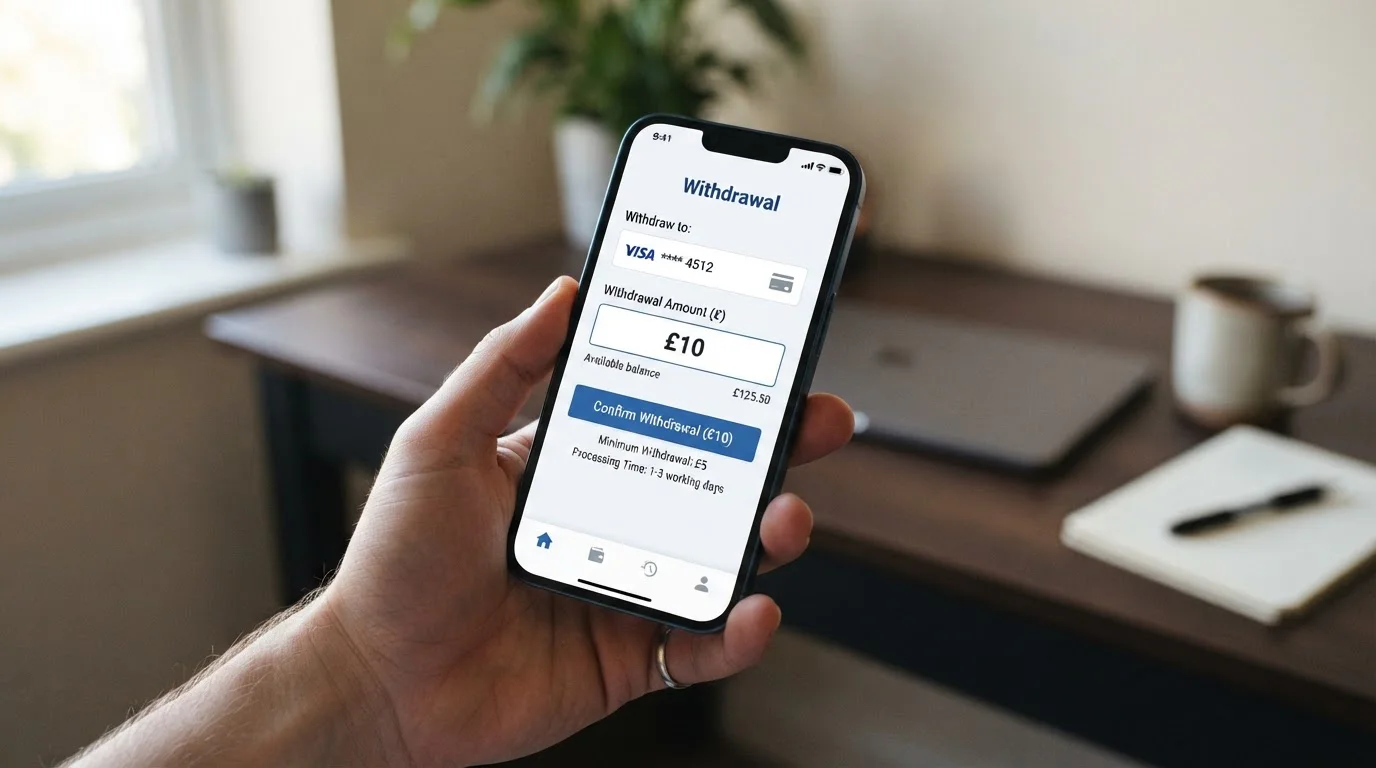
Every UKGC-licensed casino listed above is mobile-optimized. Sites use responsive HTML5 design, meaning they adapt to your screen size whether you are on a phone, tablet, or desktop. Some operators offer dedicated iOS and Android apps, but the mobile browser experience is usually sufficient.
Depositing £4 via mobile works the same as desktop: select your payment method, enter the amount, confirm. Apple Pay and Google Pay are designed for mobile, making them faster than entering card details manually. Withdrawals follow the same process—request via the cashier section, verify if it is your first payout, and wait for processing.
Mobile play suits low-deposit sessions because you can fund your account on the go and play for a few minutes without committing to a long session. Slots translate well to mobile screens. Live dealer games work but feel cramped on smaller phones. Table games like blackjack and roulette are playable but benefit from a larger screen for chip placement.
Low-Deposit Alternatives: £1, £2, £3, and £5 Casinos
The £4 minimum is rare, but £1, £5, and £10 minimums are common. If you cannot find a £4 option that suits you, broadening your search to £5 casinos expands your choices significantly. Most operators in the £5 tier are UKGC-licensed, offer similar bonus structures, and have more established reputations than niche £1–£3 sites.
£1 and £2 minimums exist but are almost always found at offshore casinos operating outside UKGC jurisdiction. These sites accept UK players but do not hold UK licences, meaning you lose GamStop protection, dispute resolution through the UKGC, and the regulatory safeguards that come with a Commission licence. The lower deposit minimum is not worth the regulatory risk.
£5 minimums are the sweet spot for low-deposit play in the UK. Operators like Ladbrokes and Betway enforce £5 across most payment methods, giving you access to the same game libraries, bonus structures, and payout speeds as higher-deposit players. The difference between £4 and £5 is marginal—if you are comfortable depositing £4, depositing £5 gives you more operator choice without meaningfully increasing your risk.
What is the minimum deposit at UK online casinos in 2026?
The most common minimum deposit at UKGC-licensed casinos is £10, followed by £5. A £4 minimum is rare and usually tied to specific payment methods (e-wallets or pay by mobile) rather than a uniform site policy. Some operators set higher minimums (£20 or £30) to reduce processing overhead. Lower minimums (£1, £2, £3) exist primarily at offshore sites not licensed by the UKGC.
Casinos Not on GamStop: The £4 Offshore Option
GamStop is the UK national self-exclusion scheme. Players who sign up for GamStop are blocked from all UKGC-licensed gambling sites for a chosen period (6 months, 1 year, or 5 years). Casinos “not on GamStop” are offshore operators—licensed in jurisdictions like Curaçao or Malta—that accept UK players but do not integrate with GamStop because they do not hold UK licences.
These sites sometimes advertise £4 or lower deposit minimums to attract UK players who have self-excluded via GamStop or who want to avoid UK affordability checks. The deposit threshold is not the value proposition—the lack of UKGC oversight is. You lose regulatory protections: no recourse through the UKGC if a dispute arises, no mandatory GamStop integration, no affordability checks, and often weaker responsible gambling tools.
Offshore casinos operate legally in their licensing jurisdiction but are not legal under UK law if they target UK customers without a UKGC licence. The UKGC has prosecuted operators for serving UK players without a licence. As a player, you are not committing an offence by using these sites, but you are accepting significantly higher risk. Payment processors may refuse to handle disputes, and winnings can be delayed or withheld with little recourse.
If you are searching for a £4 deposit casino to bypass GamStop, the honest answer is that you are using the deposit threshold as cover for circumventing a self-exclusion you enacted. That is a gambling harm signal, not a budget choice. Contact GamStop support or a problem gambling service like BeGambleAware before depositing offshore.
How to Choose the Right £4 Deposit Casino
Start with licensing. If the casino does not display a UKGC licence number and link to the Public Register, stop. No licence means no protection. Second, check the minimum deposit across payment methods—many sites advertise £5 minimums but enforce £10 for certain methods. Third, read the welcome bonus terms: confirm the minimum deposit to trigger the bonus, the wagering requirement (should be 10x or lower under UKGC rules), and which games contribute to clearing.
Compare withdrawal minimums to your likely balance. If you deposit £4 and the withdrawal minimum is £20, you need to quintuple your balance to cash out. That is a steep climb. Sites with £10 minimums are more realistic. Check withdrawal speeds by method—if you prefer fast payouts, prioritize operators with strong e-wallet processing times like Betway.
Assess the game library. If you only play slots, any of the six operators listed will serve you. If you want live dealer or a wide table game selection, Ladbrokes and Betway have deeper catalogues. If you prefer bingo or Slingo, Virgin Games and JackpotJoy are better fits.
Avoid chasing the lowest minimum deposit if it comes at the cost of licensing, reputation, or payout reliability. The difference between £4 and £5 is one pound. The difference between a UKGC-licensed site and an unlicensed one is the entire regulatory framework that protects your funds and enforces fair play.
Responsible Gambling at Low-Deposit Casinos
A £4 deposit is low-risk in absolute terms, but risk scales with frequency and pattern, not deposit size. Depositing £4 fifty times in a week is higher-risk than depositing £50 once. UKGC-licensed operators must offer deposit limits, reality checks, time-outs, and self-exclusion via GamStop. Use them.
Set a deposit limit before you play. Most sites let you cap daily, weekly, or monthly deposits. A £4 minimum does not protect you if you deposit £4 twenty times in a day. Set a limit you can afford to lose and stick to it. Enable reality checks—pop-up reminders showing how long you have been playing and how much you have wagered. These break the flow and force a conscious decision to continue.
If you find yourself depositing repeatedly to chase losses, that is a harm signal. Take a break using the time-out feature (24 hours, 7 days, or 30 days). If the problem persists, self-exclude via GamStop for 6 months or longer. GamStop blocks you from all UKGC-licensed sites instantly. Contact BeGambleAware or Gamblers Anonymous for support.
Low-deposit casinos are not safer than high-deposit ones. The harm comes from loss of control, not the size of individual deposits. A £4 threshold lowers the barrier to entry, which is exactly why it requires discipline. If you cannot stop at £4, the threshold is irrelevant.
Minimum Deposit Casinos UK 2026 — £1, £5 and £10 Options
Content created by the «casinomoneyg» team