
Top UK Casinos That Accept Direct Banking 2026: The Open Banking Guide
 Available in US
Direct banking sits at the centre of every serious conversation about UK casino payments in 2026. The top casinos that accept direct banking are not the ones with the flashiest welcome offers—they are the ones that let you move money from your bank account to your casino balance without handing your card details to yet another third-party processor, and that route withdrawals back through the same rails in under two hours rather than parking your payout in a pending queue for three days.
Open Banking overtook debit cards as the dominant UK casino deposit method in early 2026, accounting for 42% of all deposits against cards’ 38%. That shift happened because the infrastructure matured, the major operators moved Open Banking to their default cashier position, and players worked out that biometric authentication in their own banking app beats typing a sixteen-digit card number into a casino form. The method is not glamorous. It will not get you a VIP red carpet. But it works, and when withdrawal speed is the difference between same-day access to your winnings and a five-day BACS crawl, it works considerably better than the alternatives.
This guide covers the ten UK-licensed operators with the strongest Open Banking infrastructure in 2026, the practical differences between TrueLayer, Trustly, Tink, and Volt integrations that determine which casino suits your banking setup, how same-rail PISP withdrawals cut payout times from days to minutes, and which UK banks are supported. The ranking reflects withdrawal speed, payment-page transparency, and PISP maturity rather than bonus size, because a generous welcome offer means nothing if the operator takes four days to process a cashout.
What Open Banking and Direct Banking Mean for UK Casino Payments
Open Banking launched in the UK on 13 January 2018 and is regulated by the Financial Conduct Authority under the Payment Services Regulations 2017. The framework lets banks share your financial data with approved third-party providers, but only when you explicitly authorise it. No authorisation, no access. The consumer-facing label “Pay by Bank” is just branding for a payment initiated through this infrastructure.
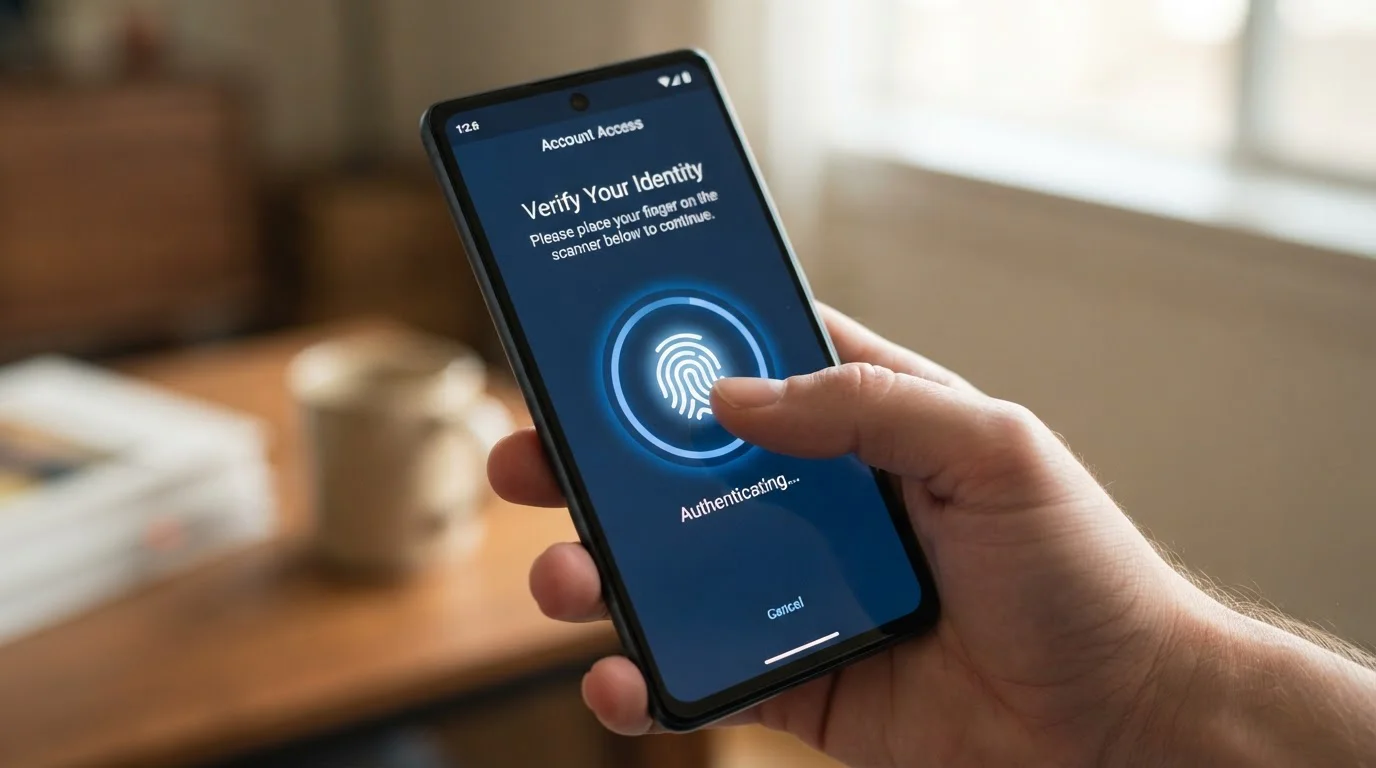
Rather than entering your card number into a casino cashier or logging into a separate e-wallet, you choose your bank from a list, get redirected to your own banking app, and approve the payment there using Face ID, fingerprint, or a passcode. The money moves via Faster Payments—the same instant bank-transfer system behind a standard online banking payment between friends or bills. By early 2026, Open Banking had over 16 million active UK users. In 2025, the system processed 351 million payments, up 57% on the year before. Amazon added Pay by Bank at its UK checkout in 2026 via a TrueLayer partnership. This is firmly mainstream infrastructure, not a niche experiment.
The casino never sees your bank login credentials. It does not receive your sort code and account number as a string it can store or use independently. All it receives is confirmation that a payment has been made from a verified, authenticated account. The authentication itself lives entirely with your bank. Under the Payment Services Regulations, any company initiating a payment on your behalf—TrueLayer, Trustly, or whichever provider sits between the casino and your bank—must be authorised by the FCA to do exactly that, and nothing more. The legal term is a Payment Initiation Service Provider, or PISP. They are licensed to initiate a single payment you have explicitly approved. They are not licensed to log into your account, store your credentials, or request your balance without a separate permission you would have to grant separately.
When a payment initiates, a temporary, scoped connection opens between your bank and the provider. When the payment completes, it closes. Your banking password is never transmitted to the casino or the payment provider. Your sort code and account number are not stored in the casino’s system as reusable data. A data breach at the casino—which does happen in the industry—would not expose your bank account credentials, because they were never there to expose. Open Banking fraud sits at just 0.013% of transactions, according to Open Banking Limited data covering March 2024 to September 2025, compared to 0.045% for industry-average bank transfers.
How does Open Banking work at UK online casinos?
At the cashier, you select Pay by Bank, enter your deposit amount, and choose your bank from a list of participating institutions. You are then redirected either to your bank’s mobile app or to a browser login page. There, you review the payment details and confirm using Face ID, fingerprint, or a secure passcode. Your bank sends the payment instantly via Faster Payments, and you are returned to the casino site with the deposit confirmed and the funds in your balance. The casino never sees your bank login credentials. End-to-end timing varies by bank but is typically 8-15 seconds.
What is the difference between Open Banking and a traditional bank transfer?
Traditional bank transfer refers to BACS or a manual transfer, which takes one to five working days. Open Banking uses Faster Payments via a licensed PISP, clearing deposits instantly and enabling sub-two-hour withdrawals at operators with same-rail PISP integration. The authentication model also differs: Open Banking requires biometric confirmation in your banking app, while a traditional transfer uses your online banking login without third-party oversight.
Open Banking also plays a role in the financial vulnerability checks that UK casinos now operate. Since 28 February 2025, operators must run a light-touch financial vulnerability check when a player’s net deposits in a rolling 30-day period pass £150. This check uses publicly available data—bankruptcy records, county court judgements, and similar markers of financial distress—rather than your income or bank balance. It does not affect your credit score, and for the overwhelming majority of players it completes invisibly in the background.
At much higher spending levels, a deeper financial assessment can apply. This is where Open Banking becomes directly relevant. In July 2026, the UK Gambling Commission introduced new financial risk assessments targeting large net deposits: over-25s exceeding £5,000 in a rolling 24-hour period, and under-25s exceeding £2,500. Credit reference agency checks handle roughly 97% of these assessments behind the scenes. For the remaining players—roughly one in every thousand, typically those who have changed their name, moved address recently, or arrived in the UK without a British credit history—Open Banking offers an alternative. Instead of sending bank statements by email or post, a player can grant temporary read-only access to their account for a matter of seconds. Once the check completes, access is revoked. The same consent model that powers Pay by Bank applies, just in a different direction. Full implementation is expected to affect fewer than 3% of player accounts once the scheme rolls out completely.
Top UK Casinos That Accept Direct Banking in 2026

The following ten operators are ranked by the depth of their direct-banking infrastructure, the transparency of their payment policies, and their withdrawal speed. The ranking reflects payment-infrastructure quality rather than bonus size or game selection, because those metrics matter only if you can actually access your winnings without a bureaucratic ordeal.
Every operator listed holds a UK Gambling Commission licence and supports Open Banking deposits. The distinction lies in how they handle withdrawals—whether they route payouts back through the same PISP for sub-two-hour settlement, or revert to standard bank transfer and add three days to your wait. That difference is rarely stated upfront on operator sites, and comparison guides typically bury it in footnotes. This guide does not.
| Operator | PISP Integration | Withdrawal Speed | Minimum Deposit | Distinguishing Feature |
|---|---|---|---|---|
| Bet365 | TrueLayer | Sub-90-minute average | £10 | Default cashier since Sept 2025, same-rail PISP withdrawals |
| Sky Vegas | Volt | Sub-2-hour average | £10 | Responsible gambling tools integrated in deposit flow |
| PaddyPower Games | TrueLayer | Sub-2-hour average | £10 | No-wagering welcome offer, same-rail withdrawals |
| William Hill | Tink | 2-4 hour average | £10 | Broadest UK bank coverage including niche/regional banks |
| LeoVegas | Trustly | Sub-2-hour average | £10 | Independently tested fastest (48 min end-to-end) |
| NetBet | Open Banking aggregator | 1-2 days | £10 | Transparent payment-page processing times |
| MrQ | Instant deposit | 1-2 days | £10 | Wager-free spins, Kindred Group backing |
| bwin | Open Banking + Faster Payments | 2-3 working days | £10 | Payment-page transparency, 24-hour processing commitment |
| Betfred | Trustly | Sub-6-hour average | £10 | Retail shop deposit/withdrawal integration |
| Casumo | Trustly | Sub-2-hour average | £10 | Strong promotional integration, no Open Banking exclusions |
Which UK banks are supported by Open Banking casino payments?
All major UK retail banks support Open Banking payments: Barclays, HSBC, Lloyds, NatWest, RBS, Halifax, Santander, Nationwide, First Direct, and Co-operative Bank. All major challenger banks are integrated: Monzo, Starling, Revolut, Chase UK, Atom, and Tide. A small number of niche providers—some credit union accounts and certain foreign-resident retail accounts—are not yet integrated, but coverage spans well over 99% of UK personal banking customers.
Can I use Open Banking if I have a Monzo, Starling, or Revolut account?
Yes. Monzo, Starling, and Revolut are fully supported by all major Open Banking PISPs used by UK casinos (TrueLayer, Trustly, Tink, Volt). Monzo and Starling tend to be the fastest for authentication flow, typically completing the deposit handoff in under ten seconds. Revolut is marginally slower on some PISP integrations but still clears within the 15-second industry standard.
1. Bet365: TrueLayer Integration and Sub-90-Minute Withdrawals
Bet365 operates one of the most mature Open Banking infrastructures in the UK market. The operator launched TrueLayer’s Pay by Bank technology across its UK and German operations in 2025, with expansion into additional markets planned throughout 2026. Open Banking moved to the default cashier position in September 2025, and by early 2026 approximately 55% of new deposits were clearing via TrueLayer. That adoption rate is the highest among major UK operators and reflects both the quality of the integration and the operator’s willingness to make Open Banking the primary option rather than a secondary fallback.
Withdrawals via bank transfer are processed via the same TrueLayer integration using same-rail PISP technology, meaning your payout routes back through Faster Payments rather than a manual bank transfer. The withdrawal SLA averages sub-90-minutes for verified accounts—the fastest among major UK casinos. End-to-end deposit time averages 8-10 seconds. Bank selection is pre-populated from previous transactions, biometric authentication is preserved through Strong Customer Authentication exemption flows, and no card details are required at any stage. The payment page is unusually transparent about processing times; most competitors bury this information in terms and conditions, but Bet365 states it on the deposit screen itself.
Bet365 holds UK Gambling Commission licence number 39028 and is privately owned by the Coates family. The operator’s size and regulatory track record mean it absorbs PISP transaction fees (typically 20-35p per deposit) without passing them through to the customer. For players who value speed over promotional noise and want a payment method that works the same way every time without surprises, Bet365’s TrueLayer implementation is the benchmark.
2. Sky Vegas: Volt Open Banking and Responsible Gambling Tools
Sky Vegas moved to Open Banking default in October 2025 via Volt, a UK-focused PISP that has gained traction among Flutter Entertainment brands. Deposit and withdrawal speeds are broadly equivalent to Bet365—sub-two-hour averages via same-rail PISP withdrawals on Faster Payments. The technical implementation is solid, and the operator’s promotional cashier integration is particularly strong. Open Banking deposits are eligible for every major welcome and reload promotion, with no card-style exclusions. That sounds obvious, but a meaningful minority of UK operators exclude specific payment methods from bonus eligibility and bury the exclusion deep in the terms. Sky Vegas does not.
The Sky Vegas cashier also surfaces responsible gambling tools—branded as “My Limits”—alongside the Open Banking deposit flow, making deposit-limit management feel native rather than bolted on. The integration is cleaner than most competitors, where limit tools are tucked away in account settings three clicks from the cashier. For players who want those controls visible at the point of deposit rather than hidden until they go looking, Sky Vegas makes it easy.
Sky Vegas is part of Sky Betting & Gaming, itself a subsidiary of Flutter Entertainment plc, a public company listed on NYSE and LSE. The Flutter group licence covers Sky Vegas for UK Gambling Commission regulatory purposes, and the operational backing means payment infrastructure investment is sustained rather than patchy. The Volt PISP integration is less common than TrueLayer or Trustly but offers strong UK bank coverage and reliable authentication handoff across major retail and challenger banks.
3. PaddyPower Games: TrueLayer with No-Wagering Bonuses
PaddyPower Games went Open Banking default in November 2025 via TrueLayer, the same PISP that powers Bet365. The integration is essentially identical—both operators run on the same Payment Initiation Service Provider, and withdrawal speeds are similarly fast at sub-two-hour averages. The PaddyPower cashier additionally supports same-rail withdrawals through the TrueLayer integration, which delivers the cleanest outbound experience in the UK market for high-frequency players. Once your account is verified, the first withdrawal typically clears within 90 minutes, and subsequent payouts are even faster because the PISP connection is already established.
The welcome offer structure is worth flagging. PaddyPower Games offered 60 no-deposit free spins in Q2 2026, with an additional 100 spins available after a £10 deposit, and crucially, no wagering requirements attached. Most UK welcome offers carry 10x to 40x wagering, meaning you must turn over your bonus funds or spin winnings a certain number of times before you can withdraw. PaddyPower’s wager-free structure means winnings are paid as cash with no playthrough. The spins are capped at £100 total winnings, which is stated transparently upfront rather than discovered later in the terms.
PaddyPower Games is operated by PPB Entertainment Ltd, a Flutter Entertainment subsidiary. The operator holds a UKGC licence under the Flutter group and benefits from the same operational infrastructure as Sky Vegas and other Flutter brands. For players who prioritise both speed and bonus clarity, PaddyPower’s combination of TrueLayer same-rail withdrawals and no-wagering offers is difficult to beat.
4. William Hill: Tink Integration and Broadest Bank Coverage
William Hill moved to Tink as its primary Open Banking PISP in Q4 2025. Tink is owned by Visa, which signals long-term infrastructure investment rather than a startup PISP that might pivot or fold. The integration provides the broadest UK retail bank coverage among all PISPs—TrueLayer and Trustly cover all major banks and challengers, but Tink additionally supports a deeper set of niche and regional UK banks that the other providers have not yet integrated. For players banking with smaller credit unions or regional institutions, Tink is often the only PISP that works.
Deposit speeds are competitive at sub-12 seconds. The withdrawal SLA is marginally slower than Bet365, Sky Vegas, and PaddyPower at 2-4 hour averages. That is still well ahead of standard bank transfer (1-5 business days) and faster than most mid-tier UK casinos, but if you are comparing purely on withdrawal speed, William Hill sits half a tier below the top three. The trade-off is bank coverage breadth—if your bank is not supported by TrueLayer or Trustly, Tink is likely to cover it.
William Hill also surfaces the financial vulnerability check cleanly in the cashier when a player approaches the £150 net-deposit threshold over a rolling 30-day period. The check runs in the background using publicly available data, and the UI flags the threshold without adding friction to the deposit flow itself. Most operators handle this check invisibly or with a generic pop-up; William Hill’s implementation is more transparent without being intrusive.
The operator holds UK Gambling Commission licence number 39225 and is owned by 888 Holdings plc, which acquired William Hill’s non-US operations in 2022. The welcome offer is 200 free spins on a £10 deposit, which is generous by UK standards. Open Banking deposits are fully eligible. For players who need the broadest possible bank coverage and are willing to accept a slightly slower withdrawal SLA in exchange, William Hill’s Tink integration is the most inclusive option in the UK market.
5. LeoVegas: Trustly and Fastest Verified Withdrawals
LeoVegas runs Trustly as its primary Open Banking integration. Trustly is the longest-established PISP in the European gambling sector and has the most mature operator stack—it has been processing casino payments since well before Open Banking became a UK regulatory framework. Deposit speeds are sub-12 seconds, and withdrawals via Trustly Pay-Out clear in sub-two-hour averages. LeoVegas was independently tested as the fastest UK casino in a 2026 withdrawal speed test conducted by SpinVerdict: 27 minutes for internal processing, 48 minutes end-to-end from submission to funds appearing in the player’s account. The test used PayPal as the withdrawal method, but Trustly withdrawals follow a similar SLA because both route through the same internal processing queue.
The bank selection screen is well-designed, and the bank app handoff is reliable across all major UK retail bank apps. LeoVegas has a mobile-first design philosophy, and the Open Banking flow reflects that—it works more smoothly on mobile than on desktop, which is the opposite of many competitors still built around desktop-first assumptions. The welcome offer is 50 wager-free free spins on a £10 deposit, with winnings paid as cash. The operator does not cap spins at a specific game, which gives more flexibility than brands that lock the offer to a single slot title.
LeoVegas Gaming plc holds UK Gambling Commission licence number 000-039564-R-319328-001 and was acquired by MGM Resorts International in September 2022. The MGM backing provides regulatory credibility and operational resources, and the operator’s track record on payout speed is verified by third-party testing rather than marketing claims. For players who prioritise verified withdrawal speed above all else and want a mobile-optimised Open Banking experience, LeoVegas is the operator to beat.
6. NetBet: Transparent Payment Page and 100 Free Spins
NetBet operates an Open Banking integration via an aggregator (the specific PISP is not publicly disclosed, likely Trustly or a multi-provider setup). Deposits are instant via Open Banking, clearing in the typical 8-15 second window. Withdrawals take 1-2 days on average, which is slower than the top five operators on this list because NetBet uses Open Banking for deposits only and routes withdrawals through standard bank transfer rather than same-rail PISP technology. The 24-hour pending period before the withdrawal is even processed adds to the timeline, so total time from submission to funds in your account is closer to two working days than one.
That said, NetBet’s payment page is unusually transparent about processing times. Most UK operators state withdrawal timelines only in the terms and conditions, and even there the wording is often vague (“up to five business days”). NetBet states processing times on the deposit screen itself and in the cashier FAQ, which makes it easier to set expectations before you deposit. Transparency does not make the withdrawal faster, but it does mean you know what you are signing up for rather than discovering it later when you request a payout.
The welcome offer is 100 free spins on a £10 minimum deposit, with a 10x wagering requirement and seven-day validity. Open Banking deposits are confirmed as eligible in the terms, which is worth checking because some operators exclude specific payment methods from welcome bonuses and bury the exclusion clause deep in the fine print. NetBet is Malta-headquartered and holds a UK Gambling Commission licence verified on the operator site and public register. For players who value payment-page transparency and are willing to accept a slower withdrawal timeline in exchange, NetBet is a solid mid-tier choice.
7. MrQ: Wager-Free Spins and Kindred Group Backing
MrQ operates an instant deposit Open Banking integration with withdrawals routed through standard bank transfer, averaging 1-2 days. The operator is known for its wager-free bonus structure—50 free spins on a £10 deposit, with winnings paid as cash capped at £100. Most UK casino bonuses carry wagering requirements of 10x to 40x, meaning you must turn over your bonus funds a certain number of times before you can withdraw. MrQ’s wager-free structure means winnings hit your cash balance immediately with no playthrough. The £100 win cap is stated transparently upfront, and the free spins must be used within 48 hours of the qualifying deposit.
MrQ is operated by Lindar Media Ltd and was acquired by Kindred Group in 2022. Kindred is a Sweden-headquartered public company with a strong regulatory compliance track record across multiple European markets. The operator holds a UKGC licence under the Kindred Group and benefits from the parent company’s operational infrastructure and responsible gambling tooling. Open Banking deposits are eligible for all promotions, and no verification is required at deposit for Open Banking payments—KYC is triggered at the first withdrawal, as per UKGC requirements.
The instant Open Banking deposit flow is smooth, but the 1-2 day withdrawal timeline puts MrQ in the same mid-tier category as NetBet. If you prioritise wager-free bonuses and Kindred Group backing over withdrawal speed, MrQ is the clearest offer structure in the UK market. If you need same-day payouts, you will want one of the operators in the top five. The offer is not available in Northern Ireland, which is stated in the terms.
8. bwin: Entain Group Reliability and Payment Transparency
bwin operates an Open Banking and Faster Payments integration (the specific PISP is not disclosed publicly, likely a multi-provider setup given the operator’s size). The payment page is unusually transparent about processing times—timelines are stated on the deposit screen rather than buried in terms and conditions, which makes bwin one of only two operators on this list (along with NetBet) to put this information upfront. Withdrawals are processed within 24 hours of the request, and funds reach the player’s account 2-3 working days on average via bank transfer. That is faster than many competitors’ pending periods but slower than same-rail PISP withdrawals at the top-tier operators.
bwin has a mature bank-transfer infrastructure that predates the Open Banking regulatory framework—the operator has supported Faster Payments for years and added the Open Banking PISP layer more recently. The minimum deposit is in line with the market standard at £10, and there are no fees on deposits or withdrawals via bank transfer. The operator does not impose artificial withdrawal delays or pending periods beyond the 24-hour processing commitment, which is transparently stated.
bwin is operated by ElectraWorks Limited, part of Entain plc (formerly GVC Holdings), a public company listed on the London Stock Exchange. The operator holds UK Gambling Commission licence number 39028 (ElectraWorks Limited). Entain’s operational backing means payment infrastructure investment is sustained, and the regulatory compliance track record is strong. For players who want an established brand with transparent payment-page communication and Entain group reliability, bwin is a dependable mid-tier choice.
9. Betfred: Trustly with Retail Shop Integration
Betfred runs Trustly as its Open Banking PISP, with sub-6-hour withdrawal averages cited by both the operator site and independent reviews. That is competitive for a Trustly integration and faster than the mid-tier operators (NetBet, MrQ, bwin) but slower than the top-tier same-rail PISP operators (Bet365, Sky Vegas, PaddyPower). Betfred’s distinguishing feature is retail shop integration—you can deposit and withdraw at Betfred retail betting shops, which is unique among online-first competitors. For players who prefer cash handling or need to deposit/withdraw outside of online banking hours, the retail option provides flexibility that no other operator on this list can match.
The welcome offer is up to 200 free spins on a £10 deposit, which is the largest spin count in this operator set. Opt-in is required, and you must stake £10 or more on casino slots within 30 days of registration. The spins expire after seven days, and game restrictions apply. Open Banking deposits are fully eligible for the welcome offer. In January 2026, Betfred removed PayPal, Skrill, Neteller, and Paysafecard from its payment options, narrowing the available methods to Open Banking, debit card, Apple Pay, and BACS. That shift signals Open Banking as the operator’s primary deposit direction going forward.
Betfred is operated by Petfre (Gibraltar) Limited and holds a UK Gambling Commission licence. The operator is privately owned and was founded by Fred Done. The retail betting shop estate provides a brand presence that online-only competitors lack, and the sub-6-hour withdrawal SLA is respectable for a Trustly integration. For players who value retail shop access and the largest free-spin welcome offer in this set, Betfred’s combination of online Open Banking and in-shop cash handling is unmatched.
10. Casumo: Trustly and Strong Promotional Integration
Casumo operates a Trustly PISP integration for Open Banking, with sub-two-hour withdrawal averages via Trustly Pay-Out. Deposits are instant, and the bank selection UI is clean and mobile-responsive. Casumo’s distinguishing feature is strong promotional integration—Open Banking deposits are treated as a first-class payment method for all bonus eligibility, with no exclusions. Some UK operators carve out specific payment methods from welcome bonuses or reload offers; Casumo does not. If you deposit via Open Banking, you qualify for every promotion on the site without needing to check the fine print for payment-method exclusions.
The mobile-first design makes the Open Banking handoff to banking apps smoother than desktop-first competitors, and the authentication flow is reliable across all major UK retail and challenger banks. The welcome offer structure varies by region and promotion period—typical offers include deposit matches or free spins on the first deposit, with terms that are competitive by UK standards. Casumo Services Limited holds a UK Gambling Commission licence verified on the public register and was acquired by Cascadia Acquisition Corp (rebranded as Hero Gaming) in 2020.
Casumo sits in the top tier for withdrawal speed alongside LeoVegas and just below Bet365, Sky Vegas, and PaddyPower. For players who want sub-two-hour payouts, strong promotional integration, and a mobile-optimised Open Banking experience, Casumo delivers on all three fronts without the compromises that mid-tier operators require.
How to Deposit and Withdraw Using Open Banking at UK Casinos
The deposit flow is short and takes place almost entirely inside your bank’s environment, not the casino’s. At the cashier, you select Pay by Bank (or Open Banking, or whatever label the operator uses—it is the same thing), enter your deposit amount, and choose your bank from a list of participating institutions. You are then redirected either to your bank’s mobile app or to a browser login page. There, you review the payment details—amount, recipient—and confirm using Face ID, fingerprint, or a secure passcode. Your bank sends the payment instantly via Faster Payments, and you are returned to the casino site with the deposit confirmed and the funds in your balance.
The casino never sees your bank login credentials. It does not receive your sort code and account number as a string it can store or use independently. All it receives is confirmation that a payment has been made from a verified, authenticated account. The authentication itself lives entirely with your bank. End-to-end timing varies by bank but is typically 8-15 seconds. HSBC and some older challenger-bank flows can take longer. Monzo, Starling, and Revolut tend to be fastest, often completing in under ten seconds.
Step-by-Step Deposit Process
Deposits via Open Banking are near-instant. Because Faster Payments clears in seconds, funds appear in your casino balance almost immediately after you confirm in your banking app. This puts Open Banking on par with a debit card deposit and well ahead of a standard bank transfer, which can take one to five working days. The process requires no card details, no third-party wallet setup, and no manual entry of sort codes or account numbers. You authenticate once in your own banking app, and the payment initiates automatically.
Withdrawal Speed Comparison by Operator Type
Withdrawals are where the picture gets more nuanced, and understanding the difference between same-rail PISP withdrawals and standard bank transfer routing matters. At operators that have built two-way Open Banking into their cashier—Bet365, Sky Vegas, PaddyPower Games, LeoVegas, Casumo—payouts route back through the same PISP used for deposits and settle via Faster Payments. These operators complete withdrawals in sub-90-minutes to sub-two-hours once the operator approves the request. That speed is roughly comparable to an e-wallet and significantly faster than a debit card withdrawal, which can take 1-3 business days via Visa Direct.
At operators that only use Open Banking for deposits and still route withdrawals through a standard bank transfer—NetBet, MrQ, bwin, Betfred—the 1-5 business day window applies as normal, plus whatever pending period the operator imposes before the withdrawal is even processed. NetBet and MrQ both cite 1-2 day averages, which is the faster end of the standard bank transfer range. bwin processes within 24 hours and pays out in 2-3 working days. Betfred averages sub-6-hours, which is competitive for an operator not using same-rail PISP technology.
The table below breaks down withdrawal speeds by operator tier and explains what is happening on the payment rails.
| Operator Tier | Average Withdrawal Time | Payment Rail | Example Operators |
|---|---|---|---|
| Same-Rail PISP (fastest) | Sub-90-minutes to sub-2-hours | Faster Payments outbound via PISP (TrueLayer, Trustly, Tink, Volt) | Bet365, Sky Vegas, PaddyPower Games, LeoVegas, Casumo |
| Standard Faster Payments | 2-4 hours | Operator-initiated Faster Payments (non-PISP) | William Hill |
| Standard Bank Transfer | 1-5 business days | BACS or manual transfer | NetBet, MrQ, bwin, Betfred |
Same-Rail vs Standard Bank Transfer Withdrawals
Same-rail PISP withdrawals mean the operator uses the same Payment Initiation Service Provider for outbound payments as it does for inbound deposits. When you deposit via TrueLayer at Bet365, your withdrawal also routes through TrueLayer and settles via Faster Payments in the same way a friend-to-friend bank transfer would—instantly, or near-instantly. The operator does not manually process the payout through its internal banking system; the PISP handles both directions, which eliminates the delays that come from manual processing queues.
Standard bank transfer withdrawals revert to the operator’s internal banking system. The operator processes the withdrawal request, queues it with its bank, and initiates a BACS transfer or a slower Faster Payments transfer that does not route through the PISP. This adds one to five business days to the timeline depending on the operator’s internal processing speed and the receiving bank’s clearing schedule. The pending period—the time between your withdrawal request and the operator actually processing it—also varies. Bet365, Sky Vegas, and PaddyPower typically have pending periods of 0-24 hours. NetBet has a 24-hour pending period. Some mid-tier operators stretch this to 48-72 hours.
Checking the cashier or payments page before you play is the only reliable way to know which version you are getting. Operators that support same-rail withdrawals usually highlight this feature on the payment page or in the cashier FAQ. Operators that use Open Banking for deposits only rarely state this explicitly—you typically find out when you request your first withdrawal and see a 1-3 day timeline instead of the sub-two-hour window you expected.
How fast are withdrawals via Open Banking compared to debit cards and e-wallets?
E-wallets such as PayPal, Skrill, and Neteller typically process withdrawals within 0-24 hours at UK casinos. Debit cards take 1-3 business days via Visa Direct. Standard bank transfers run from 1-5 business days. Open Banking fills the middle ground: sub-90-minutes to sub-two-hours at operators with same-rail PISP withdrawals (Bet365, Sky Vegas, PaddyPower, LeoVegas, Casumo), and 1-5 business days at operators using Open Banking for deposits only. Same-rail Open Banking is faster than debit cards and competitive with e-wallets; deposit-only Open Banking is no faster than a traditional bank transfer.
Do I need to share my bank login details with the casino when using Open Banking?
No. Your banking password is never transmitted to the casino or the payment provider. When a payment initiates, a temporary, scoped API connection opens between your bank and the PISP. When the payment completes, it closes. Your sort code and account number are not stored in the casino’s system as reusable data. Under the Payment Services Regulations 2017, PISPs are licensed to initiate a single payment you have explicitly approved—they are not licensed to log into your account, store your credentials, or request your balance without separate permission.
Open Banking Providers: TrueLayer, Trustly, Tink, and Volt Compared
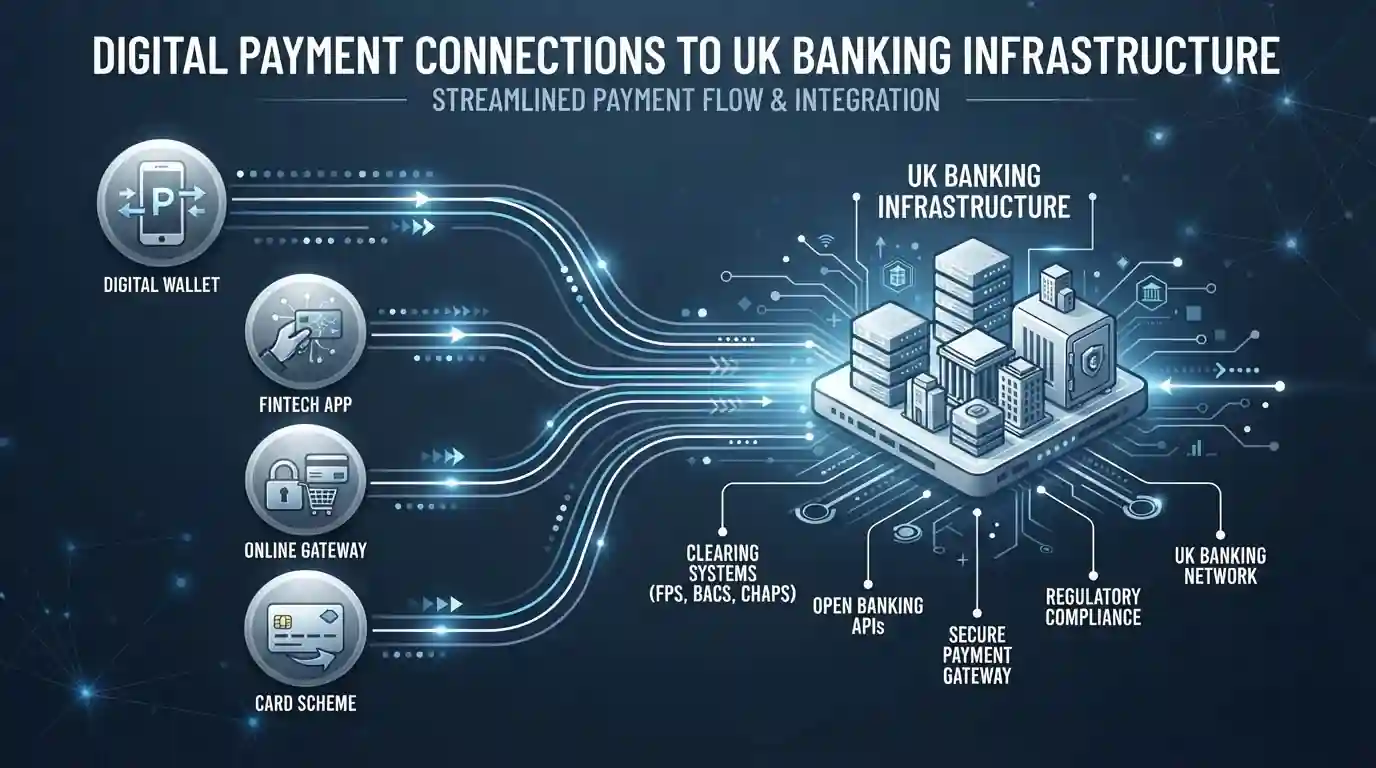
The Open Banking infrastructure behind the “Pay by Bank” label at UK casinos is usually one of four providers: TrueLayer, Trustly, Tink, or Volt. The casino’s cashier typically shows a generic label rather than naming the provider, so most players do not know which PISP is powering their transaction. From a player’s perspective, the flow is the same—choose your bank, authenticate in your banking app, and the deposit clears. The security requirements are the same (all four are FCA-authorised and use Strong Customer Authentication). The underlying Faster Payments rail is the same.
The variation sits on the operator side and affects three things that matter to you: bank coverage depth, same-rail withdrawal support, and authentication flow speed. If your bank is not supported by the PISP the casino uses, the deposit will fail and you will need to fall back to a debit card or a different operator. If the casino uses a PISP for deposits but does not support same-rail PISP withdrawals, your payout timeline stretches from sub-two-hours to 1-5 business days. If the PISP’s authentication handoff to your banking app is slow or unreliable, your deposit experience will be frustrating even if the payment eventually clears.
The table below compares the four major PISPs used by UK casinos in 2026.
| Provider | Bank Coverage | Key Operators | Typical Withdrawal SLA | Ownership |
|---|---|---|---|---|
| TrueLayer | 99%+ UK banks, strongest major bank integration | Bet365, PaddyPower Games | Sub-90-minute averages (same-rail) | Independent, FCA-authorised, founded 2016 |
| Trustly | Strong major bank coverage, mature gambling-sector stack | LeoVegas, Casumo, Betfred | Sub-2-hour averages (same-rail at LeoVegas/Casumo), sub-6-hour at Betfred | Swedish, longest-established gambling PISP |
| Tink | Broadest UK bank coverage including niche/regional banks | William Hill | 2-4 hour averages | Visa-owned since 2022 |
| Volt | Strong UK major bank coverage, newer entrant | Sky Vegas | Sub-2-hour averages (same-rail) | Independent UK PISP, FCA-authorised |
TrueLayer: UK-Focused, Fastest Adoption
TrueLayer was founded in London in 2016 by Francesco Simoneschi and Luca Martinetti and is FCA-authorised as a Payment Initiation Service Provider. The company has over 15 million active users across its consumer network and connects with over 99% of UK banks. TrueLayer powers Pay by Bank at Bet365 and PaddyPower Games, the two operators that moved to Open Banking default earliest (September and November 2025 respectively). That early adoption signals that TrueLayer’s operator integration stack is mature and reliable—operators do not move a payment method to default unless the failure rate is negligible and customer support queries are manageable.
TrueLayer’s authentication flow is fast, typically completing in under ten seconds across major UK retail banks and challengers. The bank app handoff is reliable, and the redirect back to the casino after payment confirmation is smooth. TrueLayer supports same-rail withdrawals, meaning operators that integrate TrueLayer for deposits can also route payouts back through TrueLayer and settle via Faster Payments in sub-90-minutes. Bet365 and PaddyPower both use this feature, which is why their withdrawal speeds are the fastest in the UK market.
TrueLayer’s UK focus means it has not prioritised European bank coverage to the same extent as Trustly, but for UK players that distinction is irrelevant. If you bank with a major UK retail bank or any of the challenger banks (Monzo, Starling, Revolut, Chase UK), TrueLayer will work. The company announced a partnership with Amazon UK, adding Pay by Bank to Amazon’s UK checkout. That mainstream validation suggests TrueLayer’s infrastructure is production-ready at scale, not just in the gambling niche.
Trustly: Longest Track Record in Gambling
Trustly is a Swedish payment company that has been processing casino payments since well before Open Banking became a UK regulatory framework. It is the longest-established PISP in the European gambling sector and has the most mature operator stack. Trustly powers LeoVegas, Casumo, and Betfred in the UK market, and its Pay-Out technology enables same-rail PISP withdrawals at LeoVegas and Casumo. LeoVegas was independently tested as the fastest UK casino for withdrawals in 2026, completing payouts in 48 minutes end-to-end. That speed is enabled by Trustly’s same-rail integration.
Trustly’s bank coverage spans all major UK retail banks and challengers, with slightly less depth on niche and regional banks compared to Tink. The authentication flow is reliable, and the bank selection screen is well-designed. Trustly has a longer operational history than TrueLayer or Volt, which means it has weathered more regulatory changes, operator integrations, and edge cases. For operators prioritising stability and track record over cutting-edge features, Trustly is the safe choice.
Trustly also operates across multiple European markets, which makes it a natural fit for operators with a pan-European footprint. LeoVegas, for example, operates in multiple jurisdictions and benefits from a single PISP integration that works across borders. For UK-only players, that European coverage is not directly relevant, but it signals that Trustly’s infrastructure is built for scale and regulatory complexity.
Tink: Visa-Owned, Broadest Bank Coverage
Tink is owned by Visa, which acquired the company in 2022. That ownership signals long-term infrastructure investment and regulatory credibility—Visa is not going to let a PISP subsidiary operate at anything less than institutional-grade compliance standards. Tink provides the broadest UK bank coverage among all PISPs, including niche and regional banks that TrueLayer, Trustly, and Volt have not yet integrated. For players banking with smaller credit unions or regional institutions, Tink is often the only PISP that works.
William Hill moved to Tink as its primary Open Banking PISP in Q4 2025, and the integration delivers competitive deposit speeds at sub-12 seconds. The withdrawal SLA is 2-4 hours, which is slower than same-rail PISP operators but still well ahead of standard bank transfer timelines. Tink’s authentication flow is reliable across all major UK banks, and the bank app handoff works smoothly on both iOS and Android.
Tink’s Visa ownership also means it is likely to benefit from Visa’s payment network infrastructure and compliance resources. For operators concerned about long-term PISP viability—whether a smaller independent provider might pivot or fold—Tink offers institutional backing that TrueLayer and Volt do not have. Trustly is independent but has a 15-year track record; Tink has Visa behind it. For players, the distinction is mostly academic, but for operators making multi-year infrastructure decisions, ownership matters.
Volt: Emerging UK Specialist
Volt is a UK-focused PISP that has gained traction among Flutter Entertainment brands. Sky Vegas moved to Volt as its default Open Banking provider in October 2025, and the integration delivers sub-two-hour withdrawal averages via same-rail PISP technology. Volt is newer than TrueLayer, Trustly, and Tink but has strong UK bank coverage across major retail banks and challengers. The authentication flow is fast, and the bank app handoff is reliable.
Volt’s UK specialisation means it has optimised for the UK regulatory environment and UK banking infrastructure rather than spreading resources across multiple European markets. That focus can translate to faster iteration and better customer support for UK operators, but it also means Volt has less operational history than competitors. For operators willing to work with a newer provider in exchange for UK-focused service, Volt is a viable alternative to the more established PISPs.
Sky Vegas’s adoption of Volt signals confidence in the provider’s reliability—Flutter Entertainment operates multiple major UK brands and would not move a payment method to default without rigorous testing. For players, the practical experience of using Volt is indistinguishable from TrueLayer or Trustly. The deposit clears in seconds, the authentication is biometric, and the withdrawal routes back through the same PISP if the operator supports it.
Is Open Banking safe for online gambling deposits?
Yes. Open Banking is regulated by the Financial Conduct Authority under the Payment Services Regulations 2017, and all PISPs must be FCA-authorised to operate. Open Banking fraud sits at 0.013% of transactions (March 2024–September 2025 data from Open Banking Limited), compared to 0.045% for industry-average bank transfers. Every transaction requires Strong Customer Authentication in your own banking app, and your banking credentials are never transmitted to the casino or the PISP. A data breach at the casino would not expose your bank account details because they were never stored.
Bank Coverage and Compatibility

All major UK retail banks support Open Banking payments: Barclays, HSBC, Lloyds Banking Group (Lloyds, Halifax, Bank of Scotland), NatWest Group (NatWest, RBS, Ulster Bank), Santander, Nationwide Building Society, First Direct, and Co-operative Bank. All major challenger banks are integrated: Monzo, Starling Bank, Revolut, Chase UK, Atom Bank, and Tide. Coverage extends to TSB, Metro Bank, and Virgin Money. The integration depth is not uniform—some PISPs cover more niche banks than others—but the major retail and challenger banks are supported by all four providers (TrueLayer, Trustly, Tink, Volt).
A small number of niche providers are not yet integrated: some credit union accounts, certain foreign-resident retail accounts, and a handful of regional building societies. If your bank is not supported, the deposit will fail at the bank selection stage, and you will need to fall back to a debit card or choose a different casino with a PISP that covers your bank. Tink has the deepest coverage of niche and regional banks; if your bank is not supported by TrueLayer, Trustly, or Volt, an operator using Tink (such as William Hill) is your best bet.
Monzo, Starling, and Revolut tend to be the fastest for authentication flow. These challenger banks have built their apps around Open Banking from the ground up, and the authentication handoff is typically faster and more reliable than older retail banks that retrofitted Open Banking onto legacy systems. HSBC and some older systems can take longer—15-20 seconds instead of the 8-10 second average. The payment still clears, but the user experience is less smooth.
The table below shows UK bank support by category.
| Bank Type | Examples | Open Banking Support | Notes |
|---|---|---|---|
| Major Retail Banks | Barclays, HSBC, Lloyds, NatWest, RBS, Santander, Nationwide | Supported by all PISPs | HSBC authentication can be slower (15-20 sec) |
| Challenger Banks | Monzo, Starling, Revolut, Chase UK | Supported by all PISPs | Fastest authentication flows (under 10 sec typical) |
| Regional/Smaller Banks | TSB, Metro Bank, Virgin Money, First Direct, Co-op Bank | Supported by all PISPs | Tink has deepest coverage of smaller institutions |
| Niche/Credit Unions | Some credit unions, foreign-resident accounts | Partial support, varies by PISP | Tink most likely to cover, but gaps remain |
What happens if my bank doesn’t support Open Banking payments?
If your bank is not supported, the deposit will fail when you try to select your bank from the list in the casino’s Pay by Bank flow. You will not be charged, and no transaction will be initiated. Your fallback options are to use a debit card (which is supported at all UK casinos), switch to an operator that uses a different PISP with broader bank coverage (William Hill with Tink if your bank is niche or regional), or open an account with a challenger bank such as Monzo or Starling specifically for gambling transactions. Many UK players already maintain separate accounts for gambling to keep those transactions ring-fenced from their main finances, and a challenger bank account is typically faster to open than a traditional retail bank account.
Open Banking Bonuses and Promotional Eligibility
Open Banking deposits are generally eligible for casino welcome bonuses and reload promotions. The method is treated as a bank transfer deposit rather than an e-wallet deposit, and that distinction matters because many UK operators exclude e-wallet deposits (specifically Skrill and Neteller) from bonus eligibility. Those two methods are carved out because of their historical association with anonymous accounts and bonus abuse. Open Banking deposits, being verified bank-to-bank transfers tied to your real account and subject to Strong Customer Authentication, do not carry the same flag.
That said, operators set their own bonus terms, and a minority of UK casinos do list specific payment providers or payment categories as excluded from welcome offers. The exclusion is often buried in the terms rather than stated prominently on the promotional page. If the welcome offer is the reason you are choosing a particular casino, confirm that Open Banking deposits (or bank transfer deposits more broadly) qualify before you register. Check the bonus terms for phrases like “deposits via e-wallet or prepaid methods excluded” or “only deposits via debit card eligible.” If bank transfer or Open Banking is not explicitly excluded, it qualifies.
Every operator in the ranked list above—Bet365, Sky Vegas, PaddyPower Games, William Hill, LeoVegas, NetBet, MrQ, bwin, Betfred, Casumo—confirms Open Banking deposit eligibility for their welcome offers either explicitly in the terms or implicitly by not listing it among excluded methods. Sky Vegas and PaddyPower Games are particularly transparent about this, stating in their promotional cashier that Open Banking deposits qualify for all bonuses with no exclusions.
The larger risk is assuming that because one operator treats Open Banking as bonus-eligible, all operators do. Some smaller or offshore-licensed operators exclude bank transfer deposits from bonuses because they cannot verify the deposit source as easily as a card deposit. UK Gambling Commission-licensed operators are required to verify that the bank account belongs to the player and not a third party, which makes Open Banking deposits as verifiable as card deposits. If you encounter an operator that excludes Open Banking from bonuses, that is often a sign of weak compliance infrastructure rather than a legitimate anti-fraud measure.
Are Open Banking deposits eligible for casino welcome bonuses?
Yes, at the overwhelming majority of UK-licensed casinos. Open Banking is treated as a bank transfer deposit and is generally eligible for all welcome bonuses and reload promotions. The exceptions are rare and usually involve operators that exclude all non-card payment methods from bonuses. Check the bonus terms before depositing if the welcome offer is your primary reason for choosing a specific operator. Look for phrases like “deposits via e-wallet excluded” (this typically does not include Open Banking) or “only deposits via debit card eligible” (this would exclude Open Banking). If bank transfer or Open Banking is not explicitly listed as excluded, it qualifies.
New UK Casinos Adopting Open Banking in 2025-2026
Open Banking moved from emerging payment rail to dominant UK casino deposit method between Q4 2025 and Q1 2026. The shift was driven by major operators moving Open Banking to their default cashier position, which signaled to the industry that the technology was mature enough for mainstream adoption. Bet365 made the switch in September 2025, followed by Sky Vegas in October 2025, PaddyPower Games in November 2025, and William Hill in Q4 2025. Those four operators represent a significant share of UK casino market activity, and their adoption forced competitors to accelerate their own Open Banking integrations or risk losing players to faster-paying rivals.
The timeline is relevant because it explains why Open Banking feels like a new feature even though the regulatory framework launched in 2018. For the first five years, Open Banking was a secondary option buried in casino cashiers under labels like “instant bank transfer” or “pay by bank,” and most players defaulted to debit cards or e-wallets because those were the methods positioned at the top of the payment page. When Bet365 moved Open Banking to default—making it the first option players see in the cashier—adoption jumped to 55% of new deposits within a few months. Sky Vegas and PaddyPower followed the same playbook and saw similar adoption rates.
The context also explains why withdrawal speeds vary so dramatically between operators. The operators that moved to Open Banking default in late 2025 built two-way PISP integrations, meaning they support same-rail withdrawals via the same provider used for deposits. That investment only makes sense if Open Banking is your primary payment method, not a secondary fallback. Operators that added Open Banking earlier—when it was still a niche option—often built deposit-only integrations and never retrofitted withdrawal support. Those operators are now stuck with slower withdrawal timelines unless they rebuild their payment stack, which is not a trivial project.
Amazon UK’s adoption of Pay by Bank via TrueLayer in 2026 is the clearest mainstream validation of the technology outside the gambling niche. When a retailer of Amazon’s size integrates Open Banking at checkout, it signals that the infrastructure is production-ready, the failure rates are negligible, and customer support queries are manageable at scale. For casino players, that mainstream adoption translates to better reliability, faster authentication flows, and broader bank coverage as the ecosystem matures.
Traditional Bank Transfer vs Open Banking: What Changed
Traditional bank transfer refers to BACS (Bankers’ Automated Clearing Services) or a manual bank transfer initiated through your online banking without a third-party provider. BACS takes one to five working days to clear, and the operator does not receive instant confirmation that your deposit has been sent. You initiate the transfer, wait for it to clear, and then contact the operator’s customer support to confirm the deposit once it arrives in their account. This process is slow, prone to errors (mistyped account numbers, wrong reference codes), and offers no consumer protection if the transfer is sent to the wrong recipient.
Open Banking uses Faster Payments via a licensed Payment Initiation Service Provider, clearing deposits instantly and enabling sub-two-hour withdrawals at operators with same-rail PISP integration. The authentication model also differs: Open Banking requires biometric confirmation in your banking app and is governed by the Payment Services Regulations 2017, which mandates Strong Customer Authentication and limits the PISP’s access to a single transaction. Traditional bank transfer uses your online banking login without third-party oversight, and if you send money to the wrong account, your recourse is limited to your bank’s goodwill rather than a regulatory framework.
The terminology around “instant bank transfer” causes confusion in the UK casino market because it is used interchangeably with Open Banking in some contexts and to describe non-PISP Faster Payments in others. Faster Payments is the underlying rail for both Open Banking and non-PISP instant bank transfers—it is the UK’s real-time payment infrastructure, capable of clearing transfers in seconds. Open Banking sits on top of Faster Payments and adds the PISP layer, which provides instant deposit confirmation to the casino, enables same-rail withdrawals, and ensures regulatory oversight. Non-PISP Faster Payments can also be fast, but the casino does not receive instant confirmation, and withdrawals still route through the operator’s manual processing queue.
The table below compares the three methods directly.
| Method | Deposit Speed | Withdrawal Speed | Authentication | Fees |
|---|---|---|---|---|
| Traditional Bank Transfer (BACS) | 1-5 business days | 1-5 business days | Online banking login | Typically free |
| Open Banking (PISP) | Instant (8-15 seconds) | Sub-90-min to sub-2-hour (same-rail operators) or 1-5 days (deposit-only operators) | Biometric SCA in banking app | Free for player |
| Faster Payments (non-PISP) | 2 hours typical (no instant confirmation to casino) | 2-4 hours typical | Online banking login | Typically free |
Open Banking is the fastest and most secure of the three methods when used at an operator with same-rail PISP withdrawals. Traditional bank transfer is the slowest and least secure. Faster Payments without a PISP sits in the middle but offers no advantage over Open Banking for the player—the deposit is faster than BACS but not instant from the casino’s perspective, and the withdrawal is still manually processed.
Security, Regulation, and Financial Vulnerability Checks

Open Banking is regulated by the Financial Conduct Authority under the Payment Services Regulations 2017, which implement the EU’s Second Payment Services Directive (PSD2) in UK law. The regulations mandate Strong Customer Authentication for all Open Banking transactions, meaning every payment must be confirmed via biometric authentication (Face ID, fingerprint) or a secure passcode in your own banking app. The PISP cannot initiate a payment without your explicit, transaction-specific authorisation. The regulatory framework survived Brexit and remains UK law as retained EU legislation.
All Payment Initiation Service Providers must be FCA-authorised to operate in the UK. TrueLayer, Trustly, Tink, and Volt all hold FCA authorisation, which requires capital adequacy, operational resilience, and consumer protection safeguards. The FCA maintains a public register of authorised payment institutions, and you can verify a PISP’s status before using it. Operators that use unlicensed payment providers or route transactions through jurisdictions outside UK regulatory oversight are not UKGC-compliant and should be avoided.
Open Banking fraud sits at 0.013% of transactions according to Open Banking Limited data covering March 2024 to September 2025. That compares to 0.045% for industry-average bank transfers and significantly lower than card fraud rates, which vary by issuer but typically run at 0.08% to 0.15% in the UK payments sector. The low fraud rate reflects the combination of Strong Customer Authentication, transaction-specific authorisation, and the fact that no reusable credentials are transmitted or stored. A fraudster would need access to your physical device, your biometric data, and your banking app PIN to initiate an Open Banking payment. That attack surface is considerably smaller than card fraud, which requires only a card number, expiry date, and CVV—all of which can be skimmed, phished, or purchased on dark web markets.
Payment Services Regulations 2017 and FCA Oversight
The Payment Services Regulations 2017 govern Open Banking in the UK and establish the legal framework for PISPs. The regulations require PISPs to obtain explicit consent from the customer before initiating a payment, limit the PISP’s access to a single transaction (no standing access to the account), and mandate Strong Customer Authentication for every transaction. The regulations also establish liability rules: if an unauthorised payment is made through a PISP, the customer’s bank is liable for the loss unless the customer acted fraudulently or with gross negligence.
FCA oversight includes regular audits, capital adequacy requirements, and operational resilience standards. PISPs must hold professional indemnity insurance, maintain segregated client funds, and comply with data protection requirements under UK GDPR. The FCA can suspend or revoke a PISP’s authorisation if it fails to meet these standards, and enforcement actions are published on the FCA’s website. For casino players, this means that an FCA-authorised PISP operating under UK law provides significantly stronger consumer protection than an offshore payment processor operating under a less rigorous regulatory regime.
How Financial Vulnerability Checks Use Open Banking Data
Since 28 February 2025, UK-licensed casinos must run a financial vulnerability check when a player’s net deposits (total deposits minus total withdrawals) exceed £150 in a rolling 30-day period. This check uses publicly available data—bankruptcy records, county court judgements, individual voluntary arrangements, and similar markers of financial distress—rather than your income or bank balance. The check does not affect your credit score, and for the overwhelming majority of players it completes invisibly in the background without affecting the deposit flow.
In July 2026, the UK Gambling Commission introduced new financial risk assessments targeting large net deposits at the biggest operators. Stage 1 thresholds are £5,000 in a rolling 24-hour period for over-25s, and £2,500 in a rolling 24-hour period for under-25s. Credit reference agency checks handle roughly 97% of these assessments behind the scenes. For the remaining players—roughly one in every thousand, typically those who have changed their name, moved address recently, or arrived in the UK without a British credit history—Open Banking offers an alternative to sending bank statements by email or post.
The player grants temporary read-only access to their account via the same Open Banking framework used for payments. The casino (or more accurately, the casino’s compliance partner) sees a snapshot of recent transactions sufficient to assess affordability, and access is revoked immediately once the check completes. The player must explicitly consent to this check; it is not triggered automatically by an Open Banking deposit. The UK Gambling Commission has stated explicitly that it is not exploring enforced Open Banking for affordability checks, meaning the check remains consent-based rather than mandatory. Players who decline to share Open Banking data can still provide bank statements manually or use credit reference data if available.
Full implementation of the financial risk assessment scheme is expected to affect fewer than 3% of player accounts once rolled out completely. The checks are targeted at high-value players, not casual depositors. If you are depositing £10 to £100 per session, the financial vulnerability check at the £150 threshold is the only check you are likely to encounter, and it runs on publicly available data without requiring Open Banking access.
Fraud Rates and Data Protection
Open Banking’s 0.013% fraud rate is enabled by transaction-specific authorisation and the absence of reusable credentials. When you deposit via Open Banking, you authenticate a single payment in your banking app. No card number, no CVV, no sort code and account number pass through the casino’s systems. If the casino’s database is breached, the attackers get confirmation that a payment was made—they do not get data they can use to initiate further payments or withdraw funds from your account.
Card fraud, by contrast, relies on reusable credentials. A card number, expiry date, and CVV can be used for multiple transactions until the card is cancelled. Those credentials are transmitted to the casino’s payment processor and stored (in tokenised form, but the tokens can still be compromised). A breach exposes those tokens, and while PCI-DSS compliance limits the damage, the attack surface is larger than Open Banking’s transaction-specific model.
Data protection under UK GDPR applies to all Open Banking transactions. PISPs must process personal data only for the purpose of initiating the payment, must not store data longer than necessary, and must obtain explicit consent before processing. The temporary API connection between your bank and the PISP is logged for fraud prevention and regulatory audit purposes, but the logs do not contain your banking credentials. If you want to know what data a PISP holds on you, you can submit a Subject Access Request under UK GDPR, and the PISP must respond within one month.
Choosing the Right Open Banking Casino for Your Needs
Selecting a casino based on payment method alone is a mistake—the payment method is necessary but not sufficient. A casino that accepts Open Banking but holds a licence from a jurisdiction with minimal oversight, or that has a poor track record on dispute resolution, is not a good choice no matter how convenient the deposit process is. The selection criteria below are ordered by priority rather than alphabetically.
UKGC licence status comes first. Any casino accepting UK players must hold a licence from the UK Gambling Commission or be operating illegally. Playing at an unlicensed operator puts you outside the protection of the UKGC’s dispute resolution process. If the operator refuses a withdrawal, you have no meaningful recourse. The UKGC public register at gamblingcommission.gov.uk lists all licensed operators with licence numbers, conditions, and enforcement history. Verify the licence before you register.
Withdrawal infrastructure comes second. Many casinos advertise Open Banking deposits but route withdrawals through a different, slower system. A casino that supports Open Banking should support it in both directions, with same-rail PISP withdrawals and a pending period of no more than 24 hours. If the operator uses Open Banking for deposits only and reverts to standard bank transfer for withdrawals, your payout timeline stretches from sub-two-hours to 1-5 business days. That distinction is rarely stated upfront—you typically find out when you request your first withdrawal. Check the cashier or payments page before you register, or look for independent reviews that cite withdrawal speeds with specific timelines.
Bank coverage comes third. If your bank is not supported by the PISP the casino uses, the deposit will fail. Major UK retail banks and challengers are supported by all PISPs, but if you bank with a niche or regional institution, verify coverage before you register. William Hill with Tink has the broadest bank coverage. Bet365 and PaddyPower with TrueLayer cover 99%+ of UK banks. LeoVegas, Casumo, and Betfred with Trustly cover all major banks. If your bank is not on the list, choose an operator with a different PISP or fall back to a debit card.
Bonus terms come fourth. If the welcome offer is your primary reason for choosing a casino, verify that Open Banking deposits qualify before you register. Check the bonus terms for payment-method exclusions. If bank transfer or Open Banking is not explicitly excluded, it qualifies. If you are unsure, contact customer support and get written confirmation before depositing. Do not assume that because Open Banking is generally bonus-eligible, it qualifies for every offer at every operator.
Prioritize Same-Rail Withdrawals for Speed
If withdrawal speed matters to you—and it should, because same-day access to your winnings is materially better than a five-day wait—prioritize operators with same-rail PISP withdrawals. Bet365, Sky Vegas, PaddyPower Games, LeoVegas, and Casumo all support same-rail withdrawals and clear payouts in sub-90-minutes to sub-two-hours. William Hill is slightly slower at 2-4 hours but still uses Faster Payments rather than manual bank transfer. NetBet, MrQ, bwin, and Betfred use Open Banking for deposits only and revert to standard bank transfer for withdrawals, adding 1-5 business days to your payout timeline.
Same-rail withdrawal support is the single biggest differentiator between operators and is rarely highlighted on operator sites or in affiliate reviews. The fastest way to verify it is to check independent reviews that cite specific withdrawal timelines with operator names, or to contact the operator’s customer support and ask: “Do you support same-rail Open Banking withdrawals, or do withdrawals route through standard bank transfer?” If the support agent does not understand the question, that is a red flag—it suggests the operator has not trained its support team on the payment infrastructure, which often correlates with slower withdrawal processing.
Check Bank Coverage Before You Register
If you bank with Monzo, Starling, Revolut, Barclays, HSBC, Lloyds, NatWest, or any other major UK retail or challenger bank, coverage is not an issue—all PISPs support these banks. If you bank with a smaller building society, a credit union, or a regional bank, verify coverage before you register. William Hill with Tink has the deepest coverage of niche banks. If your bank is not supported by Tink, it is unlikely to be supported by TrueLayer, Trustly, or Volt either, and your fallback is a debit card or opening an account with a challenger bank for gambling transactions.
Understand Pending Periods and Processing Times
The pending period is the time between your withdrawal request and the operator actually processing it. This is separate from the time it takes for the money to reach your account once processed. Bet365, Sky Vegas, and PaddyPower typically have pending periods of 0-24 hours. NetBet has a 24-hour pending period. Some mid-tier operators stretch this to 48-72 hours. The pending period is often stated in the operator’s terms and conditions under “Withdrawal Policy” or “Payment Processing Times.” If it is not stated, contact customer support and ask for the pending period in writing before you deposit.
Once the pending period ends and the withdrawal is processed, the payout timeline depends on the payment method. Same-rail PISP withdrawals clear in sub-two-hours. Standard bank transfer takes 1-5 business days. The total time from submission to funds in your account is the pending period plus the payout timeline. An operator with a 72-hour pending period and a 3-day bank transfer payout can take nearly a week to settle a withdrawal, even if the operator claims “fast payouts.” Transparency on processing times matters more than marketing claims.
Verify Bonus Eligibility for Your Payment Method
If the welcome offer is your reason for choosing a specific operator, verify that Open Banking deposits qualify before you register. The fastest way to do this is to read the bonus terms on the operator’s site and look for a section titled “Excluded Payment Methods” or “Eligible Deposit Methods.” If bank transfer, Open Banking, or Pay by Bank is not listed among excluded methods, it qualifies. If the terms are ambiguous, contact customer support via live chat and ask: “Are Open Banking deposits eligible for the welcome bonus?” Get the answer in writing (screenshot the chat or request an email confirmation) before you deposit.
Some operators exclude all non-card payment methods from bonuses. Others exclude only e-wallets (Skrill, Neteller) but treat Open Banking as eligible. A small minority exclude Open Banking specifically, but this is rare among UK-licensed operators. If you encounter an operator that excludes Open Banking from bonuses, that is often a sign of weak payment infrastructure or poor compliance processes, and you are better off choosing a different operator.
What is the minimum deposit for Open Banking at UK casinos?
The minimum deposit for Open Banking at most UK casinos is £10, which is the standard minimum across all payment methods. A small number of operators set higher minimums for bank-based methods—£20 or £25—but this is uncommon. Bet365, Sky Vegas, PaddyPower Games, William Hill, LeoVegas, NetBet, MrQ, bwin, Betfred, and Casumo all have a £10 minimum deposit for Open Banking. If an operator sets a higher minimum for Open Banking than for card deposits, that is a signal that Open Banking is a secondary payment method rather than a first-class option, and you are likely to encounter other friction (slower withdrawals, poor customer support for Open Banking queries).
Why Open Banking Overtook Debit Cards in UK Casino Deposits

Open Banking’s rise to 42% of UK casino deposits by Q1 2026—overtaking debit cards at 38%—happened for three converging reasons: the April 2020 credit card ban created a vacuum, the major operators moved Open Banking to default in late 2025, and players worked out that biometric authentication in their own banking app is faster and more secure than typing card details into a casino form.
The credit card ban forced players to shift from cards to alternatives. Debit cards filled most of that gap initially, but debit card deposits carry interchange fees (typically 0.2%-0.3% in the UK for consumer cards) that operators pass through to payment processors. Open Banking deposits cost operators 20-35p per transaction regardless of deposit size, which is cheaper than percentage-based interchange for deposits above £100. That cost saving gave operators an incentive to promote Open Banking over cards, and the saving was large enough to justify rebuilding payment infrastructure to support same-rail PISP withdrawals.
The default cashier positioning was the trigger. When Open Banking was a secondary option buried under three other payment methods, adoption stayed in single digits. When Bet365 moved it to default in September 2025—making it the first option players see in the cashier—adoption jumped to 55% within months. Sky Vegas and PaddyPower followed the same playbook and saw similar results. Players default to whatever the operator positions first, and once they try Open Banking and realize the deposit clears in ten seconds with biometric authentication, they rarely go back to typing card numbers.
The withdrawal speed advantage sealed it. Players who experienced same-day payouts via Open Banking at Bet365 or LeoVegas were not willing to return to operators with 3-5 day card withdrawal timelines. That competitive pressure forced mid-tier operators to upgrade their payment infrastructure or lose high-frequency players to faster-paying rivals. The shift is self-reinforcing: as more operators adopt same-rail PISP withdrawals, player expectations rise, and operators without fast payouts look outdated.
E-wallets declined to 11% of UK casino deposits because PayPal, Skrill, and Neteller impose withdrawal fees (typically 2%-3% for Skrill and Neteller), require players to maintain a separate account balance, and are often excluded from welcome bonuses. Open Banking is fee-free, routes directly between your bank and the casino, and qualifies for bonuses. For players who previously used e-wallets solely for speed, Open Banking offers the same speed without the fees or the separate account overhead.
The trend is likely irreversible. Once a payment method crosses 40% market share and becomes the default at major operators, network effects lock it in. Banks are investing in Open Banking infrastructure because it is now mainstream, not experimental. PISPs are expanding bank coverage and adding features like Variable Recurring Payments (VRP) for subscription-style casino deposits. Operators are building same-rail withdrawal support because it is now a competitive requirement, not a nice-to-have. Open Banking is the new baseline, and debit cards are the fallback for players whose banks are not yet integrated.
The final piece is regulatory alignment. The UK Gambling Commission’s financial vulnerability checks and financial risk assessments both integrate with Open Banking more cleanly than with cards or e-wallets. Open Banking provides transaction-level data in a standardised format that is easier for operators to consume and for the UKGC to audit. Cards provide only aggregate data, and e-wallets obscure the funding source entirely. As the UKGC tightens affordability requirements, operators with mature Open Banking integrations will have a compliance advantage over operators still relying on card data.
For players, the practical takeaway is straightforward: if your bank supports Open Banking and the operator offers same-rail PISP withdrawals, Open Banking is the fastest and most secure payment method available in the UK casino market in 2026. The operators that invested early in two-way PISP integrations—Bet365, Sky Vegas, PaddyPower, LeoVegas, Casumo—are delivering sub-two-hour payouts that were unthinkable three years ago when standard bank transfer was the only alternative to cards and e-wallets. That speed advantage is not a temporary promotional feature; it is structural, built into the payment rails, and will remain as long as the operator maintains its PISP integration.
Casino Deposit Methods UK 2026 — Cards, E-Wallets & More
Content created by the «casinomoneyg» team