
Casino sites that accept Jeton in the UK: what survives an actual cashier check in 2026
 Available in US
Casino Sites That Accept Jeton in the UK: The Short Answer
Jeton Wallet is not in the cashier of any UK Gambling Commission licensee that could be verified. Not bet365, not MrQ, not 32Red, not Videoslots. The wallet itself works perfectly well and British residents can open one, but the sites that genuinely carry it hold Curaçao and Anjouan paper, and several of them name the United Kingdom as a restricted country in their own terms.
That is the whole finding, stated before the table rather than after it.
What makes the question confusing is that three different things wear the same brand. Jeton Wallet, the e-money account, barely appears in British cashiers. The Jeton Card, a debit card drawn against that wallet, runs on Visa and Mastercard rails and can slip through at a UK-licensed site without the word “Jeton” ever appearing on screen. JetonCash, the prepaid voucher, is a one-way street that cannot receive a single penny of winnings. Most pages ranking for this search treat all three as one method, which is how you end up with a ranked list of brands that reject the payment at checkout.
PokerListings runs a dedicated page for Jeton casinos. Load it from a British connection and the offer slot reads “No deals available.” The site’s own disclaimer explains why: payment availability differs by country even within the same casino. The offers it surfaces elsewhere belong to Bloody Slots, Slotoro and CrownSlots, none of which hold a UKGC licence. That empty result is more honest than every ranked table built on top of it.
Recency does not move the needle either. Searching for the newest Jeton casino, the latest Jeton site, or whatever launched last month produces the same structural answer, because the blocker is a licensing and payments-compliance mismatch rather than a question of which brands happen to be new.
So the useful version of this page is a map rather than a leaderboard. Where the wallet actually reaches a British player, where the card quietly does the job instead, what the deposit costs in pounds, whether winnings can come back, and which method to pick when Jeton is simply not an option.
Can I actually deposit with Jeton at a UK-licensed casino in 2026?
Not with Jeton Wallet. No UKGC licensee could be verified as listing it in the cashier, and the published payment pages of the brands most often named show cards, PayPal, Skrill, Neteller, Trustly and Apple Pay instead. The Jeton Card sometimes works, processed silently as an ordinary debit card.
Is Jeton Still Available in the UK, and Who Regulates It
Yes. Nothing closed, nothing was withdrawn, nothing got banned. The searches asking what happened to Jeton casinos or why Jeton shut down rest on a false premise — the company is trading, the app works, and GBP moves in and out of the wallet on rails that cost nothing.
The reason the question keeps getting asked is the gap between visibility and acceptance. Jeton has been a West Ham United partner since 2020, and in June 2025 the club announced a multi-year extension keeping the brand on as its Official Unified Finance App partner, complete with pitch-side LED advertising. A British football fan sees the name every other weekend, goes looking for it in a casino cashier, finds nothing, and reasonably concludes the service must have folded. It has not. It was never there in the first place.
The company’s own numbers put it past a million registered users, with marketing citing more than fifty currencies, seventy-plus payment methods and over a hundred countries. Elsewhere on its site the figure tightens to roughly twenty-five countries and fifty payment methods for its European connections, and that narrower number is the one worth trusting, because it describes actual local rails rather than theoretical reach. Jeton also holds ISO 27001 certification and has appeared in the Financial Times FT 1000 ranking of Europe’s fastest-growing companies, compiled with Statista, in consecutive years.
Who actually holds the Jeton permissions
Here is where the detail matters, and where every competitor page stops at “FCA-regulated” and moves on.
The brand is operated by LA Orange Limited, registered in England and Wales under company number 11535714, with its registered office at The Shard in London. Its entry on the FCA’s Financial Services Register carries firm reference number 902088, and its status is recorded as an e-money agent. Jeton’s own privacy policy spells out what that means: the company is authorised under the Electronic Money Regulations 2011 for distributing or redeeming electronic money and providing certain payment services on behalf of an e-money institution.
That institution is Financial House Limited, FRN 902039, company number 10459236, which is an authorised electronic money institution in its own right and the issuer behind the Jeton Card. EU distribution runs through a separate entity, LA Orange CY Limited, registered with the Central Bank of Cyprus under 115.1.3.66. A further company, Jeton Bank Limited, is licensed in Dominica and has nothing to do with funding a casino account.
An agent is registered. A principal is authorised. The distinction sounds like paperwork until you put it next to the rule that governs which payment methods a British casino may accept, at which point it becomes the entire explanation.
What protection your wallet balance has
Money sitting in a Jeton wallet is electronic money, safeguarded under the Electronic Money Regulations 2011. It is not a bank deposit and it carries no Financial Services Compensation Scheme cover. Safeguarding means the firm must hold customer funds separately from its own, so that if it fails those funds are earmarked for customers rather than swallowed by creditors. What it does not mean is a government-backed guarantee paying you out to £85,000 the way a failed bank would.
This is true of Skrill, Neteller, MuchBetter and every other e-wallet, so it is not a mark against Jeton specifically. It is simply worth knowing before you park a four-figure balance in an app because the deposits are free.
Is my money safe in a Jeton wallet if something goes wrong?
Balances are safeguarded e-money under the Electronic Money Regulations 2011, held separately from company funds, with ISO 27001 certification on the security side. There is no FSCS protection, because this is not a bank deposit. For gambling disputes, your recourse depends on the casino’s licence, not on Jeton.

Why UK-Licensed Casinos Do Not List Jeton
Two licence conditions and one commercial reality. Between them they explain the absence completely, and none of the pages competing for this search mention any of the three.
The payment-provider test that came in on 31 January 2024
Licence Condition 5.1.2 of the Gambling Commission’s Licence Conditions and Codes of Practice governs which payment methods a British-facing operator may accept. The current wording took effect on 31 January 2024:
> Licensees must only accept payment from customers using their gambling facilities in Great Britain by a method which involves the provision of payment services as defined in Schedule 1 Part 1 of the Payment Services Regulations 2017 (SI 2017 No 752) if the provider of those services is a ‘payment service provider’ within the definition of that term in regulation 2 of those Regulations. — Gambling Commission, LCCP Licence Condition 5.1.2
The 2024 amendment swapped the old reference to the 2009 regulations for the 2017 ones. It applies to all remote casino, bingo and betting operating licences, with narrow exceptions for ancillary, host and trading-room intermediary licences.
Now put that next to the registration detail from the FCA. The operator’s compliance team has to satisfy itself that the provider of the payment service meets the regulation 2 definition. Jeton Wallet is run by an e-money agent, and the test is passed through its principal rather than by the agent directly. That is a workable arrangement — plenty of regulated payment activity runs through agent structures — but it turns a tick-box into a chain of reasoning that someone has to document, maintain, and defend to a regulator that has been handing out seven-figure penalties for payment and anti-money-laundering failures.
Faced with that, and with Skrill, Neteller, MuchBetter and Trustly all available as authorised institutions in their own right, a UK compliance function has no reason to take on the extra work for a wallet with modest British demand. The absence is not a judgement on Jeton’s conduct. It is an entirely rational cost-benefit decision made by somebody who will never explain it publicly.
The credit card rule that catches wallet top-ups
The second condition is the one that should genuinely give a player pause, because it can put the player on the wrong side of a rule the casino cannot see.
Credit cards were banned for gambling in Great Britain on 14 April 2020 under Licence Condition 6.1.2, covering online casino, bingo and betting, high-street and track bookmakers, and lotteries taking online or telephone payment. Everyone knows that part. Far fewer people know what the Commission’s own guidance adds, in a sentence last reviewed on 17 May 2024:
> Operators should also make sure that if they are accepting payments from an e-wallet, that the money was not loaded from a credit card. — Gambling Commission, Preventing credit card use
Jeton’s UK funding options include Credit/Debit Card Top Up. Load the wallet from a credit card, deposit that balance at a gambling site, and the money funding your play originated on credit — exactly what the ban exists to stop. The operator sees a wallet payment and has no visibility into how you filled the wallet. The duty to prevent it sits with them; the consequence of it being discovered lands on your account.
Fund the wallet from a debit card or a bank transfer and the problem evaporates. It is a thirty-second decision with a disproportionate downside, and no page in the top results flags it.
The commercial reason behind the compliance one
Jeton’s footprint was built around Turkey, Latin America, Asia and Eastern Europe — markets where card acceptance for gambling is patchy or blocked outright and a wallet with deep local funding rails solves a real problem. Great Britain is the opposite environment: debit cards work, Trustly moves money out of a bank account in seconds, and PayPal is on practically every cashier. The gap Jeton fills elsewhere does not exist here.
Which leaves the brand in an odd position. Highly visible in Britain thanks to a Premier League shirt deal, genuinely registered with the FCA, and commercially irrelevant to the British operators whose cashiers a player would actually want it in.
Will a Jeton deposit make me lose the welcome bonus?
At most UK-licensed sites, e-wallet deposits are excluded from welcome offers, and that exclusion normally covers Skrill, Neteller and often PayPal. Since Jeton Wallet is not in those cashiers anyway, the live question is the Jeton Card: card deposits usually qualify, but prepaid and e-money cards are frequently carved out. Check the offer terms.
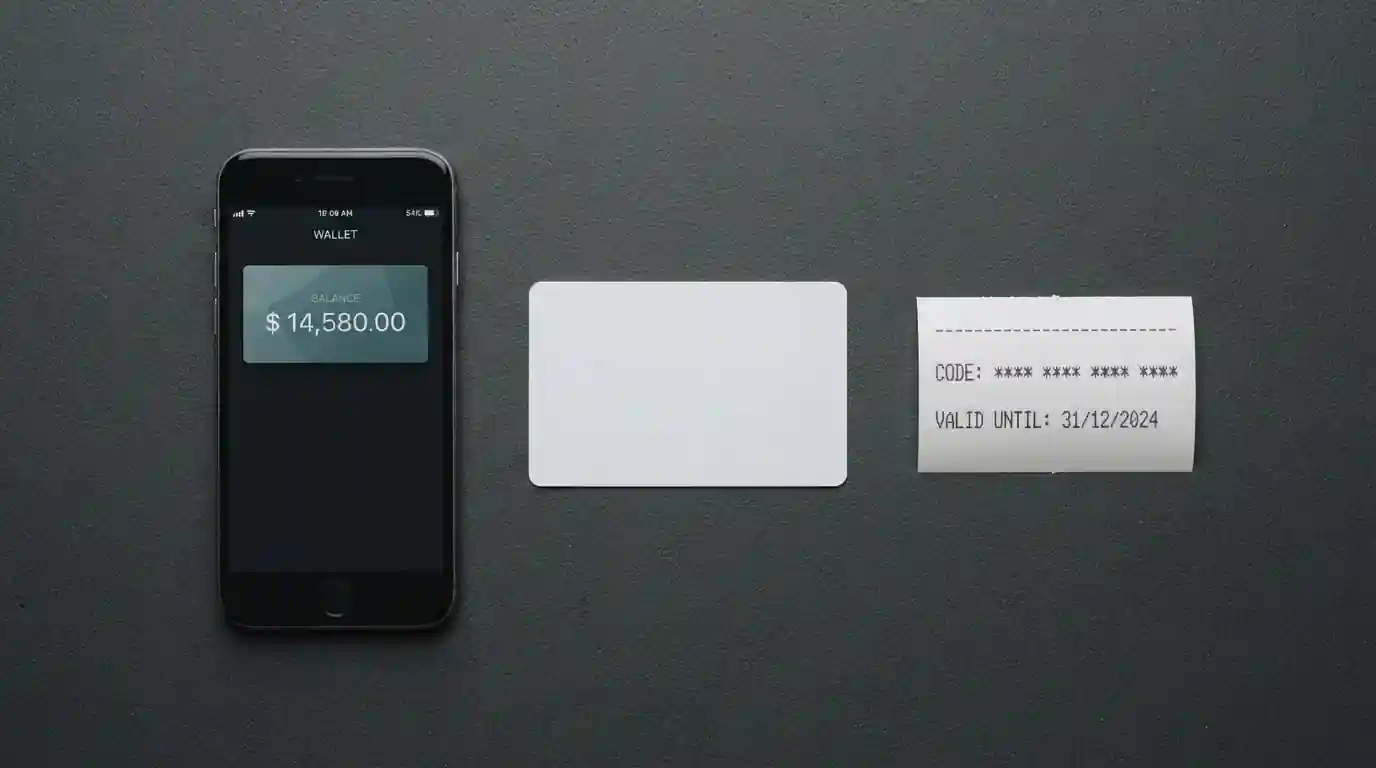
The Jeton Products, and Which One Reaches a UK Cashier
Three products, three completely different answers to the question “does this work at a casino.” Conflating them is the single biggest error in the material ranking for this search.
Jeton Wallet
The core product: a multi-currency e-money account operated by LA Orange Limited under FCA firm reference 902088, funded by bank transfer, card, PayPal or one of the local methods available in your country, and spent at merchants without the merchant ever seeing your underlying card or bank details. The wallet holds balances in dozens of currencies, converts between them inside the app, and sends money to other users. For a British account the funding corridors are unusually clean: bank transfer from £10 to £25,000, local bank transfer £10 to £10,000, instant bank transfer from as little as £1 up to £5,000, PayPal £10 to £2,000, and card top-up £5 to £1,000 — all of it free, most of it instant or inside half an hour.
Compare that with the same wallet’s other markets, where a card top-up runs 2.5% to 5% and a PayPal top-up as much as 6.5%, and the GBP setup starts to look like the best-treated corner of the entire product. Which is a genuinely strange outcome for a wallet that British casinos do not accept. You can move money into it for nothing, hold it in pounds, and then discover the cashier you wanted it for has never heard of it. Verification is separate from any casino’s checks and runs on photo identification plus proof of address, usually inside 24 hours, occasionally within the hour if your documents are clean. Nobody gets to skip it, which deals with the “no verification Jeton casino” idea fairly briskly.
Jeton Card
The interesting one. A debit card drawn against the wallet balance, issued through Financial House Limited under FCA authorisation 902039, available as a physical or virtual card on Visa and Mastercard networks, provisionable into Apple Wallet and Google Wallet, with a dedicated IBAN on the account for SEPA transfers. Earlier fee documentation lists UAB Finansinės paslaugos “Contis” as account provider for certain card types and regions. The published fee schedule, dated December 2024, is specific: no monthly maintenance, a €10 annual fee waived entirely if you load or spend €10,000 across the year, free card issue, €5 for a replacement, nothing on euro transactions, 0.5% on cash withdrawals, and 3% to 5% on any transaction in a foreign currency. Balance capped at €12,000, daily spending and e-commerce limits of €11,700, and a €300 daily cash limit.
This is the route that occasionally works at a UK-licensed site, and understanding why clears up every false claim on the subject. At the cashier the card presents as a debit card on ordinary network rails, not as an e-wallet. It is a debit product rather than credit, so the 2020 ban does not touch it. What stops it is not regulation but the operator’s own payment policy: many British operators block prepaid and e-money card ranges outright, and all of them enforce a same-name rule. One site processes the payment without ever displaying the word Jeton; the next declines it at the processor and tells you nothing useful about why. That is the mechanism behind the claim that big UK brands “accept Jeton” — they are accepting a card, silently, at their own discretion, and could stop tomorrow.
For the FX charge, mind the currency you are playing in. A GBP balance spent at a euro-denominated offshore cashier picks up 3% to 5% somewhere in the chain, and that is before whatever the casino does on conversion.
JetonCash
A prepaid voucher: non-reloadable, identified by a uniquely encoded 19-digit PIN, issued on payment, available in several currencies with the range depending on your country. Jeton’s own schedule runs €5 to €250, free and instant; resellers such as dundle typically stock €5 to €150. You can redeem it into a Jeton wallet or spend it directly at a participating merchant, and you need neither a bank account nor a card at the point of use. For anyone drawn to the idea of funding an account without leaving a trail across their current account, it does exactly what it says.
Then the catch, and it is a big one. The voucher only goes one way. It cannot receive winnings. A player who deposits by JetonCash and then wins has no Jeton payout route at all and will be pushed onto bank transfer, which means handing over the bank details the voucher was supposed to keep out of it. Worth knowing too that the two products are listed separately by operators: a cashier showing JetonCash does not thereby support Jeton Wallet, and a cashier showing the wallet may not take vouchers. Read the actual logo, not the brand name.
Does the Jeton Card work at casinos that do not list Jeton as a payment method?
Sometimes, because it presents as a Visa or Mastercard debit card rather than an e-wallet, and debit cards are permitted. Whether it clears depends on the operator’s policy toward prepaid and e-money card ranges, which many UK sites block. Make a small test deposit before relying on it, and expect no explanation if it fails.
Does JetonCash work for withdrawals as well as deposits?
No. JetonCash is a non-reloadable prepaid voucher and cannot receive funds, so winnings never come back through it. If a casino takes your voucher deposit, your payout will be routed elsewhere — usually bank transfer. Open a Jeton Wallet from the start if you want a round trip rather than a one-way ticket.

Casino Sites Where Jeton Is Confirmed in the Cashier
The test applied below is narrow on purpose: does Jeton appear as a payment method on the operator’s own published pages, and is a British player permitted to hold an account there at all. Affiliate tables do not count as evidence. Two sites pass the first test convincingly, several pass it while failing the second, and two frequently-cited names fail the first.
| Site | Licence | Jeton in cashier | Open to UK players | Minimum deposit | What it means for you |
|---|---|---|---|---|---|
| Rabona | Curaçao (Santeda International B.V.) | Yes — named in the operator’s own FAQ, deposits and withdrawals | No UKGC licence; outside GAMSTOP and UK consumer protection | €10 | The one place Jeton verifiably works both ways, with none of the British safety net |
| 20Bet | No UKGC licence; Kahnawake and Estonian paper referenced | Yes | No — the United Kingdom is named among restricted countries in its own terms | €10 equivalent | Deposit here as a British player and you risk a locked account at verification |
| Megapari | Anjouan ALSI-112310012-F15 | Yes | No — Great Britain is not a served market, and the main domain geo-blocks British visitors | €10 equivalent | Jeton present, British players not wanted; the licence costs about EUR 17,828 a year |
| 1xBet | Curaçao Gaming Authority OGL/2024/1262/0493, Caecus N.V. | Yes | No UKGC licence | €10 equivalent | Biggest name on the list, weakest recourse record; no British authorisation |
| HellSpin | Curaçao | Not confirmed — published lists show cards, Skrill, Neteller, bank transfer, crypto | No — the UK is listed as restricted in its own terms | €20 equivalent | Widely cited as a Jeton site; the cashier does not back it up |
| Bettilt | Offshore, no UKGC licence | Not confirmed — methods are region-gated behind registration | No UKGC licence | Varies by region | Cannot be verified for a British account either way |
| bet365, MrQ, 32Red, Casumo, Videoslots and the rest | UK Gambling Commission | No — Jeton Wallet appears on none of their published payment pages | Yes, fully licensed for Great Britain | £5–£10 | Properly licensed and properly protected, but the Jeton claim is somebody else’s invention |
Rabona
Live since 2019, operating at rabona.com under Rabona B.V. and Santeda International B.V. on a Curaçao licence, built sportsbook-first with more than thirty sports and a casino running into thousands of slots and live dealer tables alongside it. The payment detail is what earns it top billing: Jeton is named in the operator’s own FAQ, listed among Visa and Mastercard, Skrill, Neteller, MiFinity, MuchBetter, bank transfer, Paysafecard (deposit-only there too) and regional instant bank methods. Not an affiliate’s table — the operator’s own words, with more than twenty funding routes including crypto. Minimum deposit sits at €10, and the Jeton route is quoted around €10 to €5,000 in both directions, though published guides elsewhere cite a general per-transaction withdrawal cap closer to €1,000. Where sources disagree, the logged-in cashier is the only authority worth trusting.
So it answers the question honestly: yes, a casino genuinely takes Jeton, for deposits and for payouts. And then the licence answers a different question just as honestly. Curaçao paper does not authorise service to Great Britain, there is no UKGC oversight, no GAMSTOP connection, and no alternative dispute resolution scheme to escalate to if a withdrawal stalls. For a player outside Britain weighing a Jeton-friendly sportsbook, Rabona is a reasonable candidate. For a British player, it is proof the wallet works somewhere, not an invitation.
20Bet
A sportsbook and casino at 20bet.com with a scattering of regional mirror domains, carrying Jeton in its cashier along with a broad spread of e-wallets and crypto, and charging nothing of its own on transactions according to its FAQ, which leaves tax treatment to the player’s jurisdiction. Review material references Kahnawake and Estonian licensing. What it does not hold is a UK Gambling Commission licence.
The decisive detail sits in the brand’s own terms and conditions, where the United Kingdom appears on the restricted-countries list — in company with Belarus, Curaçao, Cyprus, Estonia, France, Gibraltar, Israel, Jersey, Latvia, Lithuania, Malta, the Netherlands, Russia, Slovakia, the UAE and the United States. This makes 20Bet the cleanest illustration of why this page exists. Affiliate listicles recommend it to British readers as a Jeton casino. The operator has written down, in its own contract, that it does not want British customers. A deposit might well go through, because payment acceptance and account eligibility are separate systems; the collision comes at verification, when documents showing a UK address meet a term excluding UK residents, and the balance sitting in the account becomes a matter for the operator’s discretion. With no UKGC licence there is no regulator to complain to and no ADR route.
Megapari
Online since 2019 and part of the broader offshore family of brands built on the same technology, Megapari runs a very large sportsbook alongside a heavily-bonused casino, funds accounts through a wide set of e-wallets and cryptocurrencies including Jeton, and states its licensing openly: the Government of the Autonomous Island of Anjouan, Union of Comoros, licence number ALSI-112310012-F15. The operator’s own legality page is candid in an unusual way, noting that it serves many countries and runs identity checks, while conceding that whether any given person may use the site depends on where that person lives.
For a British reader, that caveat is the answer. Great Britain is not a market Megapari serves, and the main domain geo-restricts visitors from the UK. Published guidance on the Anjouan framework lists the United Kingdom among jurisdictions that licensees are expected to geo-block, though one legal index notes that Anjouan publishes no official restricted-country list and treats market access as the operator’s own responsibility — so the operator’s terms and its geo-blocking are the things that actually bind. There is also a number worth sitting with. An Anjouan licence costs in the region of EUR 17,828 to issue and about the same to renew annually. Set that against the cost of a UKGC licence, the compliance staffing behind it, and the obligations it carries, and you have a precise measure of how much protection the cheaper paper buys a player. Not much.
1xBet
The largest name here by a distance. 1xbet.com is operated by Caecus N.V., a Curaçao company registered as 163779, under Curaçao Gaming Authority licence OGL/2024/1262/0493, with the domain named on the regulator’s certificate of operation. Market breadth is genuinely enormous, the payment set is as wide as any in the industry and includes Jeton, and the bonusing is aggressive. It holds no UK Gambling Commission licence, which settles the question of British authorisation on its own.
A point of accuracy, since this brand attracts a great deal of loose commentary. The Gambling Commission was asked in January 2024, under the Freedom of Information Act, for details of 1xBet’s licence and any suspension. It declined to confirm or deny holding any such information, applying the law-enforcement exemption at section 31(3). So claims that a British licence was revoked cannot be stood up from the public record, and will not be made here. What can be said is narrower and sufficient: there is no UKGC licence, enforcement activity has been reported against the brand in several other jurisdictions, and reporting on a leak from Curaçao’s regulator naming beneficial owners behind a range of offshore brands prompted responses from the regulator, a software supplier and the UKGC. For a player choosing where to put money, “no British authorisation and a contested record” is all the information the decision requires.
HellSpin: why it does not make the list
Launched around 2021 to 2022, Curaçao-licensed, operating across a spread of mirror domains, with more than three thousand games from Pragmatic Play, Evolution and NetEnt and a welcome package in the region of €400 plus 150 free spins. It turns up constantly in affiliate material about Jeton, which is precisely why it needs addressing rather than ignoring.
The cashier does not support the claim. Published payment sets for the brand show Visa and Mastercard, Skrill, Neteller, bank transfer and crypto in the shape of Bitcoin, Ethereum, Litecoin and USDT. Jeton is not among them, and no operator-published page could be found listing it. The point is moot in any case, because the United Kingdom is named as a restricted country in HellSpin’s own terms. So the honest entry is a double negative: a brand that probably does not take the payment you came for, at a site that would not accept you as a customer regardless. It appears here as an attribution that failed verification, not as an option.
Bettilt: why it does not make the list
Bettilt operates internationally at bettilt.com with its strongest presence in Turkey, Latin America and Japan-facing markets, offers a welcome package around 100% up to €500 with a €5 sports free bet, and carries roughly 194 Trustpilot reviews. Published reviews describe Visa and Mastercard, Skrill, Neteller and a broad crypto range.
Here the honest answer is that the information is not available. Payment availability at Bettilt is region-gated behind registration — one review site states plainly that to see which deposit and withdrawal methods you can use, you need to register an account and look in the cashier. That makes a public, verifiable claim about Jeton impossible to establish for a British account, and the brand holds no UKGC licence in any event. Rather than guess in either direction, the position is simply recorded: Jeton cannot be confirmed, the site is not British-licensed, and anyone who wants certainty would have to open an account at a site that is not authorised to serve them to get it. Not a trade worth making.
The brands wrongly listed as Jeton casinos
The names that recur across the top results are bet365, William Hill Vegas, MrQ, 32Red, Casumo, Unibet, Videoslots, PrimeSlots, Lord Ping, Mr Vegas, Casiku, SpinYoo, Blue Fox, Swift on the SkillOnNet platform, and Sparkle Slots. These are genuine UKGC licensees. The licence is not the problem — the Jeton attribution is.
Their own published payment pages show debit cards, PayPal, Skrill, Neteller, Trustly and pay-by-bank, Apple Pay and paysafecard. Jeton Wallet appears on none of them. The aggregator filters corroborate it: a dedicated Jeton casinos page returns no available offers for a British visitor, and the offers it serves elsewhere belong to brands with no UKGC licence at all. One competitor does get close to the truth, conceding that UK sites take Jeton “usually as a side effect of accepting Mastercard casino deposits rather than through a dedicated partnership with Jeton itself,” and that a site might take a Jeton card payment without ever mentioning Jeton while another rejects it outright on its processor’s rules. That is the correct mechanism, buried in a page that still runs a ranked list on top of it.
Which produces the only defensible summary. Wallet: no. Card: sometimes, silently, entirely at the operator’s discretion, with no guarantee it works next month. Anything presented as a confirmed Jeton integration at a British-licensed brand is somebody repeating a competitor’s table rather than opening a cashier.
How to check a cashier yourself in two minutes
The method costs nothing and settles the question for any site, any method, any month. Find the operator’s own payments or banking page, not a review of it — it will be in the footer, usually as “Payment Methods” or “Banking.” Read the deposit list and the withdrawal list separately, because they differ more often than people expect. Then open the terms and conditions and search for “restricted,” which is where you will find whether British players are eligible at all. If a payment method is genuinely supported it appears in the cashier when you are logged in, with its own logo and its own limits.
Two habits make the difference. Trust the operator’s own pages over any third-party table, including this one. And treat the logged-in cashier as the final word, because payment availability varies by country, by currency and sometimes by account, which is exactly why a page listing twelve “Jeton casinos” can be wrong about all twelve for your particular account.
A note on the slots, live dealer and table-game questions that circle this topic, since they share a single answer: the payment method does not gate game access. Depositing by Jeton rather than by card does not unlock different slots, different roulette tables or different live studios, and there is no such thing as a Jeton slot. What the funding method genuinely changes is bonus eligibility, the limits on the way in and out, and how quickly a withdrawal clears. Those are worth optimising. The game library is not affected.

Depositing and Withdrawing With Jeton: Limits, Fees and Timings
The deposit flow itself is unremarkable, which is rather the point of a wallet. Select Jeton in the cashier, enter the amount, authenticate to your wallet, pick the balance and currency if you hold more than one, approve. The casino never sees the card or bank account underneath. Deposits land as soon as the payment is authorised.
Two numbers always apply and they are not the same number. The casino sets a transaction limit; Jeton sets its own funding and withdrawal limits. Whichever is tighter wins, and the mismatch is where people get caught — a wallet happy to move £5,000 is no use at a cashier capped at €1,000 a go.
What a Jeton deposit actually costs in pounds
Published figures from Jeton’s own UK schedule, which is more than the competing pages on this subject bother to quote:
- Bank transfer, £10 to £25,000, free, inside 30 minutes; local bank transfer, £10 to £10,000, free, inside 30 minutes; instant bank transfer, £1 to £5,000, free
- PayPal, £10 to £2,000, free and instant; credit or debit card top-up, £5 to £1,000, free and instant; JetonCash vouchers, €5 to €250, free and instant
Free across the board on the way into the wallet. The same methods in other currencies are charged 2.5% to 5% for card top-ups and up to 6.5% for PayPal, so the British corridors are genuinely the cheapest part of the product.
The costs that do exist sit elsewhere. The Jeton Card carries 3% to 5% on foreign-currency transactions, 0.5% on cash withdrawals, €5 for a replacement card, and a €10 annual fee that disappears if you load or spend €10,000 in a year — a threshold most casual players will not reach, so budget for the tenner. Currency conversion is the quiet one: a GBP balance deposited into a euro-denominated offshore cashier gets converted somewhere, and that spread is rarely itemised anywhere you can see it. Anyone repeating the “Jeton casinos with no fees” line is describing the top-up corridor and ignoring everything after it.
Getting winnings back out
Deposit support and payout support are different things, and three distinct failure modes sit behind the queries about Jeton withdrawals, instant payouts and cashing out to the wallet.
The first is the voucher problem already covered: JetonCash cannot receive money, full stop. The second is cashier configuration — an operator can list Jeton for deposits only, which is common across the industry for e-wallets and vouchers alike and is exactly how Paysafecard and Rabona’s own Paysafecard listing work. The third is closed-loop and same-name rules. Operators generally return funds to the method that sent them, both as an anti-money-laundering measure and because the rules require the account names to match. Deposit via Jeton Card and winnings route back to that card; deposit from the wallet and they come back to the wallet. Deposit by voucher and the system has nowhere to send them, so you will be asked for bank details.
On timing, the honest framing is that Jeton is almost never the slow part. Total payout time is the casino’s approval time plus the wallet’s processing, and casino-side review — document checks, bonus-wagering verification, the pending period some operators still impose — is where the days go. Searching for an instant withdrawal Jeton casino optimises the wrong leg of the journey. Where Jeton payouts are unavailable, the practical fallbacks are bank transfer and, at offshore sites, crypto.
The minimum deposit question
The queries about £5 deposits and low-minimum Jeton casinos have a two-part answer, because two separate minimums apply. On the wallet side, Jeton is accommodating: instant bank transfer accepts £1 and card top-up accepts £5, so getting a fiver into the wallet is trivially possible. On the casino side it rarely is. British-licensed sites commonly set £5 or £10 as a floor, and the offshore brands that carry Jeton work in euros at €10. The binding constraint is the cashier, not the wallet.
Which means a genuine £5 Jeton casino deposit is close to unobtainable for a British player. The wallet supports the amount; the sites that would accept the wallet do not accept you; and the sites that would accept you do not accept the wallet. Low-stakes players are better served by a debit card or pay-by-bank at a UKGC-licensed site, where £5 minimums are ordinary and the money is covered by British consumer protection.
What is the minimum I can deposit with Jeton, and is a £5 deposit possible?
Into the wallet, yes: instant bank transfer starts at £1 and card top-up at £5, both free. At the cashier, rarely. Offshore sites carrying Jeton generally set €10 minimums, and UK-licensed sites that would take £5 do not list the wallet. The casino’s floor is the one that binds.
Can casino winnings be paid back into my Jeton wallet?
Only where the operator supports Jeton for withdrawals as well as deposits, which is a separate setting — Rabona does, and quotes roughly €10 to €5,000. JetonCash never can, being a one-way voucher. Expect closed-loop rules to send winnings back to whichever method funded the account.

Jeton and GamStop: What the Rules Actually Say
A large share of the searches around this topic pair Jeton with GamStop — non-GamStop Jeton casinos, Jeton sites not registered with the scheme, casinos unaffected by it. The phrasing contains a contradiction that is worth unpicking rather than servicing.
Participation in GAMSTOP is a condition of holding a Gambling Commission licence, set out in Social Responsibility Code Provision 3.5.5 on remote multi-operator self-exclusion. The Commission extended that requirement on 1 April 2024, following its consultation response of October 2023, to cover licensees taking bets by telephone and email. So a site that is UKGC-licensed is on GAMSTOP by definition, and a site that is not on GAMSTOP is not UKGC-licensed. “A licensed British casino that isn’t on GamStop” does not exist and cannot exist. Anything advertising itself that way is offshore and telling you so without meaning to.
Then the premise collapses a second time, which is the part nobody mentions. The offshore brands that genuinely carry Jeton — 20Bet, Megapari, 1xBet, HellSpin — overwhelmingly name the United Kingdom among their restricted countries. Someone who has self-excluded through GAMSTOP and goes looking for a Jeton site beyond its reach is therefore hunting for something that is unavailable to them twice: no British licensee can be off the scheme, and the off-scheme sites carrying the payment do not accept British players. The search has no answer because it describes nothing.
Worth being direct about what self-exclusion is for. GAMSTOP exists because somebody decided they needed a barrier between themselves and a cashier, and the entire value of that decision lies in it being difficult to reverse on a bad evening. Routes around it lead to operators with no UK licence, no Commission oversight, no dispute resolution scheme and no obligation to return a balance they decide to query. GamCare’s helpline is free and runs around the clock, and the National Gambling Helpline is on 0808 8020 133. Anyone reading this section because the barrier is working as intended has already got the information they actually came for.
Can I use Jeton at casinos not on GamStop?
The question has no workable answer. Every UKGC licensee must be on GAMSTOP under Social Responsibility Code 3.5.5, so off-scheme sites are offshore by definition — and the offshore brands carrying Jeton name the United Kingdom among restricted countries. No British licence, no protection, and no eligibility either.

What to Use Instead of Jeton at a UK Casino
Since Jeton Wallet is not a realistic option at a British-licensed cashier, this is the part of the page that will actually change what most readers do next. Ordered by how closely each method replaces what Jeton offered, rather than by how often it gets promoted.
| Method | Type | UK-licensed acceptance | Withdrawals | Typical bonus eligibility | Closest to Jeton for |
|---|---|---|---|---|---|
| MuchBetter | Mobile-first e-wallet | Wide — one of four most-supported wallets | Yes, fast | Often eligible | App-first players wanting low FX and a working wallet |
| PayPal | E-wallet | Broadest of any method | Yes, among the fastest | Frequently excluded | Maximum acceptance and the strongest consumer recourse |
| Skrill | Stored-value e-wallet | Wide | Yes | Commonly excluded | The nearest like-for-like wallet experience |
| Neteller | Stored-value e-wallet | Wide | Yes | Commonly excluded | Same as Skrill; pick on fees and loyalty tier |
| Trustly / pay by bank | Payment initiation from your bank | Wide and growing | Yes, usually fastest | Usually eligible | Speed, with no wallet layer at all |
| Paysafecard | Prepaid voucher | Wide | No — deposit only | Varies | The no-bank-trail appeal of JetonCash, properly licensed |
MuchBetter
In the UK payments market since 2017 and built mobile-first, with device-level authentication rather than a password and card number. It sits alongside PayPal, Skrill and Neteller as one of the four e-wallets that British-licensed casinos actually support, which is the qualification that matters most here. Fees run lower than the Paysafe wallets, foreign exchange is generally better, and there are prepaid card and wearable options for anyone who wants to spend the balance offline.
For a player who wanted Jeton specifically — an app-based wallet, quick, keeping bank details away from the operator — this is the closest functional swap that works. The additional advantage is bonus eligibility: MuchBetter is more often permitted toward welcome offers than Skrill or Neteller, which are excluded almost as a matter of course. That is a real monetary difference on a first deposit, and it goes in the opposite direction to most people’s assumptions about which wallet is the “premium” choice.
PayPal
The widest acceptance of any method listed here across UKGC licensees, instant deposits, payouts among the fastest in the British market, and consumer recourse that no other option here can match. Operators enforce a name-match requirement, so the PayPal account has to be yours. The standard catch is promotional: PayPal deposits are frequently carved out of welcome offers, which is the price of its ubiquity.
There is a neat irony in its position relative to Jeton. PayPal is itself one of the cheapest ways to fund a Jeton wallet from a British account — £10 to £2,000, free, instant. So a player can move money into Jeton via PayPal at no cost, then find the cashier will not take Jeton but will happily take the PayPal they already had. For most people reading this page, the method they were looking for an alternative to was sitting one step upstream the whole time.
Skrill
Paysafe-owned, long established in gambling payments, and authorised in its own right rather than operating as an agent — the structural contrast with Jeton that makes it pass the payment-provider test without any extra reasoning. Deposits are instant, offshore acceptance is near-identical to Neteller, and there is a VIP tier system for anyone moving serious volume.
As a replacement it is the closest like-for-like: same stored-value wallet model, same benefit of keeping card details away from the operator, and genuine presence in British cashiers. The trade-offs are the fee schedule, which bites on currency conversion and some withdrawals, and bonus eligibility, since Skrill deposits are excluded from welcome offers at most UK sites. Claim a “free” 100% match with a Skrill deposit and you will often find the offer was never available to you in the first place. Casinos are not charities, and the exclusions list is where that shows up most reliably.
Neteller
The sibling product, also Paysafe-owned, with near-identical merchant reach and the same authorised status. Instant deposits, fast payouts where the operator supports them, the same VIP tiering, and the same pattern of exclusion from promotional offers.
For a casual British player the two are functionally interchangeable, and anyone agonising over the choice is solving a problem that does not exist. Acceptance is effectively the same at the sites that take either; the difference emerges at volume, in fee schedules and loyalty benefits. Pick whichever you already hold, or whichever your preferred site’s cashier shows first.
Trustly and pay by bank
Structurally the opposite of everything else here. Trustly is not a wallet and holds no balance — it initiates a payment directly from your bank account, regulated as a payment initiation and account information service under the 2017 regulations. That category is precisely why it clears Licence Condition 5.1.2 with no complications, and why British operators have pushed it so hard since the card ban reshaped the cashier.
The practical result is the fastest withdrawals available at most UK-licensed sites, usually no fee to the player, and bonus eligibility in cases where wallets are excluded. There is no stored balance, so no safeguarding question and no compensation-scheme ambiguity. For a reader who wanted Jeton because they wanted speed, this is simply a better answer. For a reader who wanted Jeton because they would rather their bank statement did not read like a cashier receipt, it is the wrong answer entirely — every payment appears on the account, by name, and Paysafecard or a card product is the closer fit.
Paysafecard
Also Paysafe-owned, and the direct structural equivalent of JetonCash: a prepaid voucher bought with cash or a card at retail or online, redeemed into the casino by code, requiring no bank account at the point of use. Per-voucher ceilings are low by design, and plenty of operators list it explicitly as deposit-only, Rabona among them.
The limitation is identical to its Jeton counterpart — it cannot receive winnings, so a payout will be routed to a bank transfer and the bank details come into play after all. What it has over JetonCash is simply that British-licensed casinos accept it. For anyone drawn to the voucher model for privacy or for budgeting discipline, this is that model with a UKGC licence attached and a regulator to complain to, which is the trade the whole Jeton question keeps reducing to.
What should I use instead of Jeton at a UK casino?
MuchBetter is the closest working swap — app-based, low fees, genuinely accepted, and more often bonus-eligible than Skrill or Neteller. PayPal offers the widest acceptance and best recourse. For fast withdrawals, Trustly or pay by bank. For the voucher appeal of JetonCash with British protection, Paysafecard.
Before You Fund Anything
Two public registers settle almost every question on this page, and both are free.
The Gambling Commission’s register of licensed operators tells you whether a site may legally offer gambling to someone in Great Britain. Search the brand or the company name. If it is not there, nothing else about the site matters much: no Commission oversight, no requirement to offer a dispute resolution route, no GAMSTOP connection, and no realistic recourse if a withdrawal is refused. A Curaçao or Anjouan seal in the footer is not a substitute, and the gap between the two is measured in roughly EUR 17,828 a year.
The FCA’s Financial Services Register does the same job on the payments side. It is where “Jeton is FCA-regulated” turns into something precise — LA Orange Limited under 902088, registered as an e-money agent, with Financial House Limited authorised as the institution behind it under 902039. Every claim about who holds what permission on this page can be checked there in under a minute, which is rather the point of citing the numbers.
Then the pre-deposit habits worth keeping. Read the restricted-countries clause in the terms before funding, not after a withdrawal is queried — it is the single most common reason a balance gets frozen at a site that took the deposit without complaint. Fund any wallet from a debit card or bank transfer rather than a credit card. Make a small test deposit before committing real money to an untested route, particularly with the Jeton Card, where the result depends on an operator’s unpublished policy toward e-money card ranges. And check deposit and withdrawal lists separately, because “accepts Jeton” and “pays out to Jeton” are two different settings that get reported as one.
On the gambling itself, the arithmetic has not changed and no payment method improves it. Deposit limits, reality checks and time-outs are available at every British-licensed site and cost nothing to use. GAMSTOP covers every UKGC licensee in one action. GamCare’s National Gambling Helpline is free on 0808 8020 133, open around the clock. The thing that makes a payment method genuinely “safe” is not the e-money licence behind it but whether the operator receiving the money answers to a regulator that can take its licence away.
Which brings the Jeton question to a close more cleanly than a ranked table would. The wallet is real, properly registered, and well set up for British users on paper, with free GBP corridors most competitors would envy. The casinos that take it are not available to British players. The one Jeton product that reaches a UK cashier does so by pretending to be something else, quietly and at the operator’s discretion. For a player who wanted it for the privacy, the Jeton Card or Paysafecard get closest; for one who wanted it for speed, pay by bank already beats it; and for one who simply wanted an e-wallet that works, MuchBetter and PayPal were always the answer. Nothing here is a disaster. It is just a wallet with a famous shirt sponsorship and the wrong postcode.
Casino Deposit Methods UK 2026 — Cards, E-Wallets & More
Content created by the «casinomoneyg» team