
Casinos That Accept Solana in the UK: Who Takes British Players in 2026
 Available in US
Three names dominate almost every list of Solana casinos written for a British audience. Stake, BC.Game, Rollbit. All three name the United Kingdom in their restricted-territory clauses.
That is the state of the category in 2026. Solana works beautifully as a casino payment rail — sub-second settlement, fees measured in fractions of a penny, transfers you can verify yourself on a public ledger. What it does not come with is a British operator willing to bank it, because none exists. And a surprising number of the offshore sites recommended to UK readers will bounce a British sign-up at the door, which the lists recommending them rarely mention.
So this is a map rather than a ranking. Where SOL genuinely works for someone sitting in the UK, which licence sits behind each site, what the transfers actually cost and how long they actually take, and what gets surrendered in exchange for all that speed.
Can you use Solana at UK casinos in 2026?
Yes, but not at a UK-licensed one, and not at most of the sites you will have been shown.
Two separate facts get tangled together constantly, so take them apart. First: no casino holding a UK Gambling Commission licence accepts Solana, or any other cryptocurrency, as a deposit method. Not one. Second: plenty of offshore sites do accept SOL, and a British resident using one is not committing an offence — the Gambling Act 2005 places its obligations on operators, not players.
Those two facts together produce the shape of the market. Every genuine answer to “which casino takes my SOL” is a site licensed somewhere other than Britain, operating outside GAMSTOP, with no recourse to the Commission if something goes wrong. That is not a loophole or a grey area. It is the direct consequence of how the Commission enforces anti-money-laundering rules, and it has been stable for years.
Where the published lists fall down is the third fact nobody checks. An offshore licence usually comes with a restricted-territory list, and the United Kingdom appears on a lot of them — including those of the three largest brands in the category. Stake restricts the UK alongside the United States and Australia. BC.Game operates under an Anjouan licence whose terms prohibit serving British players. Rollbit names the United Kingdom among 29 restricted jurisdictions. A site can accept Solana enthusiastically and still have no interest in your sign-up.
The practical upshot: SOL acceptance and UK acceptance are two different checks, and you need both to come back clean. A cashier that lists Solana tells you nothing about whether the terms and conditions will let you keep your winnings.
Can UK players legally use casinos that accept Solana?
Yes. The Gambling Act 2005 regulates operators rather than players, so a UK resident betting at an offshore site commits no offence. The operator may be breaching UK rules by serving you without a licence, but the legal exposure sits with them. Winnings are not taxable either.
Why no UK-licensed casino accepts Solana
The reason is narrower and more technical than “the regulator dislikes crypto,” and understanding it explains why this will not change soon.

The source-of-funds problem
Every UKGC licensee operates under the Licence Conditions and Codes of Practice, and sits beneath the Money Laundering, Terrorist Financing and Transfer of Funds Regulations 2017 and the Proceeds of Crime Act 2002. Those instruments require an operator to establish the source of funds behind deposits — to know, on demand and with evidence, where a customer’s money came from.
A bank transfer answers that question by itself. A card payment answers it. A pseudonymous on-chain transfer from a wallet address does not, and cannot be made to at any workable scale. The operator receives a cryptographic confirmation that value moved from one address to another, with no identity attached to either end. Satisfying a source-of-funds obligation against that would mean forensic chain analysis on every deposit from every customer, and a regulator that accepts the result.
So the refusal is structural rather than attitudinal. A licensee that accepted SOL would be accepting a compliance obligation it has no mechanism to discharge, which is a quick route to the sort of enforcement action that ends licences.
What Stake’s UK exit showed
The abstract version of that risk became very concrete in early 2025, and the sequence is worth knowing because it involves the most-recommended brand in the category.
Stake had a UK presence through stake.uk.com, operating under a white-label arrangement with TGP Europe Limited — the UKGC licensee whose permission the site traded on. On 12 February 2025 the Commission published a consumer information notice: the site would cease to be licensed, new registrations stopped immediately, and closure followed on 11 March 2025. TGP Europe then surrendered its own licence and left the British market on 16 May 2025, having been told it faced a £3.3 million penalty and substantial required improvements if it wanted to continue. It had already been fined £320,000 in April 2023 for anti-money-laundering and social-responsibility failures.
Note what that sequence does and does not mean. Stake’s UK-facing site was fiat-only — the white-label licence was never going to permit crypto deposits. The brand’s Solana support lives on the offshore platform, which restricts British players. A UK reader therefore has no legitimate Stake route at all: one door closed by enforcement, the other closed by the terms and conditions.
What you give up by playing offshore
Four protections disappear the moment you deposit at an unlicensed site, and they are worth naming individually rather than gesturing at.
Dispute resolution is the big one. A UKGC licensee must belong to an approved alternative dispute resolution scheme, and the Commission itself can act on patterns of misconduct. Offshore, your escalation path ends with whatever complaints process the licensing jurisdiction operates, which ranges from a functioning mechanism to a contact form that absorbs email. Customer-fund protection goes next: Licence Condition 4.2.1 requires UK licensees to disclose how customer money is held and what happens to it on insolvency, a requirement tightened again in October 2025. Offshore, your balance is an unsecured claim against a company you cannot sue affordably.
GAMSTOP coverage goes, which gets its own treatment below. And the mandated deposit-limit and affordability machinery goes — the checks that a lot of players find intrusive, and which exist because the alternative is worse.
Why does no UK-licensed casino accept Solana?
Anti-money-laundering rules in the LCCP and the Money Laundering Regulations 2017 require licensees to verify the source of every deposit. A pseudonymous blockchain transfer cannot satisfy that duty at scale, so accepting SOL would expose a licensee to enforcement it cannot defend against. The bar is practical, not ideological.
Do I pay tax on winnings from a Solana casino in the UK?
No. HMRC does not treat gambling winnings as taxable income for UK residents, including winnings from offshore sites, because gambling is not a trade for income-tax purposes. The guidance sits at BIM22015 in the Business Income Manual. Converting SOL to sterling later is a separate matter worth checking.
Casinos that accept Solana and take UK players
What follows is sorted by the strength of the evidence behind it, not by commission rates. Sites with logged, timestamped Solana transfers come first, because a transaction you can check against the blockchain beats a marketing claim about “instant payouts” every time.

A word on the licence column before you read it. Several of these operators publish no verifiable licence detail, and where that is the case the table says so rather than guessing. That absence is itself information: an operator unwilling to publish a checkable credential has told you something about how a dispute will go.
| Site | Licence | UK accepted | Measured or stated SOL payout | Minimum deposit | Distinguishing feature |
|---|---|---|---|---|---|
| Betpanda | Curaçao GCB (Star Bright Media SRL) | Not on restricted list | 1 min 11 s, logged 13 May 2026 | Not published; crypto-only cashier | Only site here with both a deposit and a withdrawal independently logged on SOL |
| Betplay | Tobique Gaming Authority | Yes — only 4 jurisdictions blocked | 38 s fastest logged SOL withdrawal | $5 minimum withdrawal | SOL at 38 s against Litecoin at 9 min on the same platform |
| AllStars | Not publicly confirmable | Not on any retrieved restriction list | 1 min 08 s, logged 14 July 2026 | Not published | Lowest network fee recorded anywhere: 0.000006 SOL |
| Grailbet | Not publicly confirmable | Not on any retrieved restriction list | 27 s, logged 16 June 2026 | Not published | Fastest logged withdrawal in the category |
| Lucky Coin | Not publicly confirmable | Not on any retrieved restriction list | Logged but timing incomplete | Not published | Deposit credited in under one second |
| Vave | Curaçao claimed; Costa Rica registration reported | Not among roughly 12 blocked | ~10 minutes, operator-stated, no fee | Not published; 12 coins accepted | Publishes rolling 24-hour RTP per slot |
| Winna | Not publicly confirmable | Not on any retrieved restriction list | Instant after approval, operator-stated | $1 | Lowest deposit floor in the category |
| Thrill | Curaçao eGaming plus Anjouan | Unconfirmed — check cashier | Under 30 minutes, operator-stated | Not published | Up to 70% rakeback with no wagering attached |
| Rakebit | Not publicly confirmable | Not on any retrieved restriction list | Instant once approved, operator-stated | Not published | Matches VIP tier earned at another casino |
| Jack | Not publicly confirmable | Geo-restricted, list not published | 10–12 minutes, operator-stated | $50 for the welcome offer | Cards and crypto in one cashier, 1x wagering |
| Bets.io | Not publicly confirmable | Not on any retrieved restriction list | 0–2 days, operator-stated | Not published | Largest library here, slowest payout window |
| Cryptorino | Not publicly confirmable | Likely in scope, unverified | Not independently logged | Not published | Blocks almost nothing except the United States |
| Duelbits | Curaçao Gaming Authority OGL/2024/1507/0838 | Unconfirmed — check cashier | Just over 1 minute, logged | Not published | Only verifiable post-reform licence number in the set |
Betpanda
Launched in 2023 and operated by Star Bright Media SRL under a Curaçao Gaming Control Board licence, Betpanda is crypto-only in the strict sense — no fiat on-ramp, no built-in exchange, no card fallback. If you do not already hold coins, the cashier has nothing for you. Solana sits among more than thirty supported assets, alongside the usual Bitcoin, Litecoin, Ethereum, Tether and Tron. The restricted-territory list runs to roughly sixty jurisdictions, weighted heavily towards African and Central Asian states plus the United States, Australia, Cuba, Cyprus, Iran, North Korea, Syria and Venezuela. Britain is absent from it.
It earns the top slot here on evidence rather than charm. Betpanda is the only operator in this set with both a deposit and a withdrawal independently logged on the Solana network: 0.23221448 SOL credited in 30 seconds on 12 May 2026 at a network fee of 0.00000635 SOL, and 1.22 SOL back out in 1 minute 11 seconds the following day. Two sides of a round trip, timestamped and checkable against the chain. One caution worth registering: sources disagree on where the operation actually sits, with the Curaçao licence claimed by the operator and a Costa Rica registration reported elsewhere. That kind of ambiguity is routine in this segment and it is never reassuring.
Betplay
Operating since 2024 under a Tobique Gaming Authority licence, Betplay runs a multi-coin cashier that covers SOL alongside Bitcoin Lightning — an unusual pairing, and both chosen for the same reason. The restricted-territory list is the shortest you will find anywhere in this category: Afghanistan, Iran, North Korea and Syria. Four countries. The UK is nowhere near it, which makes Betplay one of the few large crypto casinos a British player can approach without first reading the terms twice.
The trade-off is the licence itself. Tobique is a lighter regime than post-reform Curaçao, so that permissive territory list reflects a regulator asking fewer questions rather than an operator holding a stronger credential. Beyond that, Betplay supplies the cleanest demonstration in this whole category of why the chain you pick matters: in the same round of testing, a Solana withdrawal landed in 38 seconds while a Litecoin withdrawal from the same platform took nine minutes. Same site, same cashier, same approval process, fourteen times the wait. Minimum withdrawal is $5 and the daily ceiling is $50,000, which will not trouble most people. Two-factor authentication is available and the self-exclusion tooling is rated well by independent reviewers. The “no KYC” badge deserves scepticism, though: identity verification is required before you can deposit, which is earlier than most sites ask.
AllStars
Public licence detail for AllStars could not be confirmed from any source that stands up, and that gap is recorded here rather than papered over with a plausible-sounding jurisdiction. What does exist is transaction evidence, and more of it than most: two Solana deposits logged on the same day — 0.54 SOL credited in 36 seconds and 0.53637278 SOL in 26 seconds, both at a 0.00000635 SOL fee on 24 June 2026 — plus a withdrawal of 0.15178489 SOL that reached the wallet in 1 minute 8 seconds on 14 July.
That withdrawal carries the lowest network fee recorded anywhere in the dataset at 0.000006 SOL. At typical SOL prices you are looking at a fraction of a penny, which is the entire argument for this chain over Ethereum mainnet compressed into one figure. Two consistent deposits timed within ten seconds of each other also suggest the crediting process is automated rather than eyeballed by someone on a shift. SOL moves in both directions here, which matters more than it sounds: a site that takes SOL but pays out only in Bitcoin forces a conversion you did not ask for and did not price.
Grailbet
Licence detail is similarly thin for Grailbet and is left as a gap. The transaction record, though, makes it the most instructive site in this entire comparison, because it holds both extremes at once.
A withdrawal of 0.376499307 SOL reached the wallet in 27 seconds on 16 June 2026 — the fastest cashout logged anywhere here, and fast enough that no human can have been involved. The day after, a deposit of 0.45 SOL took 2 minutes 53 seconds to credit, the slowest deposit in the set, at a network fee identical to every other logged deposit: 0.00000635 SOL. Same chain, same fee, same wallet software, one site, and a hundred-fold difference in elapsed time between the two legs. Whatever caused that delay happened inside Grailbet’s own systems, not on Solana. Keep that figure in mind the next time a comparison page attributes its payout speeds to the blockchain.
Lucky Coin
Another operator with no publicly confirmable licence, and the honest answer is that a registered player’s own hands-on experience remains the only reliable read on it. It appears here for one measurement: a deposit of 0.304878 SOL credited in under one second on 5 May 2026. That is the practical ceiling of this payment rail — the balance updated faster than the page could finish rendering.
There is a second detail worth more than the first, and it concerns how the data was handled rather than the site. Lucky Coin’s withdrawal completed, but the request and receipt times were not both recorded, so the tester excluded it from the published averages rather than estimating. That is the behaviour you want from anyone quoting numbers at you, and reproducing the gap is more useful than quietly rounding it away. On the evidence available, the site is quick on the way in. On the way out, the honest position is that nobody has a verified figure.
Vave
Launched in November 2022 and operated by Chestoption Sociedad de Responsabilidad Limitada, Vave is built crypto-first rather than retrofitted — bonus ceilings are denominated in Bitcoin rather than sterling, which takes a moment to adjust to. Twelve cryptocurrencies including Solana, card and wallet on-ramps for buying coins inside the app if you arrive empty-handed, and a catalogue drawn from more than a hundred providers: Pragmatic Play, Evolution, NetEnt, Play’n GO, Hacksaw, Nolimit City, Relax Gaming, Red Tiger, Yggdrasil, Push Gaming, Quickspin and Big Time Gaming, plus in-house exclusives. The restricted list runs to around twelve jurisdictions against fifty or sixty for a typical competitor, and the UK is not reported among them.
Two things genuinely distinguish it. Vave publishes live 24-hour RTP figures per slot, which almost nobody in this segment does and which is the single most useful disclosure a casino can make. And it states no minimum or maximum withdrawal limit at all, with payouts typically landing in around ten minutes and no operator fee on top of the network cost. Against that sits a licensing question that will not resolve cleanly: Curaçao is claimed, while one independent review records a drift towards Costa Rica registration — and Costa Rica issues no gambling licence whatsoever, only a company number. Deposits must be turned over once for sports and three times for casino and live play before a withdrawal clears, which is mild by category standards. The advertised “app” is an installable web shortcut rather than anything from a store.
Winna
No confirmable licence detail, recorded as such. Winna’s reason for being here is a single number: a $1 minimum deposit, the lowest anywhere in this comparison, and the only place in this set where Solana’s sub-penny network fee makes a trivially small deposit genuinely sensible rather than theoretically possible. On Ethereum mainnet a one-dollar deposit would be comedy. Here the fee rounds to nothing.
The reward structure drops the welcome match entirely in favour of rakeback, with a $50,000 weekly race you enter simply by playing and a personal host from the Platinum tier upward. Wagering on the deposit is 1x, which is about as close to unencumbered as this industry gets. Solana sits among twelve supported assets. For anyone whose actual question was the £5-deposit one, this is the substantive answer — though a site with a $1 floor and no published licence is a site to test with $1 before trusting with more.
Thrill
Thrill holds a dual licence, Curaçao eGaming alongside Anjouan, and that combination needs flagging rather than celebrating. Anjouan terms commonly restrict British players, and Thrill’s own position on the UK could not be confirmed from the published documentation. Check the cashier before you deposit — this one sits genuinely unresolved, and the honest thing is to say so instead of waving you towards a sign-up that may bounce.
The proposition itself is the most interesting in the set. Thrill offers no welcome match at all; instead there is up to 70% rakeback plus 10% lossback, paid win or lose, with no wagering requirement attached. For a steady player that structure is worth considerably more than a headline “bonus” that arrives shackled to a 40x turnover condition, because rakeback is money rather than credit. Add enhanced RTP on selected slots — the house voluntarily shrinking its own edge, which is as rare as it sounds — nine in-house Originals, Solana among fourteen-plus assets, a $75,000 weekly race, and payouts reported under thirty minutes. The catch is disclosure: the exact rakeback percentages are not fully published, which independent reviewers have flagged, and an uncapped promise you cannot read the terms of is a promise with a gap in it.
Rakebit
Licence detail unconfirmed and left as a gap. Rakebit accepts Solana among more than twenty assets and runs on rakeback rather than matched deposits, paying 100% rakeback across VIP levels 1 to 9, with a $2,000 weekly race spanning slots and in-house Originals and social play rooms bolted on.
Its one genuinely unusual feature is VIP status matching: arrive with a tier earned elsewhere, show it, and Rakebit will mirror it rather than making you climb from zero. If you have spent two years accumulating standing at another site, that is real money rather than a gesture — loyalty tiers are the one asset a player builds that normally evaporates on switching. Bonus wagering runs at 40x with individual reward terms varying by programme, so the fine print needs reading in each case, and crypto payouts are instant once a withdrawal clears approval. Solana’s presence in the live cashier has been verified independently, which is more than can be said for the licence.
Jack
Jack runs a hybrid cashier, and that is the point of it. Solana sits among seventeen crypto options alongside Visa, Mastercard, Apple Pay and Google Pay — so SOL is one route in rather than the only one, which suits anyone who wants crypto speed on the way out and a card on the way in. The catalogue runs past 6,500 titles. Licence detail is not publicly confirmable and geo-restrictions are flagged in the available sources without being enumerated, so the restricted list needs checking at source.
The welcome offer is 100 free spins on a $50 deposit at 1x wagering, which is unusually light — most of this industry attaches 35x or 40x and hopes you do not read that far. Payouts are quoted at 10 to 12 minutes, there is a $40,000 weekly tournament across slots and live tables, and VIP management runs through Telegram, with a Diamond-tier manager for players who get that far. Treat “VIP manager” for what it is: a retention mechanism with a human face. Nobody is assigned to you because the casino worries you are not having enough fun.
Bets.io
No confirmable licence detail. Bets.io carries one of the largest libraries in the crypto segment and a welcome package up to 1 BTC plus 225 free spins, carrying 40x wagering on the bonus and on free-spin winnings, with daily, weekly and weekend promotions running alongside.
It is included here partly as a corrective. The stated payout window is nought to two days — the slowest in this entire comparison, at a site that accepts a payment rail capable of settling in under a second. Solana cannot rescue an operator whose internal approval queue runs overnight, and the gap between what the chain can do and what the casino chooses to do is nowhere wider than here. If breadth of catalogue is what you came for, Bets.io delivers it. If the phrase “instant Solana withdrawal” is what brought you, read that column again.
Cryptorino
Licence detail could not be confirmed and is recorded as a gap. Cryptorino runs around 6,000 games with Solana supported, and its distinguishing characteristic is territorial: third-party review describes it as accepting players from an unusually wide range of jurisdictions with the United States as the principal exclusion, which would place the UK comfortably in scope. That has not been verified against the operator’s own terms, so treat it as a lead to check rather than a settled fact.
A permissive territory policy cuts both ways, and it is worth being clear about which way. It makes a site accessible, and it also tells you the licensing jurisdiction is not demanding much in the way of market-by-market compliance. For a British player locked out by Stake, BC.Game and Rollbit, accessibility has obvious appeal — just understand that the same leniency which lets you through the door is the leniency that will shape how a dispute gets handled.
Duelbits
Duelbits is operated by Liquid Entertainment N.V. under a Curaçao Gaming Authority licence numbered OGL/2024/1507/0838, and that string is the most valuable thing in this section. It is a direct post-reform CGA licence — a credential you can look up rather than a logo in a footer — which makes Duelbits the strongest regulatory position in this comparison by a distance. Curaçao’s National Ordinance on Games of Chance, passed in December 2024, scrapped the old master and sub-licence arrangement that let operators shelter under someone else’s permission, so a 2024-series direct licence means the holder answered to the regulator itself.
The platform runs more than 7,000 games with Solana in the cashier and fiat routes via Revolut and gift cards for anyone who wants them. Logged Solana transfers came in at just over a minute in both directions, consistent with automated processing. One unresolved point, stated plainly: Duelbits publishes a restricted-region policy and blocks jurisdictions that require a separate local licence, but the country list could not be retrieved — the operator’s help-centre pages refused access. Given that the UK requires exactly such a separate licence, the restricted list needs checking at the cashier before you commit, and anyone telling you Duelbits definitely accepts British players has not read the document either.
Dexsport: the one that gets everything right except the licence
Dexsport added Solana support in the first quarter of 2026 and, on the merits, it is arguably the best-constructed option in this entire category. The cashier adds nothing above the Solana network fee, so a deposit costs exactly what the chain charges and not a penny more. The platform is non-custodial, which means a settled balance returns to a wallet you control rather than sitting in an operator account between sessions — the single most meaningful structural protection available anywhere in crypto gambling, and almost nobody offers it. Live content comes from Evolution, Playtech and Ezugi, slots from around twenty studios, with Solana among twenty-three supported assets, a native DESU token economy, up to 15% weekly cashback at the top tier and a welcome offer reaching $10,000 plus 300 free spins at 40x.
It is also completely unusable if you live in Britain. Dexsport operates under an Anjouan licence whose restricted territories cover the United States, the United Kingdom and Australia. Every advantage listed above is irrelevant to a UK player, and that is precisely why it sits here: it is the cleanest illustration of the lesson this page keeps returning to. Read the restricted-territory list before you read the bonus. The finest cashier in the category, the lowest fees, the only non-custodial balance on offer — none of it survives contact with a terms-and-conditions clause naming your country. Work in that order and you will not waste an afternoon on a sign-up that was never going to complete.
Do Solana casinos require KYC verification?
Many advertise no-KYC sign-up, and some deliver it. Treat the badge carefully: Betplay requires identity verification before you can deposit, earlier than most. Anti-money-laundering duties also surface on large or unusual withdrawals at any licensed operator, so no-KYC is a default setting rather than a guarantee you will never be asked.
The brands you will be recommended that will not take you
These three appear near the top of almost every Solana casino list aimed at British readers. All three restrict the United Kingdom. Two of them also carry regulatory histories that make the absence of UK dispute resolution feel a good deal less theoretical.
Stake
Medium Rare N.V. founded Stake in 2017 and built it into the largest operation in crypto gambling — the biggest catalogue of anything discussed here, Solana among a long list of accepted assets with per-asset withdrawal minimums published, and balances held custodially between sessions. Solana’s negligible fees make small withdrawals viable at Stake in a way they simply are not on Ethereum mainnet, where network costs can exceed the amount being moved. On a technical level the cashier does its job well.
The restricted-countries list includes the United Kingdom, alongside the United States and Australia. And the UK-facing alternative is gone: stake.uk.com ran under TGP Europe’s white-label licence until the Commission’s notice of 12 February 2025 halted new registrations and closed the site on 11 March, after which TGP surrendered its licence entirely on 16 May 2025 rather than pay a £3.3 million penalty, having already absorbed a £320,000 fine in April 2023. So a British player has two doors, both shut — the licensed one by enforcement, the offshore one by contract. Any list recommending Stake to a UK audience in 2026 was assembled without checking either.
BC.Game
BC.Game launched in 2017 and grew into one of the category’s heavyweights: over 10,000 games, Solana among sixteen-plus assets, four deposit bonuses resetting monthly at 45x wagering on deposit plus bonus, and a 24-hour payout window. Operations ran through BlockDance B.V. until April 2024, when they transferred to Small House B.V.
Then the regulatory floor gave way, and the sequence is the most useful cautionary tale available in this market. On 12 November 2024 a court ruled BC.Game’s Curaçao operating entities bankrupt, amid player-claim litigation. In December the operator pre-emptively surrendered its Curaçao licence — the day before the regulator was due to rule on its status — characterising the jurisdiction as “an increasingly hostile environment for operators.” It now trades under an Anjouan licence whose terms prohibit serving players in Australia, Austria, Comoros, France, Germany, the Netherlands, Spain, the United Kingdom, the United States and all FATF-blacklisted countries. Separately, it was ordered out of the Netherlands under threat of an €840,000 penalty. One aggregator still lists the UK as unrestricted for BC.Game, directly contradicting the licence it actually operates under; where those two disagree, the licence terms are the side that will be cited back at you. A bankruptcy judgment against the entities holding player balances is what “no dispute resolution” looks like when it stops being an abstraction.
Rollbit
Bull Gaming N.V. operates Rollbit under Curaçao licence OGL/2024/1260/0494 — a legitimate post-reform credential, and the paperwork here is in better order than most. Solana is supported, the design is wallet-forward with on-chain elements running outside the casino lobby, and balances are operator-held during play. The catalogue is narrower than Stake’s or BC.Game’s.
The United Kingdom is one of 29 restricted jurisdictions, against 166 supported, so the answer for a British reader is short. Worth noting regardless: Rollbit runs crypto futures trading with leverage up to 1000x in the same account as the casino. Stacking a leveraged derivatives product on top of a gambling balance, inside one wallet, with one set of login credentials, is a structure that deserves more suspicion than it usually attracts. Two ways to lose money quickly, sharing a cashier.
Reading an offshore licence before you deposit

Since every option here is offshore, licence quality becomes the only safety axis you have left. It is a weaker axis than UK regulation and pretending otherwise would be dishonest, but the four regimes in play differ enough to matter.
Curaçao after the LOK reform
Curaçao was for years the soft option, and the reason was structural. A handful of master-licence holders sub-licensed to anyone who paid, meaning the entity actually taking your deposit had no direct relationship with any regulator. Complaints went to the sub-licensee, who answered to the master-licence holder, who answered to nobody in particular.
The National Ordinance on Games of Chance — the LOK — passed in December 2024 and dismantled that arrangement. Operators now hold direct licences from the Curaçao Gaming Authority, with anti-money-laundering obligations, player-protection requirements and a mandatory player-complaint policy that every CGA licensee must operate. It is the strongest of the four regimes you will encounter in this category, which says as much about the others as it does about Curaçao. A 2024-series direct licence number, of the sort Duelbits publishes, is a genuinely checkable credential. A vague “licensed in Curaçao” with no number attached, in 2026, may well be a pre-reform arrangement that nobody has updated.
Anjouan, Tobique and bare Costa Rica registration
Anjouan, in the Union of the Comoros, sits a clear step below. It issues licences, imposes restricted-territory lists — which is how Dexsport and BC.Game both ended up excluding Britain — and provides a tier of compliance above nothing at all. What it does not provide is meaningful enforcement capacity. Tobique occupies similar ground: Betplay’s four-country restricted list reflects a regulator asking very little, rather than an operator with an unusually strong hand.
Costa Rica is the floor, and it is important to understand why. Costa Rica issues no gambling licence at all. A company registers there, conducts gaming operations, and no gaming regulator is involved at any point. When an operator’s licensing page is ambiguous between Curaçao and Costa Rica — as Vave’s is, and possibly Betpanda’s — that ambiguity is worth resolving before you deposit, because the two ends of it are not remotely equivalent. One gives you a complaints policy with a regulator behind it. The other gives you a company number.
The restricted-territory list is the first thing to read
Everything above is secondary to one habit: open the terms and conditions, find the restricted-territory clause, and look for the United Kingdom before you look at anything else.
It costs thirty seconds and it is the only check that reliably predicts whether a site will take your money and then honour a withdrawal. Deposit at a site that restricts your country and you have handed funds to an operator whose own terms you have breached — which is exactly the argument they will reach for when a cashout gets reviewed. The restriction will not surface at sign-up, where geo-blocking is often imperfect, or at deposit, where nobody is checking. It surfaces at withdrawal, when the amount is large enough for somebody to look properly. Dexsport is the worked example: the best cashier in the category, zero markup over network cost, non-custodial balances, and a clause that makes all of it inaccessible from Britain.
What “no KYC” actually means
Anonymous sign-up is real at a number of these sites and it is one of the genuine attractions of a crypto cashier. Two qualifications keep it honest.
The first is timing. “No KYC” usually means no verification at sign-up, not no verification ever, and the request tends to arrive at the least convenient moment — when you want to withdraw something substantial. Betplay inverts this by asking before the deposit, which is more upfront than it initially appears. The second is that anti-money-laundering duties attach to any licensed operator regardless of marketing, so a large or unusual withdrawal can trigger checks at a site that advertised none. Treat no-KYC as a default setting that can be switched off at the operator’s discretion, rather than a property of the platform.
Are Solana casinos covered by GAMSTOP?
No. Not one of them, and the reason is worth understanding properly rather than taking as a feature.

Why the gap exists
GAMSTOP is run by National Online Self-Exclusion Scheme Limited, a not-for-profit, and has been live since April 2018. Since 2020, registration with it has been mandatory for every UKGC-licensed remote operator under the social responsibility provisions — not optional, not best practice, a licence condition. Over 400,000 active registrations were reported in the 2025–26 annual report, with new sign-ups up 25% year on year and cumulative registrations above 560,000.
Follow the logic through and the conclusion is unavoidable. Scheme membership is a condition of holding a UK licence. No crypto-accepting site holds a UK licence. Therefore no Solana casino is in GAMSTOP — not because any of them decided to stay out as a selling point, but because the mechanism that would put them in requires a licence they cannot obtain for the reasons set out earlier. The marketing in this corner of the industry sells that absence as freedom. It is a structural consequence, and it is the same consequence that removes your dispute resolution.
If you are already self-excluded
This part is blunt because it needs to be. If you registered with GAMSTOP, you did so to stop yourself gambling online. A Solana casino is precisely the route that defeats the block you built, and the search terms that lead here are, in a meaningful share of cases, typed by someone looking for exactly that.
The payment rail makes it worse rather than better. A deposit that settles in under a second removes the pause that slower methods impose by accident — the bank transfer that takes a day, the card that gets declined, the twenty minutes a Bitcoin confirmation buys you to reconsider. Those frictions are not protections anybody designed, but they function as protections all the same, and Solana removes every one of them. Sub-second settlement at sub-penny cost means nothing stands between an impulse and a funded balance.
What still works, once GAMSTOP is out of scope: bank-level gambling blocks, which most UK banks now offer and which sit outside any operator’s control; device-level blocking software; and GamCare’s helpline on 0808 8020 133, free and open around the clock. Operator-side deposit limits at offshore sites are set by the operator and removable by the operator, frequently after a single support conversation, so they are the weakest tool in the box. Use the ones the casino cannot switch off.
Depositing Solana, step by step
The mechanics are simple enough. The ways they go wrong are specific, expensive and almost entirely avoidable once you know what they are.
The deposit sequence
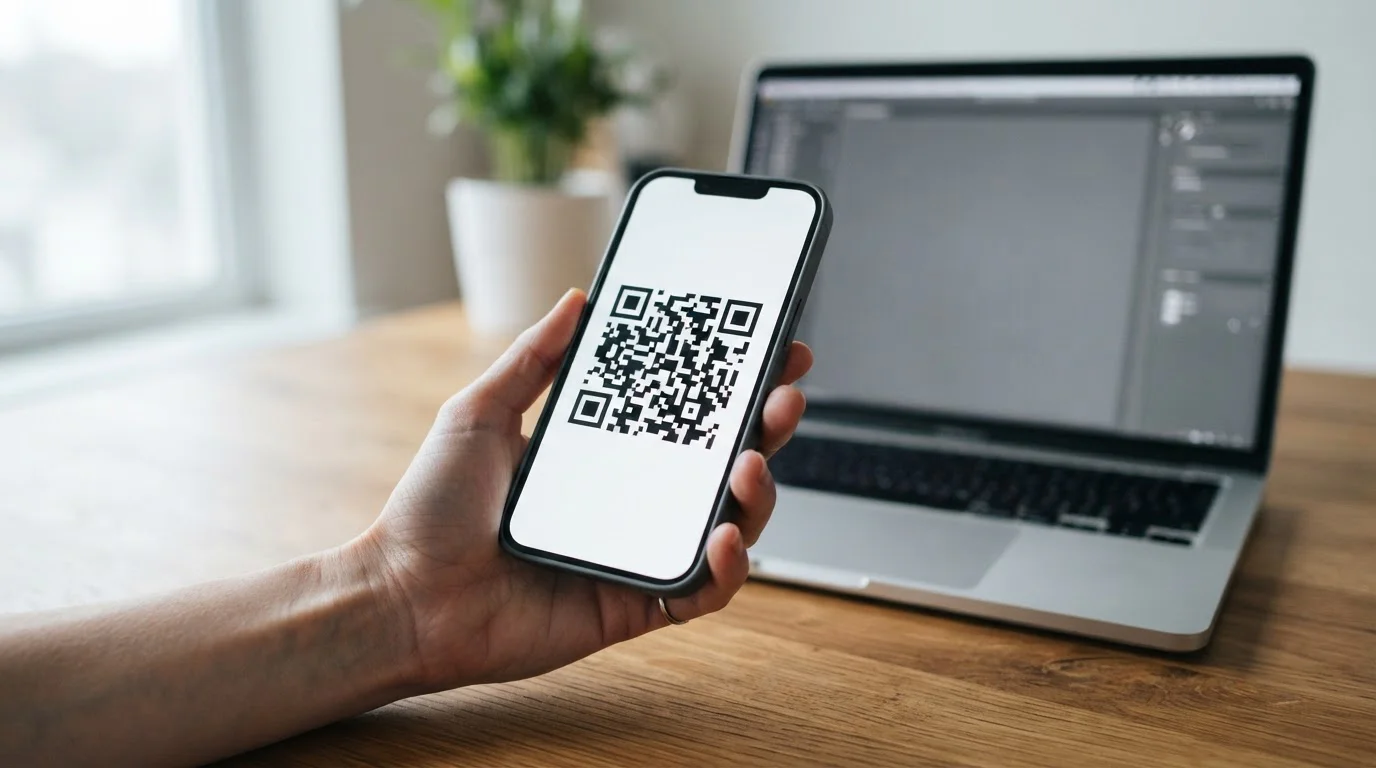
Open the cashier, choose the deposit option, and select Solana or SOL from the list of accepted coins. The site generates a receiving address — confirm it is an address for native SOL on the Solana network, not a token address on some other chain. Copy it, or scan the QR code if one is offered. Move to your wallet, paste the address, enter the amount, and check the first and last several characters of the address against what the cashier displayed before you authorise anything. Send, then keep the transaction ID until the balance credits.
Those last two habits are the whole game. Solana transfers are irreversible once submitted — there is no chargeback, no support ticket that reverses a confirmed transaction, and no intermediary holding funds in escrow. Send to a wrong address and the money is simply gone. On a first deposit to any new address, move a small test amount, confirm it credits, then send the rest. The few seconds that costs you is the cheapest insurance in crypto gambling. The transaction ID matters because it is your proof: if a balance does not appear, that string is what lets you check the transfer on a public blockchain explorer and establish whether the problem sits with the chain or with the casino.
SOL is not the same as USDT on Solana
This trips up more people than any other single mistake, and the confusion is understandable. Solana the blockchain hosts many assets. SOL is the native coin. USDT on Solana and USDC on Solana are different tokens that happen to travel on the same network. They are not interchangeable, and a casino address generated for one will not correctly receive another.
A site accepting SOL does not automatically accept every token issued on Solana, and the reverse holds too. Send USDC to an address the cashier generated for native SOL and recovery ranges from a lengthy support conversation to nothing at all, depending on how the operator’s wallet infrastructure is built. Select the exact currency and the exact network displayed by the cashier — both, every time, even when the dropdown feels familiar. The interface will not stop you making this mistake.
The failed transaction that still charges you
Here is the part that appears on virtually no page written about Solana casinos for British readers, and it is the most counter-intuitive cost on the rail.
Solana charges a base fee of 5,000 lamports per signature. That fee is fixed — it does not rise with demand the way Ethereum gas does — and a simple transfer consumes roughly 200 compute units, which is negligible. Above the base sits an optional priority fee, priced in micro-lamports per compute unit, normally dwarfed by the base fee for a plain transfer. So far, so cheap. The catch is in how Solana handles congestion. The network achieves its throughput by processing transactions in parallel rather than queueing them, which means that under heavy demand a transaction can fail to be included at all instead of waiting patiently for the next block. A Bitcoin transaction sits in the mempool until it clears. A Solana transaction can simply be dropped.
And the base fee is charged whether the transaction succeeds or fails. You can pay the signature fee and receive nothing — a deposit that cost money and did not arrive. In absolute terms the loss is trivial, a fraction of a penny. In practical terms it is a deposit you now believe you made and the casino has no record of, which is a far more irritating problem than the fee.
The fix takes one click. On any deposit that matters, let your wallet set a priority fee slightly above the minimum rather than accepting the default. You are converting a sub-penny cost into a marginally larger sub-penny cost in exchange for the transaction actually landing. Most people never do it, because the default looks free and free is hard to argue with. If a deposit does not appear, check the signature on a blockchain explorer before contacting support — on this chain the likely answer is failure rather than delay, and knowing which one you are dealing with changes the conversation entirely.
What happens if I send SOL to the wrong network or the wrong token address?
Recovery ranges from a lengthy support conversation to nothing at all. Solana transfers are irreversible and SOL, USDT on Solana and USDC on Solana are distinct assets. Match the exact currency and network shown in the cashier, send a small test amount to any new address first, and keep the transaction ID.
How fast Solana withdrawals really are
Advertised payout speeds are marketing. Logged transfers with timestamps are evidence. The gap between them is where most comparison pages quietly live.

What the logged transfers show
Independent testing moved real money through five Solana casinos and recorded the amount, start time, completion time, network fee, wallet and transaction ID for each transfer, which makes the results checkable against the blockchain rather than against an operator’s claims.
Five deposits averaged roughly 53 seconds, ranging from under one second to nearly three minutes. Three withdrawals with complete timing data averaged about 55 seconds. Across all eight fully timed transfers the average was approximately 54 seconds, and every recorded network fee fell between 0.000006 and 0.00000769 SOL.
| Site | Direction | Amount | Time | Network fee | Date |
|---|---|---|---|---|---|
| Lucky Coin | Deposit | 0.304878 SOL | Under 1 sec | 0.00000635 SOL | 5 May 2026 |
| Betpanda | Deposit | 0.23221448 SOL | 30 sec | 0.00000635 SOL | 12 May 2026 |
| AllStars | Deposit | 0.53637278 SOL | 26 sec | 0.00000635 SOL | 24 June 2026 |
| AllStars | Deposit | 0.54000000 SOL | 36 sec | 0.00000635 SOL | 24 June 2026 |
| Grailbet | Deposit | 0.45 SOL | 2 min 53 sec | 0.00000635 SOL | 17 June 2026 |
| Grailbet | Withdrawal | 0.376499307 SOL | 27 sec | 0.00000769 SOL | 16 June 2026 |
| AllStars | Withdrawal | 0.15178489 SOL | 1 min 08 sec | 0.000006 SOL | 14 July 2026 |
| Betpanda | Withdrawal | 1.22 SOL | 1 min 11 sec | Not recorded | 13 May 2026 |
Those withdrawal figures all landed inside 71 seconds, which tells you something specific: the payouts were automated or near-automated, not reviewed by a person. That is the ceiling of what this rail does when an operator lets it run unimpeded. It is also, importantly, not a promise about your withdrawal. A first cashout, a larger amount, a bonus still under verification or an account flagged for checks can each park a request for hours or days, and none of that is visible in a transfer-speed average.
Where the operator, not the chain, decides
Two comparisons isolate the variable cleanly, and both deserve to displace the usual hand-waving about blockchain speed.
The first is Grailbet, which produced both the fastest withdrawal in the dataset at 27 seconds and the slowest deposit at 2 minutes 53 seconds, at an identical network fee, on consecutive days. The chain was not the difference. The difference was how quickly Grailbet’s own systems noticed and credited an incoming payment versus how quickly they released an outgoing one. The second is Betplay, where a Solana withdrawal completed in 38 seconds while a Litecoin withdrawal from the same account, in the same testing round, took nine minutes. Same operator, same approval process, different chain.
Read together, those two cases map the whole picture. Choosing Solana over a slower chain genuinely buys you time — the Betplay comparison proves that. Choosing a slow operator gives it all back, and more — the Bets.io payout window of nought to two days makes that point at the other extreme. Sub-second settlement on a platform that batches approvals overnight is a fast car in a traffic jam. Both halves have to work.
How long does a Solana casino deposit actually take, and what does it cost?
Logged deposits averaged about 53 seconds, from under one second to 2 minutes 53 seconds, with network fees of 0.00000635 SOL — a fraction of a penny. Withdrawals with full timing data averaged roughly 55 seconds. The variation came from casino crediting speed, not from Solana.
Fees, minimums and whether a small deposit makes sense
What a SOL transfer actually costs
Across every logged casino transfer, fees ran between 0.000006 and 0.00000769 SOL. Most deposits cost exactly 0.00000635 SOL. The lowest recorded was 0.000006 SOL on an AllStars withdrawal. At a SOL price around $120, those figures sit well below one penny — close enough to nothing that the fee stops being a factor in any decision you make.
Fees are quoted in SOL here rather than converted to pence for a reason: the coin’s price moves, and a fixed sterling figure published today would be wrong within weeks. The network-wide average transaction fee across all Solana activity runs higher, around half a cent, because it includes complex transactions and priority bidding from automated traders rather than plain transfers between wallets. For a straightforward casino deposit, the lower figures above are what you will see.
Two costs sit outside the network fee and need checking separately. A casino can levy its own cashier or withdrawal charge on top — Dexsport is documented as adding nothing, Vave states no fee on payouts, others are less forthcoming, and the withdrawal terms are where that is disclosed if it is disclosed at all. And if the site converts your SOL to an internal balance on arrival rather than holding it as SOL, the exchange rate it applies is a cost whether or not anyone calls it one. Whether the coin stays SOL after it lands is worth establishing before you deposit, not after.
Minimums are set by the casino, not the chain
Solana imposes no minimum transfer. Every floor you encounter is an operator decision, and they vary more than you would expect. Winna takes deposits from $1. Betplay sets its minimum withdrawal at $5 with a $50,000 daily ceiling. Vave states no minimum or maximum withdrawal at all. Stake publishes withdrawal minimums per asset, which is the tidier approach even if the brand is unavailable to British players.
This is where the low-deposit question gets a genuine answer rather than a brush-off. On Ethereum mainnet, a £5 deposit can be swallowed whole by the network fee, and a £5 withdrawal is actively absurd. On Solana, a sub-penny fee on a £5 transfer is a rounding error — small deposits and small withdrawals both work economically, which is a real and underrated advantage of this particular chain. Just remember the fee is the easy part. An operator minimum of $20 makes a £5 deposit impossible regardless of how cheap the transfer is, and a $50,000 daily cap matters only to people whose problems are not the ones this page addresses.
What is the minimum I can deposit with Solana, and is a £5 deposit worth it?
Solana sets no minimum; the casino does. Winna accepts $1 deposits, the lowest here, while Betplay’s minimum withdrawal is $5. Sub-penny network fees make small amounts genuinely viable on this chain, unlike Ethereum mainnet where the fee can exceed a £5 transfer.
Bonuses, games and mobile play on a SOL balance
Bonus structures worth understanding
Two models compete in this corner of the market, and the difference between them is larger than the headline numbers suggest.
The matched deposit is the familiar one: Bets.io offers up to 1 BTC plus 225 free spins at 40x wagering, BC.Game runs four monthly-resetting deposit bonuses at 45x on deposit plus bonus, Dexsport reaches $10,000 plus 300 free spins at 40x. Multiply the credited amount by the wagering figure to see what you are actually agreeing to turn over, and the “gift” starts to look more like a contract. The second model is rakeback, and it works differently: Thrill pays up to 70% rakeback plus 10% lossback, Rakebit pays 100% rakeback across VIP levels 1 to 9, Winna drops the welcome match entirely in favour of it. Rakeback returns a slice of what the house took, win or lose, usually with no wagering attached — money rather than credit.
For a steady player the second structure is generally worth more, and it is also harder to dress up in a headline, which is why the first remains more common. Watch two details. Several of these sites denominate bonus ceilings in Bitcoin or USDT rather than sterling, so “up to 1.5 BTC” means whatever Bitcoin happens to be worth that week. And Thrill does not fully publish its rakeback percentages, which independent reviewers have noted — an uncapped promise with unreadable terms is worth less than a smaller one you can check. Jack’s 100 free spins on a $50 deposit at 1x wagering is the lightest condition in this set and genuinely unusual; most of the industry attaches 35x and trusts you to stop reading.
The coin does not decide the lobby
Worth stating plainly, because the expectation is widespread and completely wrong: there is no such thing as a Solana slot.
No studio builds chain-specific casino content. Pragmatic Play, Evolution, NetEnt, Play’n GO, Hacksaw, Nolimit City, Relax Gaming, Red Tiger and the rest supply identical catalogues regardless of what funded your balance. The blockchain determines how money reaches your account and influences nothing whatsoever about what you can play with it afterwards. Searches for “Solana slots” or “Solana roulette” are looking for a product category that does not exist — what they will find is ordinary slots and ordinary roulette at a site that happens to accept SOL.
Which means comparing Solana casinos on games is just comparing casinos on games, and the lobbies differ enormously: Bets.io and BC.Game run past 10,000 titles, Vave draws on 100-plus providers with in-house exclusives, Dexsport pulls live tables from Evolution, Playtech and Ezugi. Live dealer, blackjack, roulette, baccarat and crash games are all available at SOL-accepting sites, and all for the ordinary reason that the operator licensed them from the same studios everyone else uses. One genuine crypto-native category does exist — in-house Originals like dice, crash and limbo, often provably fair, with Thrill running nine of them and Rakebit and Winna carrying their own. Those are platform products rather than chain products, and you will find them at Bitcoin-only sites too.
Playing on mobile
There is no Solana casino app worth hunting for, and the searches looking for one are chasing a category error.
What works in practice is a wallet application on your phone — Exodus, Phantom or similar — paired with the casino in a mobile browser. The cashier displays a QR code, the wallet scans it, the transfer completes, and the whole sequence is smoother on a phone than on a desktop precisely because the QR step removes any chance of mistyping an address. Several of these operators advertise an app that turns out to be an installable web shortcut rather than a store download; Vave’s is explicitly a progressive web app. Functionally that is fine. It is not what most people picture when a site says “app,” and the distinction is worth knowing before you go looking in an app store that has nothing for you.
Newer sites and why a short payout record matters
New Solana casinos arrive constantly, and the appeal is obvious — better bonuses, fresher interfaces, VIP tiers you can climb before the competition arrives. Betplay has been running since 2024, Betpanda since 2023, Thrill is newer still.
The thing a new site cannot have is a payout history. Every protection discussed on this page is either absent offshore or weak, which leaves one meaningful signal: whether an operator has been paying people reliably for long enough that a pattern of failure would have surfaced. A site launched six months ago has no such record, and the absence of complaints about a new casino is not evidence of good behaviour — it is evidence that not enough time has passed. Duelbits publishing a verifiable 2024-series Curaçao licence number counts for more than any welcome offer, because it is a fact you can check rather than a claim you have to trust. Treat recency as a reason for a smaller first deposit, not a reason for enthusiasm.
If Solana does not fit
Other coins at the same sites
Solana’s weakness is availability. Bitcoin is accepted at more operators, Litecoin and the major stablecoins at more still, and native SOL support remains narrower than any of them despite expanding steadily. If your shortlist keeps collapsing on the UK check, the coin may be the constraint rather than the casino.
Several alternatives solve specific problems. Litecoin is widely accepted with low fees and is easier to identify correctly in an unfamiliar cashier, where SOL’s resemblance to its own SPL tokens creates room for error. Tether and USDC hold their value, which matters if you dislike watching your balance move while you play — a SOL balance is exposed to the coin’s price whether you wanted that exposure or not. XRP settles quickly and cheaply and is accepted at most of the sites listed here. Dogecoin, Bitcoin Cash and BNB turn up across the same cashiers. One practical rule governs all of them: check that the coin works in both directions at your chosen site. A casino that takes SOL but pays out only in Bitcoin forces a conversion you did not choose, at a rate you did not agree.
There is no Solana card, and no Solana instant banking
Searches for a Solana debit card, Solana instant banking or “Verified by Solana” are looking for products that do not exist. Solana is a blockchain. It is not a card scheme like Visa, not an instant-banking service like Trustly, and there is no verification programme bearing its name.
What the people typing those phrases usually need is a crypto debit card — the sort issued by a handful of exchanges, which liquidates coins to fiat at the point of sale. Load SOL, spend in sterling, and the merchant sees an ordinary card transaction. That route genuinely works at a UKGC-licensed casino, because the operator receives a normal card payment and never touches crypto at all. Two caveats, and the first is significant: you have sold your SOL, which may be a disposal for capital gains purposes depending on your circumstances and is worth checking before it becomes a surprise. The second is that many UK operators block gambling transactions on cards they classify as prepaid, so this can fail at the cashier for reasons nothing to do with Solana.
Solana did not shut down
People keep asking what happened to Solana casinos, why Solana closed, and whether SOL is still accepted anywhere. Nothing happened. Solana is operating normally, with roughly 673 validators, block times under half a second and over 130 billion transactions processed since launch in March 2020.
Acceptance is growing rather than shrinking — Dexsport added SOL support in the first quarter of 2026, and it appears in more cashiers now than a year ago. These questions are almost certainly bleed-through from payment methods that genuinely did disappear from UK gambling, and there have been several. Solana is not one of them. If a site that used to take your SOL has stopped, the explanation is that operator’s banking arrangements or licence position, not the network.
The UKGC-licensed route
For anyone whose real priority is protection rather than the coin, there is an honest alternative, and it should be said clearly rather than buried.
Sell your SOL on an exchange, move sterling to your bank, and deposit by card or bank transfer at a UKGC-licensed casino. You get Commission oversight, an approved dispute-resolution scheme, GAMSTOP coverage, mandated customer-fund disclosure and the deposit-limit machinery — every protection this page has spent several thousand words explaining the absence of. What you lose is the speed, the anonymity and the sub-penny fees, and you add an exchange step with its own costs.
Calling that a Solana casino would be dishonest, because it is not one: the operator never sees a coin and your search was for something else. But if the appeal of SOL was convenience rather than principle, it is a route worth weighing before you deposit with an operator in Anjouan.
Did Solana casinos shut down, and is SOL still accepted in 2026?
No closure happened. Solana runs normally with around 673 validators and sub-second block times, and casino acceptance is expanding — Dexsport added SOL in early 2026. Those questions appear to be carried over from payment methods that genuinely did leave the UK gambling market. Solana is not among them.
Is there such a thing as a Solana debit card for casino deposits?
No. Solana is a blockchain, not a card scheme, and no “Verified by Solana” product exists. Crypto debit cards from exchanges do convert SOL to fiat at the point of sale, which reaches a UK casino as a normal card payment — though selling the coin may have tax consequences worth checking.
Keeping a fast rail from becoming a problem
Everything that makes Solana good at this job also makes it the least forgiving payment method in gambling. Sub-second settlement, fees too small to notice, no bank sitting in the middle asking questions, no card issuer declining anything, no confirmation window during which a decision can be reconsidered. A deposit takes one QR scan and a thumbprint.
Slower rails impose friction by accident, and that friction does real work. The two days a bank transfer takes is two days in which an impulse can pass. The declined card is an interruption. The ten minutes a Bitcoin confirmation needs is ten minutes of sitting there watching a progress indicator and occasionally thinking better of it. Solana removes all of it, and the operators built for Solana removed what remained — no deposit limits you did not ask for, no affordability questions, no verification step, nothing between the thought and the funded balance.
Decide the figure before you open the cashier, and treat it as money already spent rather than money at risk. Gambling is entertainment with a price attached; the price is the house edge, and it is charged whether or not you enjoy the evening. Do not raise a stake because the deposit was cheap and quick — the transfer costing a fraction of a penny tells you nothing about whether the amount inside it was sensible. If you find yourself depositing more than planned, chasing losses, playing to recover rather than to pass an hour, or keeping the total quiet from people who would ask about it, the payment method has stopped being the interesting part of the problem.
Offshore, the practical tooling is thin. Operator-side deposit limits exist at many of these sites and can usually be lifted by the same operator after a short conversation with support, which makes them a speed bump rather than a barrier. The levers that hold are the ones the casino does not control: a gambling block applied by your bank, which most UK banks now offer and which blocks the card and the account rather than the site; device-level blocking software; and, if you have registered with GAMSTOP, the understanding that these sites sit outside it by construction and that seeking them out is the specific behaviour the registration was meant to prevent. GamCare runs a free helpline on 0808 8020 133, around the clock, and talking to them costs nothing at all — which, on a page full of fees measured in fractions of a penny, is still the best value here.
Be 18 or over, keep stakes inside a budget you have set in advance, and remember that nobody built any of this to make you richer. The arithmetic was settled before you arrived.
Crypto Casinos UK 2026 — Solana, XRP, Dogecoin, BCH and BNB
Content created by the «casinomoneyg» team