
Casinos That Accept Wirecard UK 2026: The Reality Check on What Replaced It
 Available in US
Wirecard collapsed. That is not speculation, not a temporary closure, not a rebrand under construction. The German payments giant filed for insolvency in June 2020 after €1.9 billion in cash vanished from its balance sheet, the UK’s Financial Conduct Authority suspended its operations, and roughly 600,000 prepaid cardholders in Britain woke up holding useless plastic. If you searched for casinos that accept Wirecard UK 2026, the short answer is zero. Not a single operator licensed by the UK Gambling Commission processes Wirecard transactions in 2026, and none ever will again.
The longer answer involves understanding what actually happened during those chaotic weeks in mid-2020, why UK casinos had no choice but to drop the payment method overnight, and which alternatives replaced it. This guide covers both: the historical collapse that answers why Wirecard is gone, and the practical map of UK-licensed casinos and payment methods that work in 2026. Expect verifiable facts, concrete withdrawal speeds, and none of the affiliate cheerleading that treats every casino bonus as a “gift” rather than a marketing cost with arithmetic attached.
Wirecard was DAX-30 listed, audited by EY for over a decade, and valued at over €24 billion at its peak. It processed payments for some of Europe’s largest e-commerce platforms and held FCA authorisation in the UK. Then the Financial Times exposed the fraud, the auditors admitted they could not verify the cash, and the whole structure came down in days. If that does not make you slightly nervous about where your casino withdrawal sits on a random Tuesday afternoon, nothing will.
Wirecard Is Dead — Why No UK Casino Accepts It in 2026
Wirecard Card Solutions was authorised by the FCA as an electronic money institution. It issued prepaid cards and processed payments for gambling merchants across Britain. When the parent company’s accounting fraud surfaced in June 2020, the FCA moved immediately. The regulatory timeline is worth understanding in detail, because it shows exactly how fast a “trusted” payment brand can vanish.
The June 2020 Collapse — What Actually Happened
Wirecard AG, the Munich-based parent, had been under scrutiny since 2018 when the Financial Times began publishing investigations into questionable accounting and dubious third-party partnerships in Asia. Wirecard denied everything, sued journalists, and briefly saw its share price rise. In June 2020, EY — the auditor that had signed off on Wirecard’s books for over a decade — finally admitted it could not verify roughly €1.9 billion in cash supposedly held in trust accounts in the Philippines.
The CEO was arrested. The share price collapsed from around €100 to under €2 within days. BaFin, the German financial regulator, shut down Wirecard Bank AG. The company filed for insolvency. For UK casino players, the practical impact was immediate: any operator using Wirecard as an acquiring channel, a card-issuing partner, or an e-wallet had to find alternatives overnight.

The FCA Timeline: 26 June to 28 August
The FCA’s statement on 26 June 2020 was blunt: Wirecard Card Solutions must not carry out any regulated activity, must not accept new deposits, and must not issue new cards. Roughly 600,000 UK prepaid cardholders were locked out. Deposits through Wirecard-branded cards failed at casino cashiers. Withdrawals routed through the same rails stalled.
On 30 June, the FCA lifted the suspension briefly — not because the company had been vindicated, but to allow orderly wind-down and ensure customer funds were secured. The three-day freeze had served its purpose: preventing further deposits and protecting existing balances. By 28 August 2020, Wirecard announced it was winding down its FCA-regulated business entirely. The brand, the licences, the infrastructure — all gone.
The FCA’s handling changed how regulators view e-money issuers connected to gambling. Post-2020, payment providers servicing UK casinos face stricter due diligence, and the Gambling Commission has repeatedly stressed that operators must ensure their payment processors are properly authorised. That regulatory tightening is one of the few genuine silver linings of the fiasco.
Why UK Casinos Had to Drop Wirecard Overnight
Payment methods at UK-licensed casinos are not decorative. They are part of the compliance perimeter. The Gambling Commission expects operators to know exactly where customer funds sit and under which regulatory regime. An operator that continued accepting Wirecard deposits after the FCA suspension would have been in breach of its own UKGC licence conditions.
Casinos that had relied heavily on Wirecard infrastructure had to demonstrate to the Commission that player funds were segregated and that withdrawal processes remained intact. Most operators had backup processors in place. A few did not, and the Commission made its position clear. The lesson the UK market took from Wirecard’s collapse was diversification: operators now face stricter expectations about payment method redundancy and player fund protection.
Why can’t I use Wirecard at UK casinos anymore in 2026?
Wirecard collapsed in June 2020 after €1.9 billion in cash was discovered missing. The FCA suspended its UK operations on 26 June 2020, and by August the company had wound down entirely. No UK-licensed casino can accept Wirecard because the company no longer exists, its licences were revoked, and there is no successor entity.
The Payment Methods That Replaced Wirecard at UK Casinos
Wirecard’s disappearance did not leave a vacuum. The UK online gambling payment ecosystem in 2026 is dominated by a handful of well-established methods, each with trade-offs in speed, fees, and convenience. Understanding these is more useful than mourning a dead payment brand.
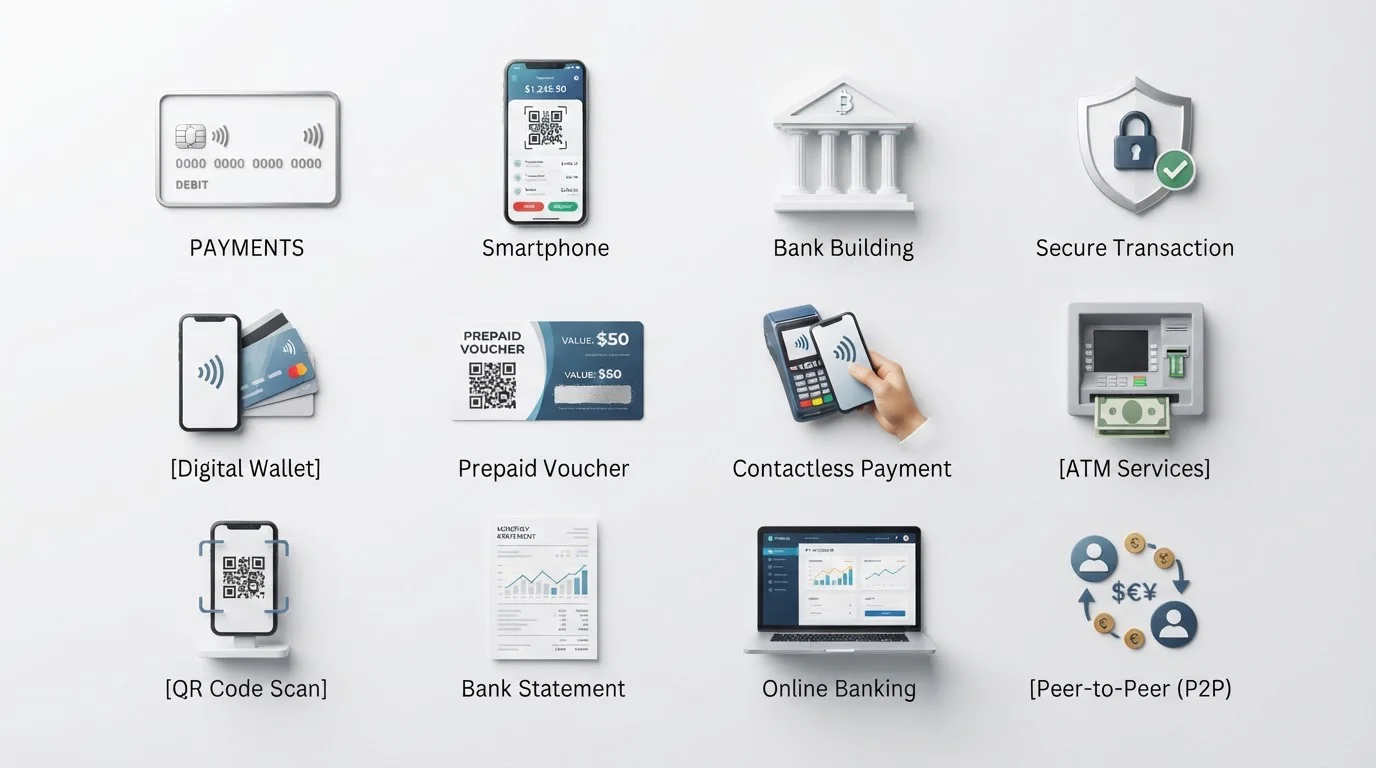
| Method | Deposit Speed | Withdrawal Speed | Fees | Limitations |
|---|---|---|---|---|
| Visa/Mastercard Debit | Instant (10 sec–2 min) | 1–3 working days | Usually none (casino side) | Credit cards banned; must withdraw to same card |
| PayPal | Instant | 24 hours typical | Usually none | Selective availability; some casinos exclude from bonuses |
| Skrill / Neteller | Instant | 24 hours typical, often same-day | Usually none (casino side) | Often excluded from bonus eligibility |
| Open Banking (Trustly, etc.) | Instant | 24 hours–5 days | Usually none | Requires banking app authorisation per transaction |
| Bank Transfer (BACS/FPS) | Instant–1 day | 3–5 working days | Usually none | Slowest withdrawal method |
| Paysafecard | Instant | Not supported | Usually none | Deposit-only; no withdrawals |
Debit Cards — The Universal Default
Visa and Mastercard debit cards remain the backbone of UK online casino payments. Virtually every UKGC-licensed operator accepts them. Deposits are instant — ten seconds to two minutes depending on whether your bank throws a security prompt. Withdrawals to the same card typically take one to three working days.
The Gambling Commission prohibited credit card gambling entirely in April 2020, a rule that came into effect weeks before Wirecard collapsed. If you are using a credit card to fund casino play, you are either outside the UK system or doing something the regulator has explicitly banned. Debit cards are the only permitted card method, and they process at roughly 98% success rates across licensed operators.
The advantage is universal acceptance and no third-party wallet. The disadvantage is speed: withdrawals to debit cards are slower than e-wallets. But for players who prefer not to introduce another intermediary between their bank and the casino, debit cards are the straightforward option.
E-Wallets: PayPal, Skrill and Neteller
E-wallets occupy a large share of UK casino payment traffic, and this is where Wirecard’s ghost lingers most visibly. Skrill and Neteller, both owned by Paysafe, are the two dominant e-wallets. They offer near-instant deposits and withdrawals, often within minutes of casino approval. PayPal is the third major option, and it carries a certain psychological weight — players trust PayPal in a way they do not trust lesser-known wallets, partly because PayPal’s buyer protection reputation transfers to gambling contexts.
Skrill and Neteller processed over £4 billion in European gambling transactions in 2023. Both are FCA-authorised as e-money institutions. Deposits are instant. Withdrawals are the fastest of any method: typically within 24 hours of casino approval, and at some operators, same-day. The trade-off is that many casinos exclude e-wallet deposits from bonus eligibility, or apply stricter wagering requirements. This is the kind of detail affiliate sites gloss over and that costs players real money.
PayPal’s availability is selective. Not every UKGC-licensed operator can offer it, because PayPal imposes compliance requirements that go beyond the UKGC’s baseline. If a casino supports PayPal, it is a mild signal of operational standards — PayPal does not partner with everyone. But the flip side is that PayPal-accepting casinos are a minority of the market.
Open Banking and Direct Bank Transfers
Open banking uses the UK regulatory framework that allows third-party providers to access your bank account — with your authorisation — for instant payments. Trustly is the most common provider at UK casinos, operating under Sweden’s regulatory framework and passported into the UK. The UK open banking framework launched in 2018 under PSD2, and adoption in the casino market has grown steadily through 2024–2026.
Deposits are instant. You authorise the transaction through your banking app, and the money lands in your casino account without sharing card details. Withdrawals via open banking settle faster than traditional bank transfers — typically 24 hours to five days depending on the implementation — but slower than e-wallets. The security advantage is real: no card numbers stored on casino servers, no third-party e-wallet holding your balance.
The disadvantage is friction. Authorising each transaction through your banking app adds a step that casual players find annoying. And first-time open banking deposits still fail more often than debit card transactions, though success rates have improved as the technology matures.
Standard bank transfers — BACS and Faster Payments — remain available as a fallback. Deposits can take up to a day. Withdrawals take three to five working days. They are the slowest method, but they work when everything else does not.
Prepaid Options: Paysafecard
Paysafecard is a prepaid voucher system. You buy a voucher — physical or digital — with a 16-digit PIN, enter that code at the casino cashier, and the money lands instantly. Paysafecard processed over £4.1 billion in transactions across Europe in 2023, and UK-licensed casinos still list it as a top-three deposit method.
The advantage is anonymity. You can buy Paysafecard vouchers with cash at UK retailers, fund your casino account without linking a bank card or sharing financial details. The disadvantage is that Paysafecard is deposit-only. You cannot withdraw to it. You will need an alternative method — debit card, e-wallet, bank transfer — to cash out.
Paysafecard is popular with players who prefer to keep gambling separate from their main financial accounts, and with those who want hard budget control: the prepaid amount is your spending cap.
Which payment methods replaced Wirecard at UK online casinos?
Debit cards (Visa/Mastercard), e-wallets (PayPal, Skrill, Neteller), open banking solutions (Trustly), bank transfers, and prepaid options (Paysafecard) replaced Wirecard. E-wallets are fastest for withdrawals (24 hours typical), debit cards are universal but slower (1–3 days), and open banking offers security without third-party wallets.
Are e-wallets like PayPal faster than debit cards for casino withdrawals?
Yes. E-wallet withdrawals typically process within 24 hours, and some casinos offer same-day payouts. Debit card withdrawals take one to three working days. E-wallets are the fastest method, but many casinos exclude e-wallet deposits from bonus eligibility or apply stricter wagering requirements.
How Fast Are Casino Withdrawals in the UK in 2026?
Withdrawal speed is where casino marketing meets reality, and the gap is usually wider than the advertising suggests. The Gambling Commission does not mandate specific withdrawal timelines for UK-licensed operators, but it does require operators to process withdrawals within a reasonable period and to explain their timelines clearly. In practice, “reasonable” varies significantly by method and by operator.

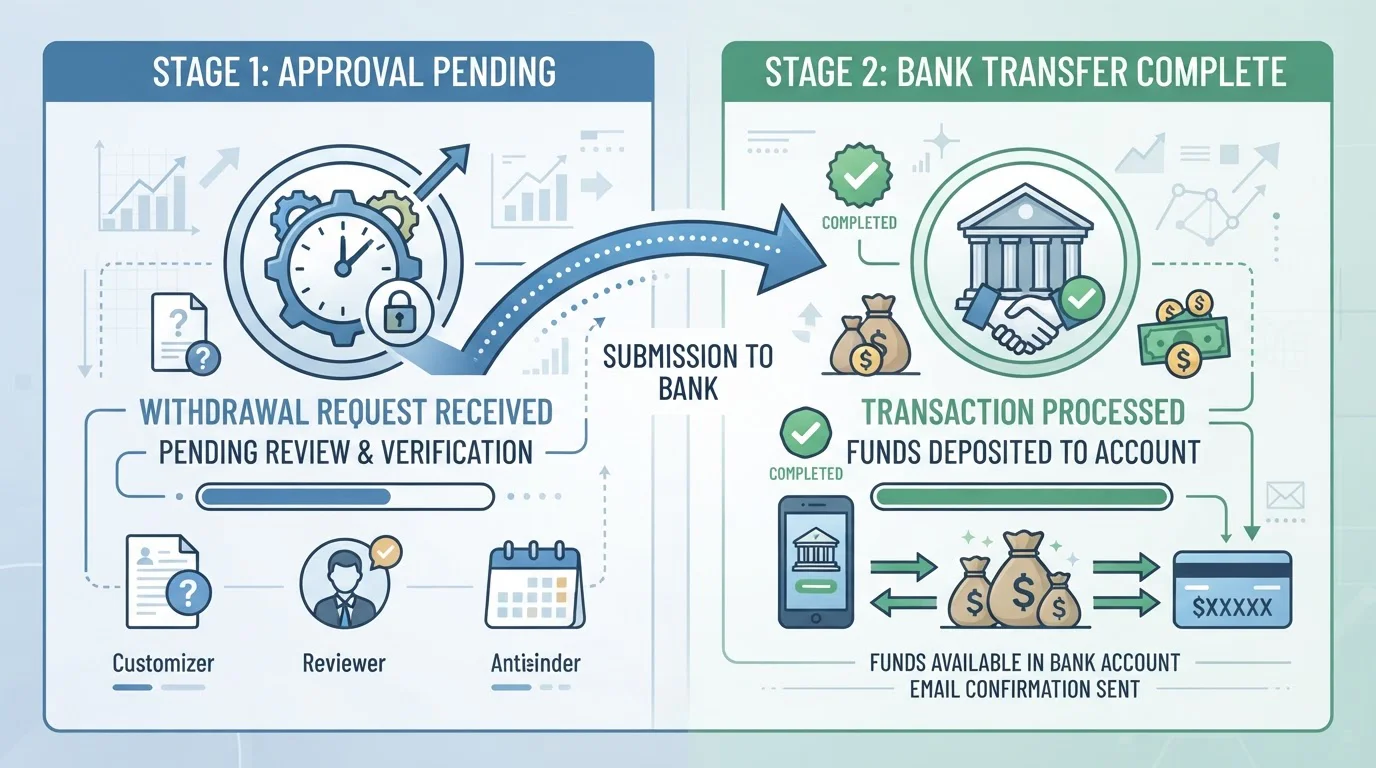
Processing Time vs Transfer Time — The Two-Stage Reality
A casino advertising “instant withdrawals” is usually referring to the transfer time after the casino has approved the withdrawal, not the total time from request to money in hand. The two stages are:
Casino processing time — the period between you requesting the withdrawal and the casino approving it. Some casinos process within minutes. Others take 24 to 48 hours. A few take longer, and those are the ones to watch.
Payment method transfer time — the period between casino approval and the money landing in your account. This is controlled by the payment method, not the casino. E-wallets transfer within minutes to hours. Debit cards take one to three working days. Bank transfers take three to five.
When a casino says “24-hour withdrawals,” ask which stage that refers to. The honest version would be: “We approve e-wallet withdrawals within two hours, and the money arrives in your wallet immediately after that.” That is less punchy on a landing page.
E-Wallet Withdrawals: The Fastest Option
E-wallet withdrawals are the fastest method at UK casinos in 2026. PayPal, Skrill, and Neteller withdrawals typically complete within 24 hours of request, and at casinos with streamlined processing, same-day payouts are common. The speed advantage is substantial: where a debit card withdrawal might take three working days, an e-wallet withdrawal can land within hours.
The catch is casino-side processing. A casino that takes 48 hours to approve a withdrawal negates the speed advantage of the e-wallet. And many casinos exclude e-wallet deposits from bonus eligibility, meaning you either skip the welcome offer or use a slower withdrawal method later.
Debit Card Withdrawals: The 1-3 Day Wait
Debit card withdrawals at UK casinos take one to three working days after casino approval. The UKGC requires that withdrawals go back to the same payment method used for deposit, so if you deposited by debit card, your withdrawal returns to that card. The timeline depends on the card network (Visa or Mastercard) and your bank’s processing speed.
Debit card withdrawals are slower than e-wallets but faster than traditional bank transfers. They are the middle ground: universally available, no third-party wallet needed, but not the fastest option if speed is your priority.
Bank Transfers and Open Banking
Standard bank transfers are the slowest withdrawal method. BACS transfers take three to five working days. Faster Payments can settle within one day but are not universally supported for casino withdrawals. Open banking withdrawals — using providers like Trustly — settle faster than traditional bank transfers, typically within 24 hours to five days, but still slower than e-wallets.
The security advantage of open banking is that no card details are stored on casino servers. The speed disadvantage is real. If withdrawal speed is a priority, e-wallets win.
What “Instant Withdrawal” Actually Means
A casino advertising “instant withdrawals” is usually referring to e-wallet methods only, and the “instant” applies after the casino’s own processing time. The honest version: if the casino approves your withdrawal within an hour, and you used Skrill, the money lands in your Skrill account within minutes of approval. That is effectively instant from the player’s perspective. But if the casino takes 24 hours to approve, the total time is 24 hours plus transfer time.
Read the terms. Check withdrawal processing times in reviews. And test with a small withdrawal before committing significant funds.
What’s the fastest withdrawal method at UK casinos in 2026?
E-wallets (PayPal, Skrill, Neteller) are the fastest. Withdrawals typically complete within 24 hours of request, and some casinos offer same-day processing. Debit cards take 1–3 working days, and bank transfers take 3–5 days. The casino’s processing time adds to the payment method’s transfer time.
How long do casino withdrawals actually take with different payment methods?
E-wallets: 24 hours typical, sometimes same-day. Debit cards: 1–3 working days. Open banking: 24 hours–5 days. Bank transfers: 3–5 working days. The total time is casino processing time plus payment method transfer time. Always check a casino’s stated processing timeframe before depositing.
UK-Licensed Casinos: The Current Market in 2026
The UK online casino market in 2026 is mature, heavily regulated, and dominated by a relatively small number of large operators who have survived multiple regulatory tightening rounds. The UKGC licence is the entry ticket. Obtaining one is neither quick nor cheap — application fees, ongoing compliance costs, and the requirement to demonstrate adequate player fund protection mean that fly-by-night operations cannot easily enter the UK market.
The operators below are among the most prominent names currently active in the UK. They are listed not as recommendations — each has strengths and weaknesses — but as the factual market landscape. What they share is UKGC licensing, established payment processing, and a track record long enough to have regulatory history.
| Operator | License | Withdrawal Speed | Minimum Deposit | Distinguishing Feature |
|---|---|---|---|---|
| NetBet | UKGC | E-wallets 24h | £10 | Wide payment range including PayPal, Trustly instant banking |
| Betfair | UKGC (PPB Entertainment Ltd) | E-wallets 24h, PayPal fastest | £5 | Flutter Entertainment (FTSE-listed), integrated wallet with exchange |
| Admiral | UKGC | E-wallets 1 day | Standard | Novomatic UK, casino+bingo shared wallet, newer entrant |
| Double Bubble Bingo | UKGC | 48h typical | Standard | UK-only, GBP cashier (no FX fees), Double Bubble franchise exclusive |
| Betfred | UKGC | E-wallets 24h | £5 | Founded 1967, high street retail heritage, established banking ties |
| Ladbrokes | UKGC (License 39264) | E-wallets 24h | £5 | Entain (FTSE-250), 2,000+ slots, founded 1886, Entain payment infrastructure |
| Lottoland | UKGC | E-wallets 1 day | Standard | Gibraltar structure, fixed-odds lottery betting core, casino supplementary |
NetBet
NetBet has been a fixture of the UK online casino scene for well over a decade, operating a broad game library that runs into the hundreds of slots plus live dealer tables from Evolution and Pragmatic Play. The cashier supports Visa, Mastercard, PayPal, Skrill, Neteller, Trustly (instant bank payment), Paysafecard, Apple Pay, and bank transfer. That range is wider than many competitors, and the inclusion of PayPal is not universal among UKGC operators.
NetBet’s withdrawal processing for e-wallets typically clears within 24 hours. Debit card withdrawals take one to three working days. The minimum deposit is £10, standard for the UK market. The operator leans on frequent reload promotions rather than one headline welcome offer, which suits players who deposit regularly rather than chasing a single bonus.
NetBet’s long UK market presence — over ten years — means there is substantial regulatory history and customer feedback to evaluate. The mobile app is available on iOS and Android. Payment processing is handled through established, FCA-authorised rails, and the operator’s diversified payment method lineup reflects the post-Wirecard expectation of redundancy.
Betfair
Betfair built its reputation on the betting exchange, but the casino side has grown into a serious product. The platform features over 1,500 slots, live dealer tables, and table games. Betfair operates under PPB Entertainment Limited, a Flutter Entertainment subsidiary. Flutter is FTSE-listed and one of the world’s largest gambling companies. The UKGC licence was first granted on 1 November 2014.
Betfair’s integration with its exchange and sportsbook means funds can move between products without re-entering card details. Casino withdrawals process quickly by UK standards: PayPal withdrawals often land within 24 hours, sometimes same-day. The minimum deposit is £5. The minimum withdrawal is reported as low as £0.01, though practical withdrawals are higher.
Betfair’s payment methods include Visa and Mastercard debit, PayPal, Skrill, Neteller, and bank transfer. The operator’s long track record in Britain and its publicly-listed parent company make it one of the more transparent outfits in the market. Regulatory compliance is overseen by Flutter’s group infrastructure, which reduces the risk of payment processor failures.
Admiral
Admiral runs a casino and bingo product under a single account. It is part of Novomatic UK, a subsidiary of the Austrian Novomatic Group. The game selection skews toward slots and instant-win titles from smaller studios alongside major providers. The shared wallet between casino and bingo means balances are interchangeable without re-depositing.
Admiral’s cashier accepts debit cards, PayPal, Skrill, Neteller, and open banking options. The operator has historically been quick to adopt new payment rails, reflecting a willingness to diversify processing infrastructure. Withdrawal speeds are competitive: most e-wallet payouts process within one working day.
Admiral is a newer entrant relative to household names like Ladbrokes or Betfred, which means it is still building its UKGC compliance track record. Newer operators often differentiate through bonus offers or withdrawal speed, and Admiral is no exception. The prudent approach with any newer platform is to start with a small deposit, test the withdrawal process, and evaluate customer support responsiveness before committing larger funds.
Double Bubble Bingo
Double Bubble Bingo is a UK-focused brand built around the Double Bubble slot franchise. It is licensed and marketed exclusively to British players, with no multi-currency options and no international scope. The cashier is designed for GBP transactions only, which avoids the currency-conversion fees that catch out players depositing on multi-currency platforms.
Payment methods include debit cards, PayPal, bank transfer, and e-wallets. Minimum deposits are standard for the UK market. Withdrawals are typically processed within 48 hours. Customer support operates on UK hours, which suits the target demographic.
The Double Bubble branded content is exclusive, giving the platform a differentiated game library. The UK-only focus means the operator is not juggling multiple regulatory regimes or currency conversions, which streamlines compliance and payment processing. For players in the UK who value GBP-native transactions and exclusive content, Double Bubble Bingo is a niche option with a clear identity.
Betfred
Betfred is one of the oldest names in British gambling, with a high-street presence that predates most online casinos. The brand was founded in 1967 by Fred Done, who still owns the company. The online casino product carries slots, live tables, and bingo, sitting alongside a comprehensive sportsbook.
Betfred’s retail footprint means it has a physical compliance infrastructure that purely digital operators lack. Payment processing benefits from established banking relationships built over decades. The cashier supports Visa, Mastercard, PayPal, Skrill, and bank transfer. E-wallet withdrawals usually clear within 24 hours. Card withdrawals take two to three working days.
Betfred’s long operational history — over 50 years — means there is substantial regulatory and customer feedback to evaluate. The mobile experience is competent. The operator’s “Fred Done era” of aggressive promotions has calmed, but regular players still receive reload offers and free-spin drops. Betfred’s retail heritage gives it brand recognition that purely online operators cannot match, particularly among older demographics.
Ladbrokes
Ladbrokes operates under the Entain umbrella alongside Coral and partypoker. Entain is FTSE-250 listed, giving it a level of corporate governance and transparency that smaller operators lack. Ladbrokes’ UKGC licence is held by Ladbrokes Betting & Gaming Limited, licence number 39264, verifiable on the Gambling Commission’s public register.
The casino offers over 2,000 slots, live casino from Evolution, table games, and an extensive sportsbook. The cashier covers all mainstream methods: Visa, Mastercard, PayPal, Skrill, Neteller, and bank transfer. Entain’s payment infrastructure means deposits and withdrawals are processed through established, FCA-authorised rails. Ladbrokes processes most e-wallet withdrawals within 24 hours.
Ladbrokes’ long-standing relationship with UK banking partners means fewer failed transactions than smaller operators experience. The shared wallet across Ladbrokes’ sports, casino, and bingo products is genuinely useful — no re-depositing between verticals. The mobile app is polished. Ladbrokes was founded in 1886, making it one of the oldest gambling brands in the UK. Its online operations date to the early 2000s.
Lottoland
Lottoland takes a different approach. It runs a fixed-odds lottery betting product — players bet on the outcomes of major international draws rather than buying tickets — alongside a casino section. The platform features slots and live tables from standard providers. Lottoland’s Gibraltar-based structure with a UK-facing licence is slightly unusual but fully compliant.
Payment methods include debit cards, PayPal, bank transfer, and major e-wallets. Withdrawal processing is solid: e-wallet payouts typically complete within one working day. The operator’s lottery betting side is the primary differentiator. For players who split their gambling budget between lottery and casino, Lottoland offers both under one roof.
The Gibraltar structure means Lottoland operates under Gibraltar Gambling Commission regulation as its primary jurisdiction, with a UK licence allowing it to serve British customers. That dual-licensing setup is less common than Malta-UK or pure UK structures, but it is legitimate and compliant.
How to Verify a UK Casino Is Legally Licensed
Checking whether a casino is licensed takes about thirty seconds. The Gambling Commission publishes a public register at gamblingcommission.gov.uk, and every UK-licensed operator appears there with its licence number, status, and any conditions attached. Type the casino’s brand name into the register search, confirm the licence status reads as active, and check that the licence covers remote casino operations. If the brand does not appear, or the status is anything other than active, walk away.

Checking the UKGC Public Register
The UKGC public register is the single authoritative source for UK gambling licences. Navigate to gamblingcommission.gov.uk/public-register. Enter the casino’s brand name or operating company name. The register returns licence details including:
- Licence number
- Status (active, suspended, revoked)
- Operating company legal name
- Licensed activities (remote casino, sports betting, bingo, etc.)
- Licence conditions or restrictions
If a casino claims UK licensing but does not appear on the register, it is operating illegally in Britain. The register does not lie. A casino marketing itself as “trusted since 2005” with no UKGC listing is unregulated for UK players.
Verifying Payment Processors on the FCA Register
The FCA’s Financial Services Register lists authorised e-money institutions and payment institutions. Wirecard Card Solutions appears there with a suspended status — a permanent scar from 2020. Cross-referencing a casino’s payment methods against the FCA register adds a layer of verification.
Navigate to fca.org.uk/firms/financial-services-register. Search for the payment provider name (e.g., Skrill, Neteller, Trustly). Confirm the provider is authorised or passported into the UK. If a casino lists an obscure e-wallet with no FCA authorisation, that is a red flag.
Post-Wirecard, the UKGC expects operators to conduct due diligence on payment processors. A casino using unauthorised payment services exposes itself to regulatory action. Cross-referencing both registers — UKGC for the casino, FCA for the payment methods — takes a couple of minutes and tells you more about legitimacy than any affiliate badge.

Red Flags: Sites Still Claiming Wirecard Acceptance
Any casino site in 2026 still listing Wirecard as an active payment method is either hopelessly out of date or deliberately misleading. Wirecard has not functioned as a payment option since mid-2020. A site claiming otherwise is not maintaining current information, and that raises questions about everything else on the page.
Affiliate sites that list “casinos that accept Wirecard” without acknowledging the collapse are optimising for search traffic, not accuracy. Treat such sites with scepticism. The legitimate approach is to acknowledge Wirecard is dead, explain why, and redirect to current alternatives.
How do I check if a UK casino is legally licensed?
Use the UKGC public register at gamblingcommission.gov.uk. Enter the casino’s name, confirm the licence status is active, and verify it covers remote casino operations. If the casino does not appear or the status is not active, it is not legally licensed for UK players.
Bonuses, Game Types and Mobile Play
Welcome bonuses at UK casinos exist to move money from your pocket to theirs with better arithmetic than you have. The headline figure — “£500 welcome bonus” — sits on top of wagering requirements that typically run 30x to 50x the bonus amount. A £100 bonus with 40x wagering requires you to wager £4,000 before you can withdraw. That is not a gift; it is a marketing cost with strings.
Many casinos exclude e-wallet deposits from bonus eligibility or apply stricter wagering. If you deposited via Skrill or Neteller to benefit from fast withdrawals, you may find the welcome offer unavailable. Read the terms before depositing. Bonus value is bonus amount divided by wagering requirement, not the headline figure.
Game types across UK casinos in 2026 are broadly standardised. Slots dominate the lobbies — hundreds to thousands of titles from providers like Pragmatic Play, NetEnt, and Evolution. Live dealer tables are standard: roulette, blackjack, baccarat, game shows. Table games (RNG versions of roulette, blackjack, poker variants) round out the libraries. The game selection is rarely a meaningful differentiator among UKGC-licensed operators; they pull from the same provider pools.
Mobile play is universal. Every major UK-licensed operator offers either a native app (iOS/Android) or a mobile-optimised site. Mobile-first design is now standard, and the smartphone is the primary device for most players. Functionality differences between desktop and mobile have narrowed. Payment methods, game libraries, and withdrawal processes work identically across platforms.
Can I still use prepaid cards at UK casinos after the Wirecard collapse?
Yes. Paysafecard, a prepaid voucher system, is widely accepted at UK casinos in 2026. It is deposit-only (no withdrawals), but you can buy vouchers with cash and fund your account without linking a bank card. Paysafecard processed over £4 billion across Europe in 2023.
The Regulatory Context: What the Wirecard Collapse Changed
The UK Gambling Commission regulates all commercial gambling in Great Britain under the Gambling Act 2005 (as amended). Licence holders must meet strict standards on customer fund segregation, anti-money-laundering checks, responsible gambling tools, and — since the review of the online sector began in earnest — tighter controls on bonus terms and affordability.
Payment methods are part of this framework. The Commission’s licence conditions require operators to use payment services that are properly authorised and to conduct due diligence on their payment processors. A casino that lists an unauthorised e-money scheme in its cashier is exposing itself to regulatory action, which is why the post-Wirecard market consolidated around FCA-authorised providers.
The Credit Card Ban (April 2020)
The Gambling Commission announced a ban on credit card gambling on 14 April 2020, effective immediately. The ban aimed to reduce the risks of harm from gambling with borrowed money. Credit cards allow players to gamble beyond their means, staking money they do not have. Debit cards, by contrast, draw from existing account balances.
The credit card ban came into effect weeks before Wirecard collapsed, but the two events are thematically linked: both involve payment method risk. Credit cards introduced financial harm risk. Wirecard introduced operational risk when it vanished overnight. The UKGC’s response to both was to tighten the framework and expect operators to demonstrate resilience.
Post-Wirecard: Payment Processor Due Diligence
Wirecard’s collapse exposed a vulnerability in the online gambling payment chain. Many operators, particularly smaller or newer ones, had built their entire payment stack on a single fintech provider because it was cheap, fast to integrate, and offered services that traditional banks refused. When that provider evaporated, the fragility was laid bare.
The lesson the UK market took from this was diversification. The UKGC did not issue a formal regulation mandating payment redundancy, but compliance enforcement shifted. Operators now face stricter expectations about maintaining multiple payment processors and demonstrating that player funds are adequately protected if one channel fails. That shift is documented in UKGC enforcement reports from 2020–2021, though it never took the form of a statutory instrument.
Player Fund Segregation Requirements
UK-licensed operators must hold player funds in separate accounts from operating capital. This is a long-standing LCCP requirement, but Wirecard’s collapse brought it into sharper focus. When Wirecard Card Solutions was suspended on 26 June 2020, the FCA’s primary concern was securing customer funds. The three-day freeze allowed regulators to verify that balances were segregated and protected.
Operators using Wirecard had to demonstrate to the UKGC that withdrawals could proceed despite the processor’s suspension. Most passed. A few did not, and those cases reinforced the Commission’s stance: player fund protection is non-negotiable.
Why did the UK ban credit cards for gambling but not debit cards?
Credit cards allow gambling with borrowed money, increasing financial harm risk. The UKGC banned them on 14 April 2020. Debit cards draw from existing account balances, so they do not enable gambling beyond a player’s means. Debit cards remain the only permitted card payment method at UK casinos.
Non-GamStop Casinos and Offshore Sites
Non-GamStop casinos are offshore operators that do not participate in the UK’s self-exclusion scheme. They typically hold licences from Curaçao, Malta (though Malta-licensed operators increasingly join GamStop), or other jurisdictions. They are not illegal for UK players to use, but they operate outside the UKGC’s regulatory perimeter.
The trade-off is clear. Non-GamStop casinos offer no UKGC consumer protections: no IBAS dispute resolution, no player fund segregation requirements enforceable by UK regulators, no UKGC-mandated responsible gambling tools. If a dispute arises, you are relying on the foreign regulator’s standards and the operator’s goodwill.
This guide focuses on UKGC-licensed operators because they offer regulatory recourse, verifiable licensing, and enforceable consumer protections. If you choose to play at an offshore site, understand that you are outside the UK regulatory framework. That is a decision, not a recommendation.
Casino Deposit Methods UK 2026 — Cards, E-Wallets & More
Content created by the «casinomoneyg» team