
Casinos that accept Dogecoin in the UK: who takes your DOGE, who quietly bans you
 Available in US
Dogecoin casinos and UK players: the position in 2026
Start with the thing almost every ranked list on this subject gets wrong. Search for Dogecoin casinos from a British connection and you will be handed Stake, BC.Game, BitStarz, Thrill — the big recognisable names, scored out of ten, tabulated by payout speed. Open their terms and conditions and find the United Kingdom sitting in the restricted-countries clause of every single one.
That is not a technicality. BitStarz names 77 countries in clause 3.6 of its terms, and “United Kingdom (including any overseas territories)” is on the list, along with the Isle of Man, Jersey and Gibraltar. Stake’s Terms of Service clause 14.3 lists 44 prohibited jurisdictions and Great Britain is among them. BC.Game shut its UK-facing operation outright in November 2024, stopping new registrations on the 14th and closing existing accounts with balances refunded. So the first problem a British player with a DOGE balance faces is not picking the best site. It is finding one that will let them through the door.
The second thing to get straight: no casino licensed by the UK Gambling Commission accepts Dogecoin, or any other cryptocurrency, at its cashier. Not bet365, not Betway, not Paddy Power, not Grosvenor. This is not an oversight waiting to be corrected — it follows directly from the anti-money-laundering duties that come with a British licence, and it is unlikely to change before late 2027 at the earliest.
Put those two facts together and the honest answer takes shape. Every site that will accept a Dogecoin deposit from someone sitting in Britain is operating without a UK licence. Under the Gambling Act 2005 that is an offence committed by the operator, not by the player — but it also means the player is outside GAMSTOP, outside affordability checks, outside UK rules on fair terms, and outside any dispute process a British regulator can enforce. Four operators in this guide do accept UK registrations. They are named, their licences are traced to entity and number where those exist, and their weak points are set out alongside their offers.
Dogecoin itself is a genuinely good payment rail for small stakes, and that part of the pitch survives scrutiny. Median network fee measured over 20–21 August 2026 came to 0.016053 DOGE — roughly a tenth of a penny — on a chain producing a block every 1.06 minutes. Nothing in fiat banking competes with that on a £10 transfer. The coin is not the problem. Where you have to spend it is.
Is it legal to play at a Dogecoin casino in the UK?
Playing is not an offence for you. Offering gambling to British consumers without a Gambling Commission licence is an offence for the operator, and advertising such a site is a separate offence under section 330 of the Gambling Act 2005. You keep no protection, no GAMSTOP cover and no regulator.
Why no UK-licensed casino takes Dogecoin
The gap is not ideological. The Gambling Commission has never banned cryptoassets outright, and its own guidance allows a licensee to accept digital currency if it can satisfy the regulator on anti-money-laundering controls and social responsibility. In practice not one major British licensee has managed it, and the reason is narrower and more stubborn than most summaries suggest.
A UKGC licensee carries source-of-funds obligations under its Licence Conditions and Codes of Practice. It has to be able to show where a customer’s money came from. A card deposit or a bank transfer arrives with an identity attached and an audit trail behind it. An inbound on-chain payment arrives with an address, and an address is not a person. The operator can see the transaction perfectly well — Dogecoin’s ledger is entirely public — but it cannot evidence provenance to the standard the licence demands without a chain-analysis apparatus that no British casino has bothered to build for a payment method it is not required to offer. The Commission classes cryptoassets as a high-risk payment method and expects funds connected to them to be scrutinised carefully. Faced with that, licensees have simply declined to take the risk.
Everything else about a crypto product would still apply too. The Remote Gambling and Software Technical Standards, updated during 2026, govern any blockchain-based game logic, smart contract, token or provably fair mechanic. A public ledger entry proves a transaction happened; it proves nothing about whether a game is fair or an operator solvent. Transparency on-chain and compliance with gambling rules are separate problems, and only one of them is solved by the blockchain.
What the Gambling Commission actually says about cryptoassets
In February 2026 the Commission moved from silence to something closer to curiosity. Tim Miller, executive director for research and policy, told the Betting and Gaming Council’s annual general meeting that the regulator is examining “the potential path forward” for cryptoassets as a consumer payment option for licensed and regulated gambling in Great Britain. His stated reasoning was pragmatic rather than enthusiastic: consumer demand exists, and evidence shows crypto-related searches pushing players toward unlicensed sites. The Commission’s Industry Forum was handed the task of working out what a compliant framework might look like.
Miller also closed off the reading the offshore sector would have preferred. Permitting crypto payments at licensed operators would not amount to approving offshore crypto casinos to operate in Britain; any operator would still need to clear suitability, compliance and know-your-customer standards. The regulator is contemplating a route for its own licensees, not an amnesty for everyone else. Set that against the enforcement backdrop — at its October 2025 compliance briefing the Commission disclosed it was tracking around 1,000 unlicensed operators targeting British consumers, with a significant share of that work aimed squarely at crypto casinos and their use of social media, influencers and referral traffic — and the direction becomes clear enough. The licensed market may get a crypto door. The unlicensed market is getting a tighter one.
What changes in 2027 — and what does not
The second track is financial rather than gambling regulation, and the dates matter because they set the earliest possible moment anything can shift. The Financial Conduct Authority published its final cryptoasset rules and guidance in June 2026. Its authorisation gateway opened on 30 September 2026, with applications due by 28 February 2027, and the new regulatory perimeter under the Financial Services and Markets Act takes effect on 25 October 2027. Firms already providing cryptoasset services must apply for authorisation or vary existing permissions; those registered only under the money-laundering regulations need full authorisation from scratch.
For a casino wanting to take DOGE, that produces a dual-layer requirement: a UKGC operating licence plus FCA authorisation for the cryptoasset activity. Neither regulator has published a framework that would let a licensee start tomorrow, and the FCA’s own perimeter does not exist until late 2027. Anyone telling you British crypto casinos are arriving imminently is working from a press release, not a timetable.
What does not change in the meantime is the status of the sites covered below. A route for licensees, whenever it opens, will not retroactively license a Curaçao operator, and it will not pull an Anjouan brand inside GAMSTOP.
Does any UK Gambling Commission licensed casino accept Dogecoin?
No. Not one GB licensee accepts Dogecoin or any cryptocurrency at the cashier, because inbound on-chain payments cannot satisfy the source-of-funds duties attached to a UKGC licence. The Commission began exploring a possible framework in February 2026, but the FCA’s crypto regime only commences on 25 October 2027.

The Dogecoin casinos that refuse UK players
Every brand in this section appears on at least one current ranked list of best Dogecoin casinos, and every one of them names the United Kingdom in its own published terms. The clauses below were read at source on 8 September 2026, with one exception noted where the operator’s own page could not be read directly.
| Brand | Licence and licensee | Where the UK bar is written | Date clause read |
|---|---|---|---|
| Stake | Curaçao, founded 2017 | Terms of Service 14.3 “Prohibited Jurisdictions” — 44 countries, United Kingdom listed | 8 September 2026 |
| BC.Game | Curaçao | Terms of Service 4.3 “Restricted jurisdictions” — 37 countries including United Kingdom; UK operation closed 14 November 2024 | 1 October 2026, via bcgame.nz mirror |
| BitStarz | Curaçao 8048/JAZ2020-013, Dama N.V. (CGA B2C licence held by Gareton B.V.), launched 2014 | Terms and Conditions 3.6 “Restricted Countries List” — 77 countries, “United Kingdom (including any overseas territories)” plus Isle of Man, Jersey, Gibraltar | 8 September 2026 |
| mBit Casino | Curaçao Gaming Control Board, trading since 2014 | Restricted-countries clause — United Kingdom alongside USA, Portugal, Slovakia, Spain, Israel, France and overseas territories | 8 September 2026 |
| Vave | Anjouan Gaming Board, Neomatrix Ltd, launched 2022 | Restricted list — United Kingdom, USA, France, Netherlands, Lithuania, Latvia, Estonia, Belarus, Cyprus, Israel, Turkey | 8 September 2026 |
| Bets.io | Anjouan Gaming Board, TESSERA LIMITED SRL, launched 2021 | Restricted territories — Spain, Israel, USA, France, United Kingdom, Netherlands, Gibraltar | 8 September 2026 |
| Thrill | Anjouan Gaming Board, launched 2025 | United Kingdom listed as restricted | 8 September 2026 |
| Cloudbet | Curaçao, launched 2013 | Terms and Conditions 7.1.3 — 21 countries including United Kingdom | 8 September 2026 |
| Shuffle | Curaçao | Terms of Service 7.3 “Prohibited Jurisdictions” — 11 countries including United Kingdom | 8 September 2026 |
| 500 Casino | Curaçao | UK players blocked from the casino product | 8 September 2026 |
Stake
The name most people reach for first, and the one that will not have them. Stake has run since 2017 and built the most recognisable brand in crypto gambling, with a sportsbook, a huge originals suite and the marketing budget to put its logo on football shirts. Clause 14.3 of its Terms of Service lists 44 prohibited jurisdictions, and the United Kingdom is on it, alongside the United States, Australia, Germany, France, Italy, Spain, the Netherlands, Belgium and Sweden. Independent trackers date the UK restriction to 2025.
Enforcement is not decorative. Stake runs geolocation checks at registration, and the terms prohibit VPN use explicitly. The practical shape of the problem is worse than a flat refusal: a determined player can often get an account open behind a VPN, deposit, and play for weeks. The block surfaces at the withdrawal, when verification is demanded and the location does not match. At that point the account is locked and the balance is subject to the terms the player already breached. One tracker probing from Japan recorded an outright HTTP 451 refusal — the geo-enforcement is built into the infrastructure, not bolted onto the signup form.
BC.Game
BC.Game is the clearest documented case of a major crypto brand withdrawing from Britain rather than risking it, which makes it the honest answer to anyone asking what happened to the Dogecoin casinos they used to be able to reach. The operator previously served UK players through a separate bcgame.uk domain. In November 2024 it announced the closure of UK operations entirely: new registrations stopped on 14 November, existing accounts were closed, and balances were refunded. The stated reason was the absence of a UK Gambling Commission licence.
Its current terms keep the door shut. Clause 4.3 lists 37 restricted jurisdictions including the United Kingdom. Verifying that is harder than it should be — bc.game refuses requests from some regions outright, and its terms page renders as a script shell that cannot be read as text, so the clause had to be read via the bcgame.nz mirror on 1 October 2026. At least one tracker that audits these clauses reports BC.Game as unverified rather than assuming it is safe, which is the right instinct. A brand that makes its own restricted-countries list unreadable has told you something about how much it wants you checking.
BitStarz
Here is where the pattern turns genuinely awkward. BitStarz is, on paper, the strongest operator in this entire subject. Launched 2014, operated by Dama N.V. under Curaçao licence 8048/JAZ2020-013, with the current CGA B2C licence held by Gareton B.V. Three to six and a half thousand titles depending on which review you read, a 5 BTC and 180 free spins welcome package, crypto withdrawals in zero to one hour with no stated limits and no withdrawal fee, a full set of responsible-gambling tools inside the account, and a complaint-resolution record of 100% across 25 tracked cases. It is ranked fifth for Dogecoin by one major list and scored 7.5 out of 10 by another.
None of which a British player can use. Clause 3.6 of the terms, the Restricted Countries List, runs to 77 countries and territories, and “United Kingdom (including any overseas territories)” is on it, together with the Isle of Man, Jersey, Gibraltar, the United States, France, Spain, the Netherlands, Belgium, Brazil and — a nice touch — Curaçao itself. Unlike the no-verification brands further down this page, BitStarz actually runs identity checks on its players, which is precisely why the territorial bar has teeth. A site that verifies you will discover where you live.
mBit Casino
The oldest surviving brand from Dogecoin’s original gambling era, trading since 2014 under a Curaçao Gaming Control Board licence, with five to nine thousand games depending on the count, a three-deposit welcome package headlined at 4 BTC plus 325 free spins at 40x wagering, reported monthly volume around $4.2m and payouts landing in roughly ten to fifteen minutes. It appears in current Dogecoin rankings at 6.9 out of 10.
Its restricted-countries clause names the United Kingdom directly, grouped with the United States, Portugal, Slovakia, Spain, Israel, France and the French overseas territories. Reviews describe the geolocation enforcement as automated and the refusals at signup as common in restricted regions. VPN use is prohibited, and there is an additional wrinkle worth knowing: individual game providers carry their own territorial restrictions, so access can vary by product inside a single account. A player might reach the sportsbook while a particular studio’s slots stay dark. That is a licensing artefact rather than a bug, and it applies across this whole sector.
Vave
Vave is the biggest library in the Dogecoin field — counts range from ten thousand to nearly seventeen thousand games — operated by Neomatrix Ltd under an Anjouan Gaming Board licence since 2022, with a combined casino and sportsbook welcome running up to 4 BTC, a real-time hot and cold slots tracker, instant withdrawals and full DOGE support. Its licensing position is also the least stable here: the brand is in transition from Curaçao to Anjouan, and at least one review records a further shift toward Costa Rica registration, which would be a downgrade rather than a move.
The restricted list includes the United Kingdom, the United States, France, the Netherlands, Lithuania, Latvia, Estonia, Belarus, Cyprus, Israel and Turkey. Vave’s terms are unusually blunt about the consequences of ignoring it: register from a restricted location and the account may be blocked with funds withheld pending verification. Read that sentence twice before deciding a VPN is a clever solution. The operator has written down, in advance, that it will hold your money while it works out whether you lied about where you live.
Bets.io
Crypto-exclusive from the start, launched 2021, run by TESSERA LIMITED SRL under an Anjouan Gaming Board licence, with over ten thousand games from sixty-plus providers across eleven languages and no fiat options at all beyond buying crypto by card on the way in. It picked up a Crypto Casino of the Year award for 2023/24 and processes withdrawals in zero to two days, which is slower than the instant-payout brands but honestly stated.
Reviews consistently record Spain, Israel, the United States, France, the United Kingdom, the Netherlands and Gibraltar as barred. The operator’s own terms take the softer approach of saying it accepts players only from countries where online gambling is permitted by law and placing the responsibility on the player to check — a formulation that sounds accommodating and amounts to the same refusal, with the added benefit to the operator that any dispute starts with the player having warranted their own eligibility.
Cloudbet, Shuffle, Thrill and 500 Casino
Four more that land in the same place by different routes. Cloudbet is the veteran, running since 2013 on a Curaçao licence with a comparatively lean two thousand games and payouts in zero to two days; clause 7.1.3 of its terms lists 21 countries and the United Kingdom is one. Shuffle has the shortest exclusion list of any operator checked for this guide — just 11 countries in clause 7.3 of its Terms of Service — and Britain is still on it, which tells you something about how the industry reads UK enforcement risk.
Thrill is the sharpest illustration of the problem. It is the highest-scored Dogecoin brand in one major ranking at 9.3 out of 10, Anjouan-licensed, launched in 2025, instant withdrawals, around 3,480 games. It also lists the UK as restricted. 500 Casino blocks British players from its casino product specifically. Both sit in current best-of lists aimed at a search that includes the word “uk”.
Why the strongest operators are the ones that bar Britain
The correlation running through this section is not an accident, and it is the single most useful thing to take from it. BitStarz verifies its players, publishes a 77-country exclusion list, maintains real responsible-gambling tooling and resolves complaints — and refuses the UK. Stake holds licences in regulated markets across Latin America and enforces geolocation at the infrastructure level — and refuses the UK. BC.Game closed a working UK business and refunded the balances rather than operate unlicensed.
These operators have assets, banking relationships, provider contracts and licences in jurisdictions they care about keeping. Accepting British players without a Gambling Commission licence puts all of that in the path of a regulator that is currently tracking a thousand unlicensed sites and coordinating with payment providers, search engines and hosting firms to cut them off. The cost of UK traffic exceeds its value, so they decline it.
Which leaves a specific category of operator still willing to take it. Not the strongest brands — the ones with the least to lose. That is the honest frame for the four operators below, and it is worth holding onto while reading about welcome packages.
Why does Stake refuse my UK registration if it is listed as a top Dogecoin casino?
Because the lists are not filtered by country. Rankings are compiled on game count, payout speed and bonus size for a global audience, then served to British searches unchanged. Stake’s own Terms of Service clause 14.3 names the United Kingdom among 44 prohibited jurisdictions, and its geolocation checks enforce that at registration.

The sites that do accept Dogecoin from UK players
Four operators take Dogecoin deposits and do not bar Great Britain in their published terms. None holds a UK licence. All four sit outside GAMSTOP by construction. What follows is what each one is, who runs it, what the licence actually is, and where the catches sit.
| Operator | Licence and licensee entity | UK status in own terms | DOGE minimum | Withdrawal speed and cap | Distinguishing feature |
|---|---|---|---|---|---|
| MyStake | Curaçao Gaming Authority, Santeda International B.V. (GTW B.V. cited for licence OGL/2024/250/0115), trading since 2019 | Not restricted — restricted list names Aruba, Bonaire, Curaçao, Lithuania, Netherlands, Georgia, Saba, Sint Maarten, USA and FATF-listed states | £10 platform, £20 to activate the welcome offer | Crypto payouts reported around 15 minutes; no published weekly cap | Widest product range — casino, sportsbook, esports and mini-games on one wallet; UK is its second-largest targeted market at 15.86% |
| JackBit (now Jack.com) | Curaçao Gaming Authority B2C licence, Ryker B.V. | Not restricted — clause excludes certain US states, France and Singapore among others | Crypto-only cashier, deposits from low single-figure amounts | Independent testing reports ~8 minutes average; verification triggered above a lifetime withdrawal threshold | 100 welcome free spins with no wagering attached; daily rakeback; Monero supported alongside DOGE |
| Rolletto | Curaçao Gaming Authority licence OGL/2024/1798/1048 granted 14 August 2024, Santeda International B.V., Curaçao company 151296, trading since 2020 | Not restricted | £10 platform, £20 to activate the welcome offer | £7,500 weekly withdrawal cap | Longest trading history in its group; Casino Guru Safety Index 8.8/10; KYC completed at registration |
| Betpanda | Costa Rica company registration — not a gambling licence; launched 2023 | Not restricted — restricted regions reported as USA, France, Netherlands | Crypto-only, 13 currencies including DOGE | Lightning withdrawals marketed instant and fee-free; documented payout caps | Email-only signup, no verification at entry, VPN tolerated; Casino Guru 5.4/10, Trustpilot 2.3 |
How this list was put together
Three filters, applied in order. First, does the operator accept Dogecoin at the cashier — not “crypto” in the abstract, but DOGE specifically, as a deposit and withdrawal currency. Second, does its own published restricted-countries clause leave Great Britain out. That clause is the only test that matters, because it is the document the operator will rely on if a dispute reaches the point of someone reading the small print. Third, is there a traceable operating entity behind the brand — a company name, a registration number, a licence number that can be checked against a register.
That third filter is where most of the sector falls apart, and it is why this list has four entries rather than fifteen. Plenty of sites will take a British player’s Dogecoin. Far fewer will tell you which company is holding it. Where a licence number exists it is quoted below; where only a company registration exists, that distinction is stated plainly, because a company registration is not a gambling licence and the two get deliberately blurred in this market.
No ranking order is implied by the sequence. These are not graded against each other as “best” — one of them has no gambling regulator behind it at all, and recommending it over the others on the strength of its cashback offer would be ridiculous.
MyStake
Operated by Santeda International B.V., registered in Curaçao, trading continuously since 2019 under an internet gaming licence issued through the framework the Curaçao Gaming Authority put in place when it replaced the old master and sub-licence system in March 2024. Some reviews record the operating entity as GTW B.V. under licence OGL/2024/250/0115 — entity naming across this group has shifted with the Curaçao reform, which is itself worth noting before depositing. One licence covers casino, sportsbook and esports. The restricted-territories list names Aruba, Bonaire, Curaçao, Lithuania, the Netherlands, Georgia, Saba, Sint Maarten, the United States and its dependencies, plus states on the FATF blacklist. Great Britain is absent, and that absence is not accidental: traffic analysis puts the United Kingdom second among MyStake’s targeted markets at 15.86%, behind Argentina at 37.64%.
The product is the broadest in this set. Counts range from four thousand to nine thousand titles across slots, live tables, RNG games and a proprietary mini-games suite, drawing on more than a hundred providers through an aggregator layer, with a full sportsbook and esports book sharing the same wallet. The welcome structure is tiered across the first deposits — reported as 150% up to £750 on the first, building toward 300% and £1,500 across three — at around 30x wagering, with £10 minimum to play and £20 minimum to trigger the offer. Crypto withdrawals land in roughly fifteen minutes. One structural quirk catches people out: the casino and sportsbook bonus wallets run on separate ledgers, so opting into a casino offer does nothing on the sports side, where the welcome instead fires on a first qualifying bet at odds of 1.70 or better and releases a free bet up to £30, single-use and not stake-returnable. If you want both, you claim both, separately.
JackBit (now Jack.com)
Run by Ryker B.V. under a Curaçao Gaming Authority B2C licence, recently rebranded from Jackbit to Jack.com — worth knowing, because a brand changing its domain is also a brand whose older reviews and support history sit under a different name. Six to seven thousand games, a crypto-only cashier with no fiat withdrawal route, Monero supported alongside Dogecoin, and reported volume around $9.2m monthly across roughly 48,000 deposits. Its geographic clause is framed by exclusion of jurisdictions where online gambling is prohibited, naming certain US states, France and Singapore, without a hard bar on Britain.
Payout performance is the best-documented thing about it. Independent testing reports an average around eight minutes, one hands-on test clocked a USDT withdrawal in four, and sub-ten-minute payouts are commonly observed. The welcome offer is also genuinely unusual: 100 free spins with no wagering requirement attached, against a sector norm of 30x to 40x, plus instant and daily rakeback that rewards volume rather than deposit size. The catch is structural rather than reputational. JackBit markets no-verification play, and that holds — up to a lifetime withdrawal threshold. Cross it and the identity checks arrive. Which means the verification a player thought they had escaped turns up at precisely the moment they are trying to take money out, having already built a balance worth verifying. Anonymity here is a feature of small play, not of winning.
Rolletto
The longest-trading brand in the Santeda International portfolio, live since 2020, and the one with the most verifiable paper trail in this guide. Santeda International B.V. is registered in Curaçao as company 151296 — registration 151645, Kaya Richard J. Beaujon Z/N — and holds active Curaçao Gaming Authority licence OGL/2024/1798/1048, granted on 14 August 2024, having previously operated under Curaçao eGaming 8048/JAZ. That licence number can be checked against the CGA register, which separates Rolletto from brands whose licensing claims cannot be traced to anything specific. Two to four and a half thousand games across slots, live, RNG tables and an in-house mini-games suite, a sportsbook spanning forty-plus sports, and support for upwards of forty cryptocurrencies including DOGE.
Longevity cuts both ways. Rolletto carries the highest Casino Guru Safety Index among its sister sites at 8.8 out of 10, with more verified player feedback and a longer complaint-resolution record than any of them — and it also carries the most documented operational baggage, including a reported pattern of self-exclusion gaps across the Santeda network. That last point matters disproportionately for anyone who arrived here after a GAMSTOP registration: excluding yourself at Rolletto is not reported to propagate to Velobet, Cosmobet, Zizobet, Donbet, Goldenbet, FreshBet, MyStake or JackBit, all of which are in the same portfolio. The bonus terms are the heaviest here too. The tiered welcome runs 150% up to £500 plus 200 free spins on a £20 to £500 deposit, or 100% up to £1,000 above that without spins, at 30x on deposit plus bonus — a meaningfully worse basis than the 30x on bonus alone applied at sister brand Velobet. Game weighting sits at 100% on slots and 5–10% on tables and live, so clearing a bonus at a live table is arithmetically hopeless. A separate crypto offer runs 100% up to $1,000 plus 200 spins at 40x over thirty days. Withdrawals are capped at a reported £7,500 weekly, and KYC is completed at registration rather than deferred, which is the honest way round even if it is the less convenient one.
Betpanda
Launched in 2023, crypto-only, and the one entry here that needs its licensing stated carefully: Betpanda operates on a Costa Rica company registration, not a gambling licence. Costa Rica does not issue gaming licences at all. Reviews that describe the site as “licensed in Costa Rica” are describing a company incorporation, which means no gambling-specific supervision stands behind the brand in any form. That is a materially weaker position than the Curaçao and Anjouan operators above, and it is the first thing to weigh against anything else on offer. Restricted regions are reported as the United States, France and the Netherlands; Britain is not among them.
What it offers is privacy, and it offers it properly: email-only registration, no identity checks at entry, VPN use tolerated rather than hunted, thirteen cryptocurrencies including DOGE, and Lightning-routed withdrawals marketed as instant and fee-free. Six to ten thousand games from seventy-plus providers including NetEnt, Pragmatic Play and Evolution, a sportsbook, provably fair in-house originals, and cashback running across verticals — including live casino play, which is genuinely rare. The independent read is poor where it exists. Casino Guru scores it 5.4 out of 10, which that site classes as below average; Trustpilot sits at 2.3. One review records the no-verification policy as “selectively enforced after wins”, alongside documented payout caps. And the welcome “gift” — 100% up to 1 BTC — carries 80x wagering, roughly double what the rest of this list asks. A casino is not a charity, and an 80x requirement on a headline bitcoin figure is the maths telling you so out loud.
What these four have in common
All four are offshore, all four are outside GAMSTOP, and none of them is licensed to offer gambling to anyone in Britain. Three hold gambling licences from Curaçao; the fourth holds no gambling licence of any kind. Two are in the same corporate group, which matters if you were planning to self-exclude from one and play at the other.
The thing worth noticing is what the licence actually buys. A Curaçao licence means a regulator exists, a licence number can be checked, and the 2024 reform imposed minimum paid-up capital and mandatory annual financial statements on licensees. It does not mean prescriptive rules on bonus presentation, affordability monitoring, or a complaints process with any real force. The CGA is a lighter-touch regime than Malta, and Malta is a lighter-touch regime than the UK. That gradient is the whole picture: you are not choosing between regulated and unregulated, you are choosing a point on a slope that runs downhill away from the protections a British player is used to having by default.
Which casinos actually accept Dogecoin deposits from UK players in 2026?
Four operators take DOGE and do not bar Britain in their terms: MyStake and Rolletto (both Santeda International B.V., Curaçao), JackBit/Jack.com (Ryker B.V., Curaçao) and Betpanda (Costa Rica company registration, no gambling licence). None holds a UK Gambling Commission licence, and all sit outside GAMSTOP.

What you give up when you deposit Dogecoin offshore
The trade is usually presented as freedom against restriction — no checks, no limits, no nanny state. Stated more precisely, it is a trade of enforceable protections for convenience, and the protections are worth more than the convenience on any day when something goes wrong.
GAMSTOP does not reach these sites
GAMSTOP is the national online self-exclusion scheme. One registration blocks a player across every operator licensed by the Gambling Commission to serve Great Britain — not one site at a time, the whole licensed market — for a minimum of six months, one year or five years, and it cannot be cancelled once it starts. The scheme works. Its 2025–26 annual report records over 400,000 active registrations and a 25% year-on-year rise in new sign-ups; more than half a million people have registered since 2018; the first quarter of 2026 brought 64,800 new registrations, up 11% year-on-year and the highest quarterly figure since launch, with under-35s accounting for 62% of them. Cross-operator enforcement reliability was reported at 99.94%.
None of that reaches a Dogecoin cashier. GAMSTOP covers UKGC licensees and nothing else — not offshore sites, not land-based venues, not the National Lottery, not FCA-regulated spread betting. Since no UKGC licensee accepts DOGE, every site in this guide’s accepting list is outside the scheme by construction. The relationship is not coincidental, it is definitional: the thing that makes a site able to take your Dogecoin is the same thing that puts it beyond your self-exclusion.
Two further gaps sit inside that one. Within the Santeda group, self-exclusion at one brand is not reported to carry across to its siblings, so a player who excludes at Rolletto may still be able to open an account at MyStake or JackBit. And crypto rails bypass bank-level gambling blocks completely. A gambling block on a current account works by refusing card transactions and transfers to merchants coded as gambling businesses. Sending DOGE from a self-custody wallet to a deposit address is neither. The bank sees nothing, because there is nothing for it to see.
No affordability checks, no fair-terms rules, no ADR
A British licensee owes its customers a list of obligations that only become visible when they are missing. It must run customer-interaction and affordability checks and act on signs of harm. It is bound by rules on fair and open terms, which constrain how bonus conditions can be written and applied. It cannot accept credit-card deposits for gambling at all. And when a dispute cannot be settled directly, it routes to an alternative dispute resolution provider with the Commission standing behind the outcome.
Offshore, each of those is absent. Bonus terms can be written as the operator pleases, which is how an 80x wagering requirement on a headline bitcoin figure becomes a marketable “welcome offer”. There is no affordability monitoring, which the marketing frames as respect for the player’s autonomy and which also means nobody will intervene when the pattern of deposits stops looking recreational. Recourse on a withheld balance runs to the Curaçao or Anjouan regulator, or in Betpanda’s case to no gambling regulator at all. A UK regulator cannot recover your money from an operator it does not license. That sentence is the whole risk, compressed.
Why a VPN makes it worse
The obvious workaround is the worst available move, and it is worth understanding why rather than simply being told. Effectively every operator reviewed for this guide prohibits VPN use in its terms, and the prohibition is enforced at the point of withdrawal rather than at signup. Geolocation checks run at registration; a VPN gets past them. Verification happens when money leaves. That asymmetry is not sloppy design — it is the most profitable possible ordering for the operator, because every deposit made in the interim has already cleared.
Vave’s terms state the consequence outright: register from a restricted location and the account may be blocked with funds withheld pending verification. Stake voids accounts on detection, and so does mBit, which additionally has to respect individual game providers’ territorial restrictions. A player who opens an account at a UK-barred site behind a VPN has not found a loophole. They have agreed, in writing, to a set of terms under which their balance can be confiscated, and handed the operator a documented breach to point at when they complain. There is no appeal, because the site they are appealing about is one no British authority licenses.
If gambling has stopped being fun
Worth saying plainly, because the sites covered here have no obligation to say it at all. The National Gambling Helpline is free and runs 24 hours a day on 0808 8020 133. GamCare provides free treatment and support across Britain. GAMSTOP registration takes a few minutes and covers the entire licensed market in one go — and while it will not reach the operators in this guide, it will close the much larger set of sites that are easier to reach on a bad evening. Bank-level gambling blocks are worth switching on at the same time, though as noted above, they do not catch crypto transfers. Device-level blocking software does.
If the appeal of a Dogecoin casino is specifically that it sits outside the scheme you signed up to, that is worth sitting with for a moment. The self-exclusion was a decision made by someone with better information about your own gambling than the version of you currently looking for a way around it.
Are Dogecoin casinos covered by GAMSTOP?
No. GAMSTOP covers only operators licensed by the UK Gambling Commission, and no UKGC licensee accepts Dogecoin. Every site that takes a DOGE deposit from a British player sits outside the scheme. Self-exclusion at one brand in an operator group is also not reported to propagate to its sister sites.
Can I use a VPN to access a Dogecoin casino that blocks the UK?
Technically often yes, practically never worth it. Nearly every operator bans VPN use in its terms and enforces it at withdrawal rather than registration, so the account functions until you try to cash out. Vave’s terms state funds may be withheld; Stake voids accounts on detection. No regulator will help you recover them.
How a Dogecoin deposit works, and what it really costs
Step by step, from wallet to balance
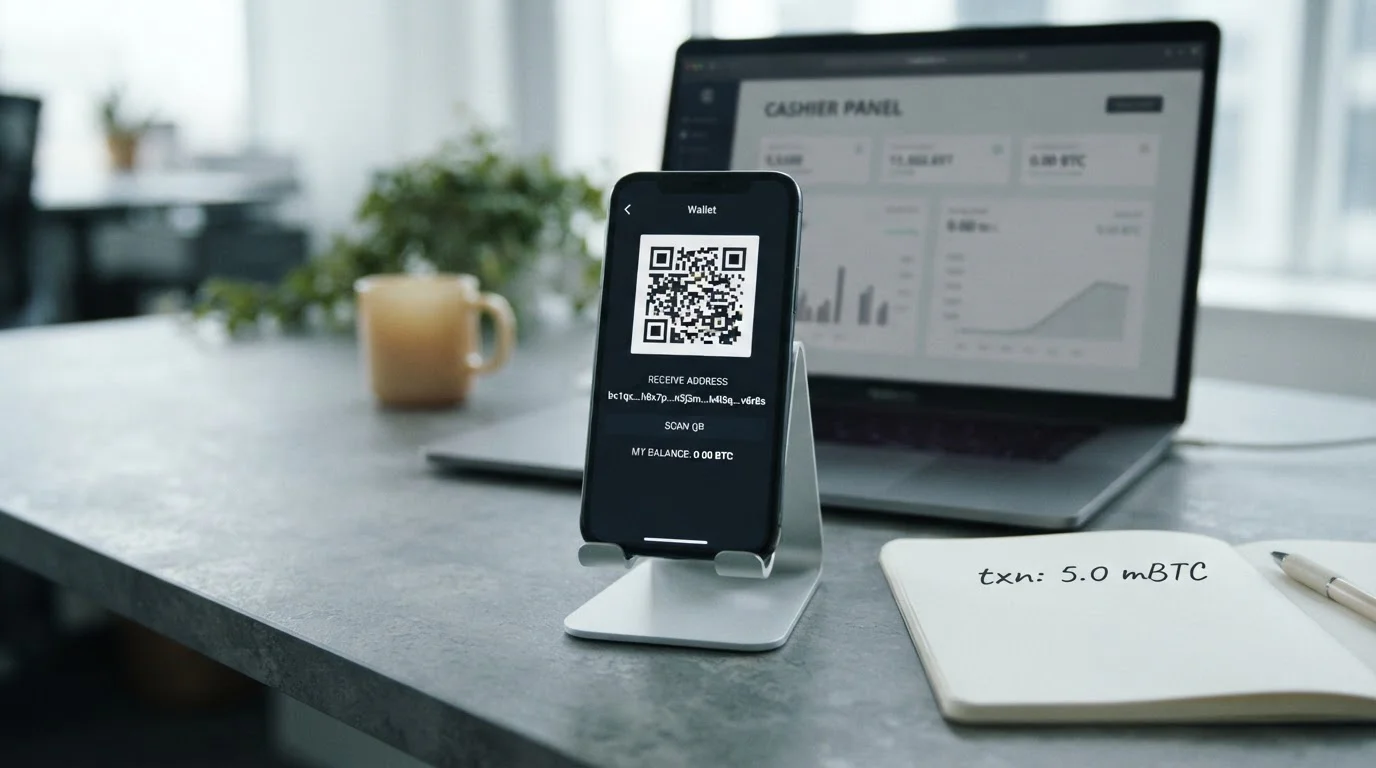
The mechanics are the same everywhere, and they are simpler than the marketing suggests. Acquire DOGE — UK-accessible exchanges including Kraken and Coinbase sell it, or you already hold it in a self-custody wallet such as Trust Wallet or Exodus. Open the cashier at the site, select Dogecoin, and it generates a deposit address, usually with a QR code alongside. Send the amount you want from your wallet or exchange to that address. The network picks up the transaction at the next block, the site waits for however many confirmations its policy demands, and the balance appears — either denominated in DOGE or converted into the site’s base currency, depending on the operator. Withdrawals run the same path backwards, with one important difference: an approval queue sits in front of the chain.
Two things carry no safety net whatsoever. A Dogecoin address is not interchangeable with a Bitcoin or Litecoin address, and DOGE sent to the wrong chain or a mistyped address is gone — there is no recovery process, no support ticket that fixes it, no reversal. And there is no chargeback on any crypto rail, ever. A card deposit to a licensed casino can, in extremis, be disputed with your bank. A Dogecoin deposit cannot be disputed with anyone. Copy the address, paste it, check the first and last four characters, and send a small test amount first if the sum is meaningful to you.
The fee figure most sites get wrong
Here is where the published numbers fall apart. Dogecoin’s network fee is quoted across the sector at around $0.028, and at least one major crypto outlet states it as “as low as $0.03”. Both figures are the mean, and on Dogecoin the mean is close to useless: a handful of large multi-output transactions drag it upward by a factor of roughly twenty-two. The median transaction — the kind an individual actually sends — measured 0.016053 DOGE over 20–21 August 2026, which came to about $0.00129. A tenth of a penny.
That gap changes what Dogecoin is good for. At a tenth of a penny the fee is not a cost to be managed, it is noise, and critically it is flat — the same tenth of a penny whether the transfer is £10 or £500. No fiat rail behaves that way. Card processing, e-wallet fees and currency conversion all scale with the amount or impose a minimum that makes small transfers disproportionately expensive. For a player moving £10 or £25 at a time, that flatness is the genuine argument for DOGE, and it is a better argument than the one the marketing makes about speed. The irony is that the sector undersells its own best feature by quoting a fee twenty-two times too high.
One-minute blocks is not one-minute credit
The other recurring error conflates two different clocks. Dogecoin produces a block roughly every 1.06 minutes — measured at 1,359 blocks across twenty-four hours — which is about ten times faster than Bitcoin. That number gets reported as though it were the time until the money is playable. It is not. The chain’s speed sets a floor; the receiving party’s confirmation policy sets the actual wait.
Casinos typically require one or two confirmations, occasionally up to six, so a DOGE deposit genuinely does credit within a few minutes. Now compare the same transaction arriving at Kraken, which requires forty confirmations on inbound Dogecoin — around forty minutes on identical chain conditions. Same coin, same block time, a fortyfold difference in waiting, determined entirely by policy. The practical consequence is worth planning around: moving DOGE from an exchange to a casino is fast, and moving it back to that exchange afterwards is not. If the plan involves cashing out to pounds the same evening, the exchange’s confirmation requirement is the step that will keep you waiting, not the casino’s.
Minimum deposits are set in DOGE, not pounds
Queries about £5 Dogecoin deposits come from fiat habits and do not map onto how these cashiers work. Minimums are denominated in the coin, so the pound equivalent moves with the price. Typical platform minimums across DOGE-accepting sites land around the £10 or $10 equivalent; some accept deposits from roughly $1, and minimum withdrawals can go as low as 15 DOGE, which was about $1.22 at the time of measurement.
The number that actually catches people is the second threshold. Bonus qualification is routinely set above the platform minimum: MyStake and Rolletto both take £10 to play and both want £20 before the welcome offer fires. Depositing the platform minimum and expecting the advertised match is the single most common way to end up annoyed at a cashier, and it is written in the terms every time.
Playing on a phone
There is no Dogecoin mobile story worth telling, and the pool of searches asking for one deserves a straight answer rather than a section. These are browser-based sites that render on a phone; a few ship wrapped apps that are the same site in a shell. The cashier is identical — the deposit address flow works the same in mobile Safari as on a desktop — and no operator in this guide offers a DOGE feature on mobile that it withholds on desktop. If anything, pasting a wallet address is marginally more error-prone on a phone, which is an argument for the QR code rather than against the device.
The cost nobody prices: holding a balance in DOGE
Every comparison in this sector treats volatility as a bullet point and then declines to quantify it. Worth doing properly. Dogecoin traded around $0.0735 in July 2026, with a market capitalisation near $12.5bn, and around $0.095 in late September 2026 at roughly $16.3bn on a circulating supply close to 172 billion coins. That is a move of nearly 30% in a quarter. The May 2021 peak was $0.7376, which puts the July level approximately 90% below the all-time high.
The structural picture behind those numbers: Dogecoin has no supply cap, roughly five billion new coins enter circulation every year — about 5% annual inflation — and the largest single wallet holds 38.43 billion DOGE, close to 27.95% of total supply. Leaving a casino balance denominated in DOGE therefore means holding an unhedged position in an inflationary asset with extreme concentration risk, on top of whatever house edge you are already facing. A player who deposits £100 of Dogecoin and plays break-even for three months has still taken a position on all of that. Sites that convert the balance into a base currency on deposit remove the exposure; sites that hold it in DOGE keep it running. Which behaviour your chosen operator follows is a cashier detail worth knowing before it matters, and it is rarely advertised.
How long does a Dogecoin casino deposit take to credit, and what does it cost?
Blocks arrive about every 1.06 minutes and casinos usually wait one or two confirmations, so deposits credit within a few minutes. The real network cost is the median fee of 0.016053 DOGE — roughly $0.00129, a tenth of a penny — not the $0.028 average most sites quote, which large multi-output transactions inflate about twenty-two-fold.
What is the minimum Dogecoin deposit?
Minimums are set in DOGE rather than pounds, so the sterling figure drifts with the price. Platform minimums typically sit around the £10 equivalent, with some sites accepting roughly $1 and minimum withdrawals as low as 15 DOGE. Bonus activation usually demands more — £20 at both MyStake and Rolletto.

Getting money back out: withdrawals, limits and caps
Instant means approved, not confirmed
Scan the Dogecoin field and nearly everything advertises instant withdrawals — Thrill, Jack, Dexsport, CasinOK, Bet25, Kings Game, Vave, Flush, Bitz, mBit, Bspin, Rainbet, Betpanda, Rakebit, Cybet and Winna all carry the claim. Bets.io and Cloudbet say zero to two days, Minebit and Reels say twenty-four hours, Ybets says one to three. The honest ones are the ones quoting a range.
What “instant” describes is the blockchain leg, which was never the slow part. A Dogecoin withdrawal, once broadcast, confirms in about a minute. The queue sits in front of that: the operator’s internal approval step, where the payout is reviewed, the account checked, and any outstanding verification demanded. Independent testing of JackBit reports an average around eight minutes end to end, which is genuinely fast; mBit is reported at ten to fifteen; BitStarz at zero to one hour with no stated limit and no fee. Those figures reflect approval efficiency, not chain performance. An operator that wants to hold your withdrawal for three days can do so while still truthfully advertising instant Dogecoin payouts, because the chain will indeed take a minute once they get round to pressing the button.
Caps and thresholds that appear at the cashout
Two mechanisms do the real limiting, and neither is prominent in the marketing. The first is a straightforward cap: Rolletto operates a reported £7,500 weekly withdrawal limit, which is generous for recreational play and a hard ceiling for anyone who has a good night. Betpanda has documented payout caps of its own. A cap does not threaten your money, but it does determine how long a large balance takes to extract, and balances sitting at an unlicensed operator are exposed for every day they remain there.
The second is more consequential and specific to the no-verification model. Sites marketing no-KYC play — JackBit explicitly, Betpanda as its central pitch — generally set a lifetime withdrawal threshold, above which identity verification is triggered. The design is elegant from the operator’s side and unpleasant from the player’s. Verification arrives precisely when a player has accumulated enough to be worth verifying, which is to say at the worst possible moment: after winning, with funds in the account and the operator holding every card. Betpanda’s record here is documented rather than theoretical — one review describes the no-KYC policy as “selectively enforced after wins”, and the site carries a Casino Guru score of 5.4 out of 10 and a Trustpilot rating of 2.3. Anonymity at these sites is available for losing. It tends to expire on winning.
What recourse you have if a payout is withheld
Short answer: very little, and this is the most important paragraph on this page. At a UKGC licensee, a withheld payout goes to the operator’s complaints process and then to an alternative dispute resolution provider, with the Gambling Commission behind it and a licence at stake. The operator has a strong incentive to settle, because its permission to trade in a lucrative market depends on its conduct record.
Offshore, the escalation path runs to the Curaçao Gaming Authority or the Anjouan Gaming Board. Both exist, both issue licences, and both are materially less effective at forcing an operator to pay than a national regulator — complaint handling is slower, outcomes are weaker, and the practical leverage over a licensee is thinner. At Betpanda there is no gambling regulator in the chain at all, only a Costa Rican company registration, so a dispute has nowhere to go once the operator stops replying. A UK regulator cannot help in any of these cases, because it does not license the operator and has no jurisdiction over it. The money is recoverable only to the extent the operator chooses to return it.
Which reframes the comparison. Rolletto’s verifiable licence number and five years of complaint history are not a formality — they are the closest thing to recourse available in this set, which is why trading history is a better selection criterion here than bonus size.
Is there a withdrawal limit?
Usually, though it is rarely headlined. Rolletto applies a reported £7,500 weekly cap and Betpanda has documented payout caps. The more significant limit at no-verification sites is a lifetime withdrawal threshold that triggers identity checks once crossed — meaning verification arrives after you win rather than at signup.
Bonuses on a Dogecoin deposit
What the welcome offers actually look like
Headline percentages across this sector are large and nearly meaningless on their own. MyStake runs 150% up to £750 on a first deposit, building toward 300% and £1,500 across three. Rolletto tiers it: 150% up to £500 plus 200 free spins on deposits between £20 and £500, or 100% up to £1,000 above that, with the spins dropped at the higher tier. Betpanda advertises 100% up to 1 BTC. JackBit takes the opposite approach with 100 free spins and no match at all, plus daily rakeback.
Dedicated crypto offers often run parallel to the fiat ones, with different terms attached — Rolletto carries a separate crypto welcome at 100% up to $1,000 plus 200 free spins at 40x over a thirty-day window, distinct from its main package. Depositing DOGE sometimes routes you into the crypto offer automatically and sometimes requires selecting it, and the two are rarely identical. Read which one applied before assuming the better of the pair is yours.
Where the wagering maths bites
The basis matters more than the multiple, and this is the comparison the ranking sites never make. Rolletto applies 30x on deposit plus bonus; sister brand Velobet applies 30x on the bonus alone. Identical multiple, substantially different obligation — on a £100 deposit with a £100 bonus, the first demands £6,000 of turnover and the second £3,000. Betpanda’s 80x is roughly double the sector norm of 30x to 40x, and against a nominal 1 BTC ceiling the requirement is arithmetic designed never to be met. JackBit’s hundred spins carry no wagering at all, which in this field is close to eccentric and is the single most player-favourable term in this guide.
Game weighting is the second trap and it is usually buried a screen below the percentage. At Rolletto, slots count 100% toward clearing, while tables and live games count 5% to 10%. A player intending to clear a welcome bonus at a live blackjack table would need to wager somewhere between ten and twenty times the nominal requirement. It is not a restriction so much as a quiet prohibition, phrased as a contribution rate.
No-deposit and no-wagering offers
No-deposit offers exist across these brands and are small by design — a handful of free spins, occasionally a token credit, typically with wagering attached and a cap on what can be withdrawn from the winnings. They function as a trial of the interface rather than a route to a balance, and treating them as anything else leads to disappointment that is entirely predictable from the terms.
No-wagering offers are the ones worth hunting, because they are the only category where the advertised number and the obtainable number coincide. JackBit’s hundred wager-free spins are the example in this set. The reason they are rare is not mysterious: wagering requirements are the mechanism that converts a “free” bonus into expected revenue, and an operator that removes them is giving something away rather than lending it at interest. When a site does, that is the offer to take seriously — and it will be smaller than the 300% banner on the site next door, for exactly the reason that makes it real.
What you can play from a Dogecoin balance
| Game type | Available from a DOGE balance | How the balance is denominated | Note |
|---|---|---|---|
| Slots | Yes, at every operator in this guide | Usually converted to a site base currency for bonus and free-spin accounting | Thousands of titles from standard studios; the deposit coin rarely affects which games are available |
| Live dealer tables | Yes | Base currency at the table, converted from the DOGE balance | Table limits are set in the base currency, so DOGE price moves shift what your balance covers |
| RNG tables — roulette, blackjack, baccarat | Yes | Base currency | Contributes 5–10% toward bonus wagering at most operators, not 100% |
| Dice and provably fair originals | Yes, and this is where DOGE is native | Often kept in DOGE | Sub-cent fees and a low unit price make high-volume micro-stakes practical |
| Crash, Plinko, Mines, Limbo | Yes | Varies by operator | In-house originals; rakeback models reward the bet volume these generate |
| Video poker, keno, bingo | Yes, where the operator carries them | Base currency | Thin coverage compared with slots; not a reason to pick a site |
| Sportsbook | Yes at MyStake, Rolletto, JackBit, Betpanda | Base currency | Separate bonus wallet from the casino at MyStake |
Slots
Slot access does not vary meaningfully by deposit coin. Every brand covered here runs thousands of titles from the same roster of studios, and depositing Dogecoin rather than Bitcoin changes nothing about which reels you can spin. Vave’s library runs to nearly seventeen thousand games, Betpanda and Bets.io sit around ten thousand, Rolletto nearer four and a half — and the practical difference between those numbers is smaller than it looks, since the top few hundred titles account for most of the play at any of them.
One denomination detail is worth knowing before a bonus round, because it surprises people. Free-spin winnings and bonus calculations are usually tracked in a site base currency behind the scenes rather than in DOGE, even when the deposit arrived as Dogecoin and the main balance displays in it. The spins settle in the base currency and convert back. In a quarter where DOGE moved nearly 30%, the difference between settling in the coin and settling in dollars is not academic — it just happens somewhere the interface does not show you.
Live dealer and table games
Live tables run from a DOGE balance at all four accepting operators, sourced mostly from Evolution and the usual suspects, and the experience is identical to playing from a fiat balance because the table itself is denominated in a base currency. Your Dogecoin is converted on the way in. That matters for stake planning: table minimums and maximums are fixed in the base currency, so a 30% swing in the DOGE price changes how many hands your balance covers without any table limit changing at all.
RNG tables — roulette, blackjack, baccarat — are everywhere and unremarkable. The thing to carry over from the bonus section is their weighting: 5% to 10% toward wagering requirements at most of these operators. Perfectly good games to play with cash. Hopeless games for clearing a bonus.
Dice and provably fair originals
This is the one category where Dogecoin is not simply an accepted coin but the historically native one. Dice and provably fair originals are where DOGE gambling culture actually began, in the coin’s earliest communities, and the economics still fit better here than anywhere else. A median fee of a tenth of a penny and a unit price low enough that stakes can be set in fractions of a coin make thousands of tiny bets practical in a way no other rail allows — a hundred bets at a penny each costs essentially nothing to fund.
Rakeback models are built for exactly that pattern. JackBit’s instant daily rakeback and the cashback structures at Betpanda return value on volume rather than on deposit size, which rewards the high-frequency micro-stakes play dice generates. If the appeal of Dogecoin for you is the ability to make a very large number of very small bets, the originals section is where that appeal is actually realised, and the slots lobby is where it gets diluted.

The licensed route: converting Dogecoin to pounds
For a player who holds DOGE and wants a casino account a British regulator stands behind, there is exactly one path, and it ends with the Dogecoin sold.
How the conversion works in practice
Sell the Dogecoin for pounds at a UK-accessible exchange, withdraw the sterling to your bank, then fund a UKGC-licensed casino account by an ordinary payment method. Kraken supports DOGE sales with cash withdrawal to a bank account quoted at zero to five business days. Coinbase supports GBP Faster Payments withdrawals once a UK bank account is verified on the account — note that direct withdrawals from a Coinbase EUR balance to a UK bank are not supported, so a euro balance needs converting to GBP first, which Coinbase’s own guidance describes as buying crypto with the euro balance and selling it back into GBP.
The outcome is a normal fiat gambling transaction. Your wallet never becomes the casino’s cashier, there is no deposit address, and no blockchain settlement occurs at any point in the gambling leg. What you get in exchange is everything the offshore route lacks: GAMSTOP cover, affordability and customer-interaction duties owed to you, fair-terms rules constraining how bonus conditions can be written, the credit-card deposit ban, and a dispute route through an ADR provider with the Commission behind it. What you give up is the thing that made crypto appealing in the first place. That is the trade, stated without decoration — and it is the only version of this where a British authority can act if something goes wrong.
One procedural point before the brands: licence status and authorised domains change, and the Gambling Commission’s public register is the only authoritative check. Any site claiming a UK licence can be verified there in under a minute, and any site that cannot be found there does not hold one.
bet365
The cleanest illustration of the distinction this whole page turns on. bet365’s relevant UK entity holds an active Casino Remote licence on the Gambling Commission’s register, covering slots, table games and live casino, and it is among the most heavily used gambling products in Britain. It does not accept Bitcoin, Dogecoin, Ethereum or any other cryptocurrency, which is standard rather than exceptional among GB licensees.
For a player holding DOGE, the regulated route is to convert through an exchange and deposit the resulting pounds by an accepted method. The advantage is regulatory clarity — full LCCP protection, inside GAMSTOP, disputes with somewhere to go. The trade-off is precise: if direct blockchain settlement is the specific feature you want, bet365 does not provide it and will not in the foreseeable term. The wallet stays a wallet.
Betway
UKGC-licensed remote casino with slots, table games and live casino, and a product built around mobile play more deliberately than most of its peers — which matters if the attraction of crypto casinos was partly that they run cleanly in a phone browser. Betway’s app and mobile site are the closest licensed equivalent to that experience.
The cashier is fiat only. Deposits go in by card, bank transfer or e-wallet, land in the balance immediately, and carry every protection a British licence requires: affordability monitoring, GAMSTOP integration, fair-terms rules on bonuses, no credit cards. For a DOGE holder the sequence is the same as above — sell, withdraw to the bank, deposit in sterling. Nothing about holding Dogecoin changes what Betway can accept.
Paddy Power
Long-established UK brand with an active UKGC remote casino licence covering slots, casino games and live tables, sitting inside a group with a substantial licensed footprint across Britain and Ireland. Its appeal in this context is recognisability and scale — a player nervous about handing money to a Curaçao entity they had not heard of a week ago is choosing a different category of counterparty entirely.
Fiat cashier, no crypto, and the same conversion path to reach it. Worth noting what the licence obliges on the bonus side, since this page has spent some time on offshore wagering terms: UK rules on fair and open terms constrain how bonus conditions are written and presented, which is why licensed welcome offers look modest next to a 300% banner and are substantially more likely to be obtainable as described.
Grosvenor Casino
The most casino-first option of the four, UKGC-licensed for remote casino play, with a land-based estate behind the brand that gives it a different risk profile from a purely online operator — there are physical venues, staff and property attached to the licence. For a player whose concern is counterparty solidity rather than game count, that is a meaningful distinction.
Online product covers slots, RNG tables and live dealer games, with a fiat cashier and no cryptocurrency support. The route in is identical: DOGE sold for pounds, pounds withdrawn to a bank, bank used to deposit. The pattern across all four names is the same because it is structural rather than a matter of individual policy — no GB licensee takes crypto, so the conversion happens off-site at every one of them.
The tax point
Selling Dogecoin for pounds is a disposal for UK capital gains purposes, and the gain or loss needs recording. That is the position whether the proceeds go into a casino account, a savings account or a sofa. Gambling winnings themselves are not taxed in the UK, which is the part most people already know and which does not change anything here — the taxable event is the crypto disposal, not the gambling.
Depositing DOGE directly into an offshore cashier does not sidestep this. Spending or transferring a cryptoasset is also a disposal event; the absence of a pound-denominated sale does not make the disposal disappear, it makes it harder to calculate, because the value has to be established at the point of transfer. Anyone moving meaningful sums should keep transaction records and take proper advice — this is a flag, not tax guidance, and the thresholds and allowances change.
Do I pay UK tax on Dogecoin I use for gambling?
Gambling winnings are not taxed in the UK, but disposing of a cryptoasset is a capital gains event — and that covers both selling DOGE for pounds and transferring it to a cashier. Depositing offshore does not avoid the disposal, only complicates the calculation. Keep records and take advice.
What should I use instead of Dogecoin if I want a licensed UK casino?
Any standard sterling method — debit card, bank transfer, or an e-wallet such as PayPal where offered. Credit cards are banned for gambling deposits in Britain. Sell the DOGE at an exchange, withdraw via Faster Payments, and deposit the pounds at a UKGC licensee such as bet365, Betway, Paddy Power or Grosvenor.
If Dogecoin is not the right coin for you
| Coin | Typical credit time | Fee pattern | Volatility exposure | Best suited to |
|---|---|---|---|---|
| Dogecoin | A few minutes at one to two confirmations, blocks every 1.06 minutes | Flat and negligible — median 0.016053 DOGE, about a tenth of a penny | High, and structurally so: no supply cap, roughly 5bn new coins annually, largest wallet near 28% of supply | High-volume micro-stakes play, dice and originals, small deposits |
| Bitcoin | Slower — confirmations arrive roughly every ten minutes | Variable, rises with network congestion | High, but the most established and widely held | Larger single deposits where fee is a small proportion |
| Litecoin | Fast, blocks around every 2.5 minutes | Low and fairly stable | High | A middle option between DOGE’s speed and BTC’s acceptance |
| USDT (Tether) | Depends on the chain used, often very fast | Low on efficient chains, higher on Ethereum | Minimal — dollar-pegged | Anyone who wants crypto rails without a price position |
| USDC | Similar to USDT | Low on efficient chains | Minimal — dollar-pegged | The same, with a different issuer’s reserve profile |
| XRP | Seconds | Very low | High | Speed-focused transfers where the coin is already held |
| Solana | Seconds | Very low | High | Fast settlement; acceptance is narrower than DOGE at casinos |
The axis that matters at a cashier is not brand popularity, it is the trade between fee flatness and price stability. Dogecoin wins the first decisively and loses the second badly. Stablecoins invert both: a dollar-pegged balance removes the volatility that a DOGE-denominated balance carries, at the cost of giving up any upside and introducing a dependence on the issuer’s reserves instead. For a player who wants crypto’s speed and privacy properties but has no interest in holding a position, USDT or USDC is the rational choice and DOGE is a worse version of it.
Bitcoin remains the most widely accepted coin and the slowest at the cashier, with fees that climb when the network is busy. Litecoin sits in the middle on every axis and is accepted nearly as widely as DOGE. XRP and Solana settle in seconds and are supported at fewer sites. Acceptance is the practical filter — Dogecoin’s real advantage over the faster, cheaper alternatives is that nearly every crypto casino takes it, which means you choose the site on its merits rather than on its coin list.
None of which changes the licensing position by a single degree. Switching from Dogecoin to Tether does not make an Anjouan operator licensed in Britain, does not bring it inside GAMSTOP, and does not create a dispute route. The coin is a payment rail. The regulatory question is about who is holding your money, and that answer is identical whichever rail you use to send it.

Checking any Dogecoin casino yourself
Read the restricted-countries clause first
Before game count, before the welcome offer, before anyone’s score out of ten: find the restricted-countries clause and search it for your own country. It lives in the terms and conditions, usually near the end, under a heading like Restricted Countries, Prohibited Jurisdictions or Restricted Territories. Open the terms, search the page for “restrict” or “prohibit”, and read the list. Thirty seconds, and it is the clause that decides whether a withdrawal happens.
Two refinements make the check reliable. Read it on the operator’s own domain, not on a review site’s summary — summaries go stale and the operator’s text is the document that governs. And note the date you read it, because these clauses change without notice; the ones quoted on this page were read on 8 September 2026, and that is stated rather than implied for exactly this reason. A clause that excluded nobody last year may exclude you now, particularly as UK enforcement pressure increases.
Telling the operator’s site from an affiliate’s copy
This is the part of the market nobody documents, and it is the single most useful thing in this guide for anyone who intends to keep looking after reading it. Search for UK Dogecoin casinos and a large share of the results are not operators at all. They are affiliate-built lookalike domains — names like vave.uk.net, casinovave.co.uk, mystake.london, mystake-en.co.uk, jackbit-uk.net, jackbits.co.uk, betpanda-uk.co.uk, rolletto-ukcasino.com, betscasino.uk, mbitcasinos.org — publishing pages titled “terms and conditions for UK players” for brands whose real terms bar UK players outright.
Some of it is simply rewritten marketing. Some of it is worse. One such page asserts that the terms “are governed by the laws of the United Kingdom” for an offshore crypto casino, which is not a stretched claim but a fabricated one. Another publishes a tidy UK-facing licence information page for a brand licensed in Curaçao. Meanwhile the operator’s actual terms, on its actual domain, name Britain among the countries it refuses. A player who reads the affiliate’s version, deposits, wins and then meets the real clause at withdrawal has been set up by a page that was never the operator’s at all.
Three checks separate them. Look at the domain: operators run one primary domain, and a spread of country-suffixed variants around a brand name is a marketing network, not a cashier. Look for the company: a real operator names its legal entity and licence number in the footer or a licensing page — Santeda International B.V. with Curaçao company 151296 and licence OGL/2024/1798/1048 is checkable, while “licensed and regulated” with no number attached is not. And if a site claims any form of UK licensing or UK-governed terms, check the Gambling Commission’s register directly; the register is public, searchable, and settles the question immediately. The Commission is currently tracking around a thousand unlicensed operators aimed at British consumers and working with search engines, payment providers and hosting firms against them — a fair amount of what surfaces in a casual search is precisely that traffic.
Brand-new sites and why the launch date matters
The 2025 and 2026 launch wave is real and heavily weighted toward Anjouan licences — Thrill, CasinOK, Bet25, Kings Game, Minebit, Reels, Monoplay and others all opened inside the last two years, several with ten thousand games and instant-payout claims from day one. The searches asking for the newest Dogecoin casinos are asking a reasonable question. The answer is that newness is a risk factor here rather than a feature.
At a licensed operator, a new brand is backed by a regulator that vetted it and can discipline it, so launch date tells you little. At an unlicensed one, the operator’s trading history is close to the only evidence available about whether it pays. A site that has settled withdrawals for five years through a complaint record anyone can read has demonstrated something; a site that launched last quarter with a 350% welcome offer has demonstrated a marketing budget. This is why Rolletto’s five years and traceable licence number count for more in this context than a newer brand’s larger library, and why a 2026 launch with no verification requirements and an enormous bonus should be read as the highest-risk combination on offer, not the most generous.
The sector’s own numbers make the point. Of the brands with the longest records — BitStarz since 2014, mBit since 2014, Cloudbet since 2013 — every single one refuses British players. Longevity and UK acceptance are, in this market, very nearly mutually exclusive. That is the fact to carry away from this page: not that Dogecoin casinos are unavailable to UK players, but that the ones available are available precisely because of what they are willing to risk, and your deposit is funding that risk tolerance rather than being protected from it.
Crypto Casinos UK 2026 — Solana, XRP, Dogecoin, BCH and BNB
Content created by the «casinomoneyg» team